Employee attrition is an ongoing challenge that organizations across the globe must face in today’s dynamic work environment. Engaging employees effectively has become crucial, making employee engagement initiatives more essential than ever.
According to US Bureau of Labor Statistics, about 4 million Americans quit their job each month. That’s a staggering number!
As businesses evolve, the reasons behind employees leaving their roles are becoming more complex and multifaceted. Attrition, though often viewed as a natural part of the workforce movement, can have significant consequences on both organizational performance and morale.
Given the power it possesses in reshaping careers and organizations, it is essential to explore its intricacies by understanding the root causes of attrition. Whether it's due to voluntary resignation, retirements, or internal shifts, understanding the factors is crucial for organizations to develop effective retention strategies.
So, let’s dive in.
What Is Employee Attrition?
Employee attrition is the gradual reduction in a company’s workforce resulting from resignations, retirements, layoffs, and unfilled positions.
Unlike turnover, which focuses on the frequency and reasons for employees leaving, attrition emphasizes a slow, natural decrease in the workforce over time.
To put it simply, if someone leaves and you don't hire a replacement, that's attrition. But if you do hire a replacement, that's deemed turnover.
Employee Attrition vs. Turnover vs. Layoffs
| Factor | Attrition | Turnover | Layoffs |
|---|---|---|---|
| Definition | Employees leave and roles go unfilled | Employees leave and are replaced | Organization terminates positions |
| Initiated by | Employee (usually) | Employee or employer | Employer |
| Position replaced? | No | Yes | No |
| Intent | Natural workforce reduction | Workforce cycling | Immediate cost reduction |
| Pace | Gradual, over time | Ongoing and measured periodically | Sudden, event-driven |
| Example | A retiree's role is absorbed by the team | A sales rep quits and a new one is hired | 200 roles eliminated during restructuring |
Why HR Leaders Should Track Attrition Separately
Solely tracking turnover will not suffice. If you are unaware of your shrinking headcount, you are on the verge of losing institutional knowledge, overloading remaining staff, and weakening your bench's strength.
This is how attrition tracking helps you:
- Identifies departments that are silently losing capacity
- Distinguishes between healthy attrition (natural retirement, low performers exiting) and unhealthy attrition (top talent leaving without replacement)
- Helps you make smarter workforce planning decisions
5 Types of Employee Attrition
1. Voluntary Attrition
Voluntary attrition occurs when employees choose to leave an organization of their own accord, often by resigning or accepting other opportunities. This type of attrition is within employees’ control and is often influenced by various personal and professional factors.
Here are some common reasons behind voluntary attrition:
- Lack of Opportunities for Learning and Development
- Job Role and Skill Mismatch
- Limited Career Advancement Opportunities
- Lack of Appreciation and Recognition
- Prolonged Workplace Stress
2. Involuntary Attrition
Involuntary attrition happens when employees are separated from their organization without their consent, usually due to circumstances or decisions beyond their control.
This form of attrition is often initiated by the organization and can arise from several factors such as organizational restructuring, financial constrain or performance-based termination.
3. Retirement
Retirement is when an employee ends their working tenure after reaching a desired age. This attrition is related to an employee’s personal decision and the work protocol based on age, health, and financial readiness.
4. Internal Attrition
Internal attrition occurs when employees choose to leave their current position to take on a new role within the same organization. This shift often involves a transition to a different department or a complete change in job responsibilities.
This type of attrition allows employees to explore new areas within the company while maintaining their tenure and commitment to the organization.
5. Demographic Attrition
Demographic attrition occurs when employees from a particular demographic group, such as a specific age bracket, ethnicity, or gender, leave an organization at higher rates than other groups. It generally results from differences in workplace experiences, opportunities, and career goals among various demographic groups.
Such trends can often point to underlying issues within the workplace, such as biases in advancement opportunities, a lack of mentorship, or a cultural disconnect.
How to Calculate Employee Attrition Rate
The Attrition Rate Formula
Attrition Rate = (Number of Departures During Period / Average Number of Employees During Period) x 100
Where: Average Number of Employees = (Headcount at Start + Headcount at End) / 2
Worked Example: Monthly vs. Annual Calculation
Monthly Example:
- Start of month: 200 employees
- Departures during month: 5 (not replaced)
- End of month: 195 employees
- Average employees: (200 + 195) / 2 = 197.5
- Monthly attrition rate: (5 / 197.5) x 100 = 2.53%
Annual Example:
- Start of year: 500 employees
- Total departures (not replaced): 40
- End of year: 460 employees
- Average employees: (500 + 460) / 2 = 480
- Annual attrition rate: (40 / 480) x 100 = 8.33%
The Real Cost of Employee Attrition
Attrition comes with baggage; it is not free. The following are the associated costs:
Direct Costs
- Recruitment: Job postings, recruiter fees, interview time
- Onboarding: Orientation, training materials, IT setup
- Training: Ramp-up time before new hires reach full productivity (typically 6-12 months)
The cost of replacing an individual employee can range from one-half to two times the employee's annual salary — and that's a conservative estimate.
– Gallup
Hidden Costs
- Productivity loss: Remaining team members are swamped with extra work that reduces their efficiency.
- Knowledge drain: Institutional knowledge, such as undocumented processes and client relationships, leaves the organization.
- Team morale: Repeated departures create a sense of uncertainty and erode trust.
- Customer impact: There is a sudden dip in service quality.
Want to know your exact attrition cost? Use our free calculator
7 Root Causes of Employee Attrition
Understanding the root cause gives you a stronger grasp of the haunting issue. The following are the root causes behind employee attrition.
1. Toxic Workplace Culture
One of the key drivers of employee attrition is workplace culture. A toxic work environment can lead to high levels of stress and dissatisfaction among employees. It can leave employees feeling undervalued, demotivated and unsupported.
Factors such as poor communication, lack of transparency, unresolved conflicts, and micromanaging can contribute to a negative workplace culture.
2. Lack of Recognition and Appreciation
Employees who feel that their contributions are not recognized or appreciated by their organization are more likely to become disengaged. Over time, this lack of acknowledgment can lead to a feeling of resentment.
For instance, imagine an employee who consistently goes above and beyond in their work but never receives any recognition or praise. Over time, this lack of recognition can make them demotivated and leave them disengaged at work.
3. Poor Management and Leadership
As the saying goes,"Employees don't quit their jobs; they quit bosses and work cultures."
Poor leadership and management are perhaps one of the biggest contributors to employee attrition. It can lead to high levels of stress due to unclear expectations, a lack of guidance, or even toxic behaviors, such as favoritism or micromanagement.
Inconsistent communication or overbearing demands can also push employees toward burnout, making them more likely to leave for roles that support a healthier work-life balance.
4. Limited Career Growth Opportunities
You cannot stop your ambitious employees from seeking growth elsewhere if they see no visible paths for career advancement, skill development, or lateral movement in your organization.
LinkedIn research highlights that 94% of employees would stay longer if the company invested in their career development.
5. Inadequate Compensation and Benefits
Pay alone is not the only factor for retaining employees, but falling below the competitive market rates is also not favorable, as it can accelerate departures before you even think of it.
6. Poor Work-Life Balance and Burnout
Chronic overwork, lack of flexibility, and growing expectations are crucial factors driving attrition, particularly among millennials and Gen Z.
Burnout doesn't just cause resignations; it first causes quiet quitting, then leads to actual quitting.
7. Weak Employee Wellness Support
Do not underestimate the impact of physical and mental health on retention. Organizations without wellness programs, mental health resources, or burnout prevention strategies, witness higher voluntary attrition.
This has become more apparent, particularly in the post-pandemic era, where employee expectations regarding well-being have shifted drastically.
8 Proven Strategies to Reduce Employee Attrition
1. Apply Professional Recruitment Strategy
A strong professional recruitment strategy is essential for reducing employee attrition. It’s not just about finding candidates with the right skills; it’s about finding individuals who align with your company's values and culture.
Start by creating detailed job descriptions that accurately reflect the role and the expectations. Also, use a variety of recruitment channels to reach a diverse pool of candidates.
By investing time and effort into your recruitment process, you can ensure that you hire employees that are likely to stay long-term. This can lead to a more stable and productive workforce.
2. Enhance Onboarding Facility
A robust onboarding program goes beyond just paperwork and orientation. It can make the new hires feel welcomed, valued, and prepared for their roles within your organization.
To enhance your onboarding process, consider implementing an orientation program that includes introducing new hires to your company culture, values, and mission.
Assigning a mentor or buddy can help new employees acclimate to their new environment and feel supported from day one. Furthermore, providing clear expectations and goals can help new hires understand their role within the organization.
3. Build a Recognition-First Culture
Weave recognition into your organization’s culture by making it frequent, specific, and visible. Peer-to-peer recognition, spot awards, and public acknowledgment create a feedback loop that reinforces the behaviors aligned with the organizational values.
Also, personalize recognition to show their work is valued. This strengthens morale, loyalty, and commitment.
A study reveals that the top 20% of companies with a “recognition-rich culture” have a 31% lower voluntary turnover rate.
 Source: Vantage Recognition
4. Provide Opportunities for Professional Growth
Employees are more inclined to remain with a company that prioritizes their professional growth. By providing opportunities for learning and career advancement, you not only strengthen employee loyalty but also create a more skilled and motivated workforce.
Consider implementing regular training sessions, workshops, and mentorship programs to help employees expand their skills and achieve their career goals. This will lead to higher retention rates and a more satisfied workforce.
5. Encourage Work-Life Balance
As humans, we are bound to get tired and worn out due to excessive work routines. The most effective way to keep employees active and energized is to prioritize a balanced approach to work.
Offering flexible work hours can empower employees to manage their schedules in ways that best suit their personal and professional needs.
Furthermore, encouraging regular time off is equally crucial. It allows employees to recharge, gain fresh perspectives, and return to work with renewed motivation.
Actively discouraging excessive overtime is also important, as it prevents burnout and helps employees maintain a healthy work-life balance.
6. Offer Competitive Total Rewards
We know rewarding your employees with a handsome paycheck is not easy. It takes a toll on your company’s pockets.
However, it is advisable not to drop below the standard norms or the average compensation awarded by your competitors. If your competitors tend to offer them more, they will not give a second thought to transitioning. This is where benchmarking salaries becomes essential.
But apart from the base pay, consider equity, bonuses, flexible benefits, learning stipends, and non-monetary perks as part of your compensation package.
7. Prioritize Manager Training
Your managers can become your frontline defense against attrition. For that, you need to ensure your managers are thoroughly trained.
Equip managers with coaching skills, not just limit them to technical expertise. Train them on giving feedback, having career conversations, recognizing burnout, and building psychological safety.
In fact, a study reveals that 56% of human resources managers consider training and development essential to business.
8. Launch Holistic Wellness Initiatives
A holistic approach to wellness will require you to move beyond basic initiatives and cover some unique approaches targeted at employees’ well-being. Here’s how you can proceed:
- Go beyond gym memberships.
- Address mental health (counseling, stress management), physical health (fitness challenges, ergonomic support), financial wellness (planning resources), and social connection (team events, ERGs).
- Build gamified wellness programs that incentivize healthy behaviors with rewards. This approach significantly reduces burnout.
How to Predict Attrition Before It Happens
The most effective attrition strategy is predictive, not reactive. Here’s how to move from tracking exits to anticipating them.
Leading Indicators vs. Lagging Indicators
| Leading Indicators (Predictive) | Lagging Indicators (Historical) |
|---|---|
| Declining engagement scores | Attrition rate |
| Drop in eNPS | Exit interview themes |
| Reduced participation in meetings/events | Cost per departure |
| Increased absenteeism | Time-to-fill for vacated roles |
| Manager relationship scores declining | Knowledge loss incidents |
| Fewer internal applications | Productivity dips post-departure |
Using Pulse Surveys for Early Detection
Quarterly or annual engagement surveys are way too slow to get a grip on attrition signals. Instead, you can run short, frequent pulse surveys (monthly or bi-weekly) to track the following:
- Overall engagement trends by team/department
- Manager satisfaction scores
- Sentiment around growth, compensation, and belonging
- eNPS fluctuations that are linked with future departures
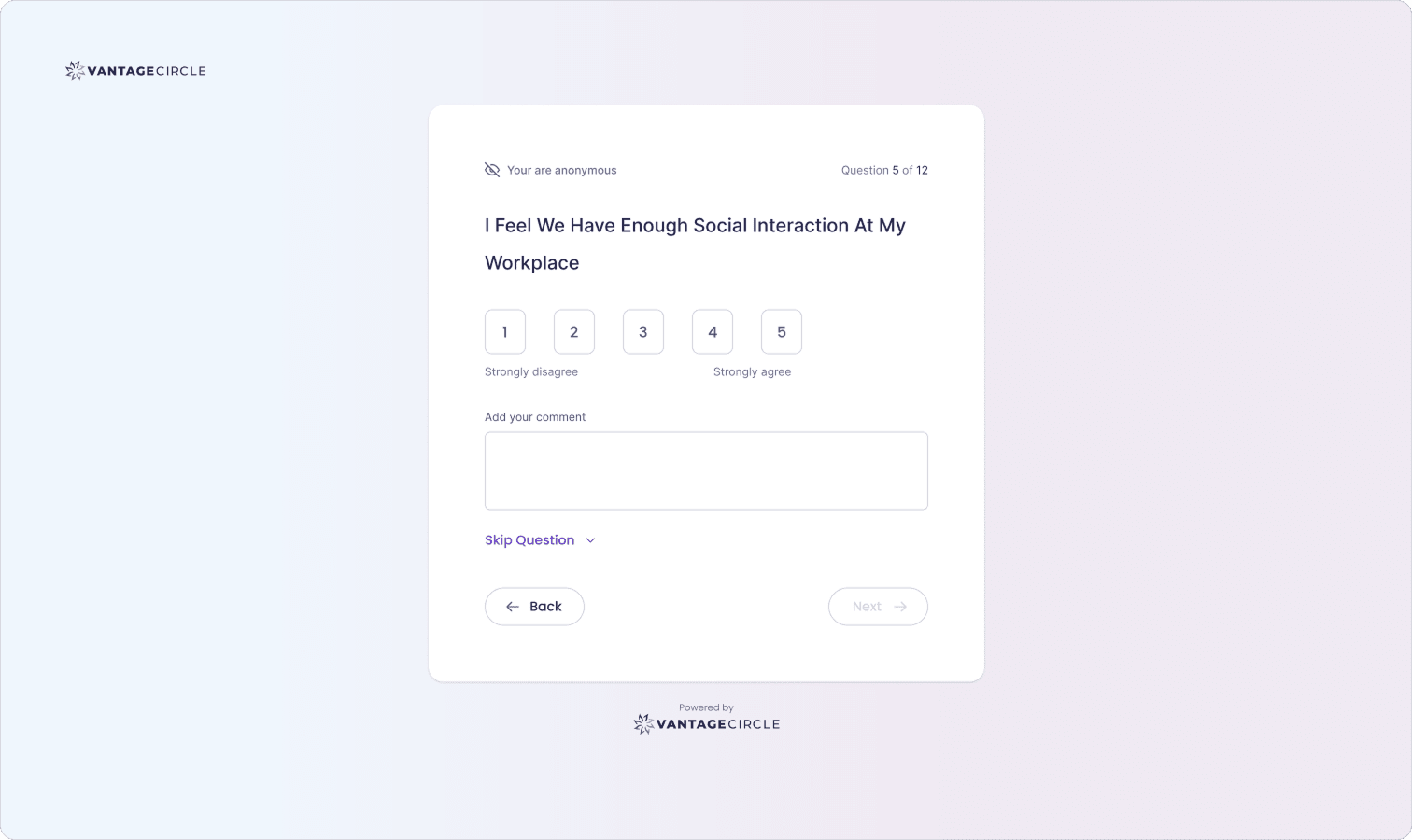

Source: Vantage Pulse
Building an Attrition Dashboard
Combining pulse survey data with HR system metrics will help you build a real-time attrition risk dashboard in the following way:
- Engagement score by department (flag teams below threshold)
- Tenure distribution (identify clusters at high-risk tenure points — typically 1-2 years and 5-7 years)
- Manager-level attrition patterns (spot managers with consistently high team attrition)
- Absenteeism trends (rising unplanned absences often precede resignations)
- Internal mobility rate (low internal movement = stagnation risk)
10 Early Warning Signs Your Team Is About to Experience Attrition
Be wary of these early warning signs before it is too late to undo the harm. These signs will help you act on time.
- Engagement survey scores drop quarter-over-quarter
- Top performers avoid or stop volunteering for stretch projects
- Increasing "quiet quitting" behaviors, with employees doing the bare minimum.
- Spike in LinkedIn profile updates and activity among your team
- Rising absenteeism
- Employees avoid participating in optional events and social activities
- Increase in short, disengaged 1:1 meetings with managers
- Team members stop asking about career development or promotions
- Increasing complaints about the workload shift from occasional to chronic
- Unaddressed consistent themes as revealed through exit interviews.
FAQs
What does 20% attrition rate mean?
A 20% attrition rate means that 20 out of every 100 employees left and were not replaced over the measurement period. This is considered high in most industries — healthy attrition rates generally fall below 10%. If your rate is 20% or above, it signals systemic issues worth investigating.
What is the difference between attrition and turnover?
Attrition occurs when employees leave and their positions remain unfilled, resulting in a shrinking workforce. Turnover occurs when employees leave and are replaced. Attrition focuses on net headcount reduction; turnover measures the rate of workforce cycling regardless of replacement.
Is employee attrition always bad?
No. Some attrition is healthy and even desirable. Retirements create space for fresh perspectives. Low performers exiting naturally improves team quality. The concern is when high performers, critical-role holders, or entire demographic groups leave disproportionately — that's regrettable attrition, and it demands action.
What is a healthy attrition rate?
It depends on your industry. As a general benchmark, below 10% annually is considered healthy for most knowledge-work industries (tech, finance, professional services). Retail and food services naturally run higher. The key is to track your rate over time, compare it to industry benchmarks, and focus on reducing regrettable attrition specifically.
What is the 5 and 20 rule for attrition?
The 5 and 20 rule suggests that organizations should aim to keep annual attrition below 5% for high-performing employees (your "keepers") while accepting up to 20% attrition among lower-performing employees. It's a framework for distinguishing between healthy and unhealthy workforce turnover.
What are the 3 R's of employee retention?
The 3 R's are Recognition, Rewards, and Respect. Recognition means acknowledging contributions visibly and frequently. Rewards means offering competitive compensation and meaningful incentives. Respect means creating a culture of trust, autonomy, and psychological safety. Together, they form the foundation of any effective retention strategy.
Written by