
Most organizations still rely on annual performance reviews as their main feedback system. But you know what’s the problem?
By the time that feedback is shared, the moment to improve has often already passed. What could have been a quick correction, timely appreciation, or helpful coaching turns into a delayed conversation months later.
No wonder, a Gallup survey found that 45% of employees who voluntarily left their jobs said their managers never spoke with them about their career future, job satisfaction, or what was expected in their role.
That’s why more HR leaders are rethinking the traditional approach and turning to feedforward. Instead of dwelling only on what went wrong in the past, feedforward focuses on what employees can do better next. It is timely, practical, and built for continuous growth.
In this blog, we’ll explore feedback vs feedforward, why the old model no longer works on its own, and how HR teams can start building a more future-focused performance culture.
Key Takeaways
- Meaning of feedback and feedforward
- Notable differences between feedback and feedforward
- When to use feedback vs feedforward
- The fundamental problems with feedback
- Why switch from feedback to feedforward
- Best practices to implement feedforward in your organization
- How to embed feedforward into recognition
- A 5-step guide for managers on how to give feedforward
What is Feedback and Feedforward?
Feedback
Feedback refers to the process in which information is given to an entity regarding some aspect of their behavior or performance. Simply put, feedback is a mechanism for providing valuable evaluation or insight based on past performance.
Feedforward
Feedforward is a method of giving advice and support that strongly emphasizes future-oriented development. It's a dynamic approach to constructive suggestions and forward-thinking recommendations.
In summary, feedback helps individuals learn and improve from past experiences. Feedforward assists in optimizing future performances by providing guidance and suggestions before actions occur.
Notable Differences between Feedback and Feedforward
Feedback and feedforward are two potent tools for honing skills and achieving goals. As such, it is imperative to grasp the nuances between the two. Outlining and understanding the key differences can help us better understand both concepts.
Here are the notable differences between feedback and feedforward.
| Area of Focus | Feedback | Feedforward |
|---|---|---|
| Time of Orientation | Focuses on past performance or behavior. | Focuses on future performance or behavior. |
| Primary Purpose | Evaluates performance or tasks already done. | Provides guidance for future performance or tasks. |
| Timing of Delivery | It takes place after the action is performed. | It occurs before the action is performed. |
| Nature of Input | It is offered in the form of results, data or observations. | It is offered through predictions, advice or suggestions. |
| Level of Focus | Provides several pieces of information without always being specific. | Underscores the area or areas that need immediate focus. |
| Learning Outcome | It promotes evaluation and learning from experience. | It drives preparation and confidence for the future. |
When to Use Feedback vs Feedforward?
Now, that we're aware of the distinguish between feedback vs feedforward, let's understand when to use it.
| HR Situation | Use Feedback | Use Feedforward |
|---|---|---|
| Performance Review | Reflect on past performance, achievements, and improvement areas. | Set future goals, development priorities, and next-step actions. |
| Onboarding | Review a new hire's early experience and identify challenges faced. | Guide them on how to adapt faster, build confidence, and succeed in the role. |
| Peer Coaching | Share observations on what worked well or what could improve. | Offer suggestions for handling future tasks or challenges more effectively. |
| Manager 1:1 | Discuss recent wins, blockers, or performance concerns. | Focus on growth plans, support needed, and actions moving forward. |
| Team Retrospective | Analyze what went well, what did not, and lessons learned. | Identify better ways of working and improvements for the next cycle. |
The Fundamental Problems with Feedback
Feedback is widely accepted and is very popular. It certainly has its advantages.
However, it is not free from drawbacks.
Understanding the challenges associated with feedback is crucial for improving its effectiveness.
So, here are some fundamental problems commonly encountered in feedback systems.
1. One-way Communication
Feedback is often criticized due to its one-way communication process. Through feedback, information is shared without allowing for the reciprocal exchange of ideas. It gives little to no room for discussion or clarification.
And, I am sure you'd agree, conversations that lack two-way communication can lead to misinterpretations of the feedback’s intent.
2. Lack of Specificity
It's no wonder, specificity is critical for feedback to be impactful. Recipients may struggle to understand which behavior or action is being addressed, if feedback lacks specificity. They’ll also struggle to implement the feedback effectively.
Certain feedback like “you need to improve” or “you could’ve done it better” may not be effective since it lacks clarity. And, most importantly, specificity.
3. Feedback Delays
Employees are 3.6 times more likely to strongly agree that they are motivated to do outstanding work when managers give daily feedback instead of annual feedback.
That shows how much timing matters. Feedback works best when it is shared soon after the moment happens. If it comes too late, employees may forget the context, what they did, or why it mattered.
When that happens, the feedback feels less useful and harder to act on.
4. Status Quo Bias
Many times, feedback is hindered by status quo bias.
Some employees may resist change and prefer to maintain existing habits or practices. Such bias may stem from a fear of failure. It may also be a reluctance to challenge one’s belief.
5. No/ Lack of Follow Up
A manager may share suggestions or highlight areas for improvement, but without continued support, guidance, or check-ins, that feedback rarely turns into real progress.
Your employees need clarity on what to do next and where exactly do they need to improve.
Feedback often falls flat due to no/lack of follow-up. It simply means no ongoing support or guidance after feedback is given.
No meaningful improvement can be achieved without proper follow-up.
Read this Blog: Effective Feedback: How to Give It and Why It Matters
6. Emotional or Psychological Impact
Poorly delivered feedback can have a negative emotional toll on employees. Sometimes, harsh criticism or insensitive comments can have damaging effects on relationships. It may further create an environment of hostility for the employees.
The impact can also be seen in engagement levels.
Four in ten employees become actively disengaged when they receive little or no feedback, demonstrating the direct link between feedback experiences and how employees feel at work.
Why Switch from Feedback to Feedforward?
1. Future-focused Improvement
Feedforward emphasizes future-oriented development. It provides guidance and suggestions for improvement before action takes place.
Unlike feedback, which focuses on past performance, feedforward helps employees and teams anticipate challenges. It set goals and makes proactive adjustments to achieve better outcomes in the future.
Encouraging a forward-thinking mindset, feedforward can promote continuous learning and development.
2. Growth Mindset Cultivation
Feedforward promotes the cultivation of a growth mindset. Growth mindset is basically a belief that abilities and intelligence can be developed through efforts. Such a mindset can help your employees reach their maximum potential.
Feedback is sometimes perceived as judgmental or evaluative. Feedforward, on the other hand, identifies opportunities for improvement.
3. Stronger Coaching Culture
It’s great to have a workplace where everyone is like a teammate. Feedforward has the potential to foster such a culture.
Traditional feedback usually has a hierarchical or top-down approach. However, feedforward encourages peer-to-peer coaching and collaboration.
It will give your employees the opportunity for mutual-learning and skill-sharing. As a result, leading to stronger interpersonal relationships and organizational cohesion.
4. Sustainable Change
Feedback may at times lead to defensiveness, or resistance to change. Feedforward has the capacity to promote openness to new ideas or experiments.
Through feedforward, you can gently guide your employees towards new possibilities. You can empower them to embrace change.
5. Enhanced Collaboration and Communication
Feedback is often criticized for being one-sided or hierarchical. But feedforward is not rigid. It encourages open dialogue, and active listening.
When your employees feel confident to share their thoughts and ideas, it fosters a culture of collaboration and communication.
6. Adaptation to Modern Work Dynamics
Modern workplaces are characterized by rapid change and uncertainty. Feedforward is well-suited to the demands of modern work dynamics. Since it emphasizes agility and flexibility.
Such an approach will allow your employees to adapt quickly to evolving challenges and seize opportunities.
Best Practices to Implement Feedforward in Your Organization
1. Educate Employees on the significance of Feedforward
You’ve to educate your employees about the meaning and significance of feedforward. Explain to them how feedforward differs from traditional feedback. You’ve got to emphasize its future-focused approach and how it can help them better their performance.
2. Motivate Employees to Offer and Accept Feedforward
Encourage a culture where your employees feel comfortable both giving and receiving feedforward. For this, you must underscore the value of constructive feedback. Encouraging them to have open dialogue is crucial here.
In fact, you can lead by example by actively seeking and responding to feedforward yourself.
Recognize employees who actively give and use feedforward. When others see that behavior being appreciated, they are more likely to join in.
3. Initiate Discussions Centered Around Feedforward
Creating opportunities for open discussions within teams is a wonderful way to initiate conversation around feedforward. You can also facilitate brainstorming sessions where your employees can share their experiences.
Moreover, you must encourage your team members to share their experiences, challenges and success by incorporating feedforward into their daily interactions.
4. Commence with a Trial Program
You can run a trial program. It’s a strategic way to introduce feedforward within your organization. Initially, you can test different feedforward approaches by selecting a specific team or project.
You’ll be able to gather valuable feedback and identify what works well.
You must encourage your employees to share their experiences and insights without any bias. It will allow the trail program to be more effective.
5. Incorporate Regular Checkpoint Meetings
You can conduct regular checkpoint meetings to discuss progress. These meetings can serve as dedicated time for employees to reflect on their performance.
Moreover, incorporating feedforward into regular communication channels will reinforce its significance. It will become a consistent part of your organizational culture.
6. Leverage the Use of Employee Pulse Survey Tools
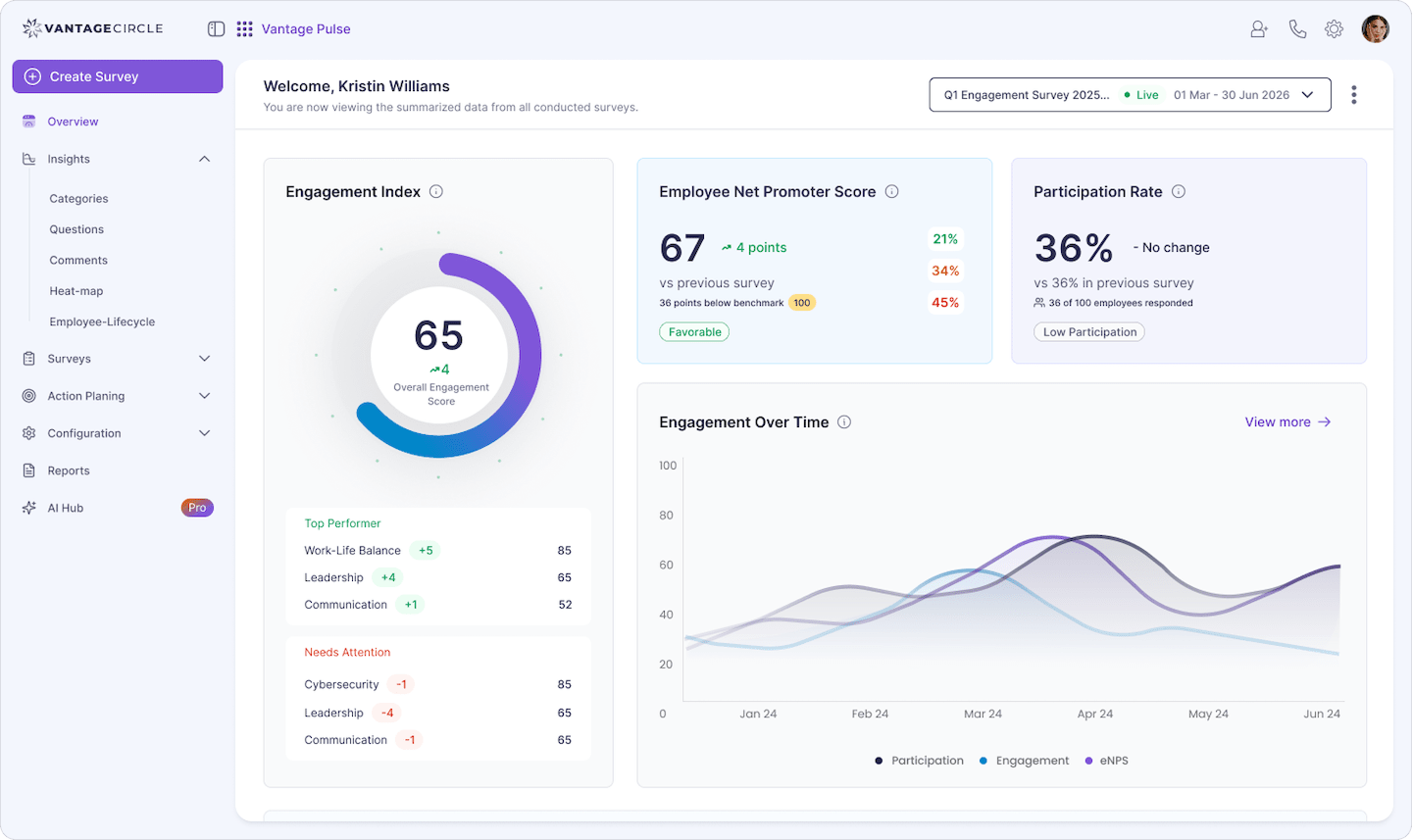
It’s good practice to conduct frequent employee pulse surveys. With the help of employee surveys, you can establish a systematic method of tracking progress.
Employee pulse surveys allow you to,
- Track progress over time
- Provide insights into the effectiveness of feedforward
- Identify trends or pattern that may emerge
A continuous feedback loop will empower you to make timely adjustments. It will also ensure that your feedforward practices remain relevant and impactful. establish a systematic method for tracking progress over time.
7. Focus on Continuous Improvements
Feedforward is an ongoing and dynamic process. You’ve to promote a mindset of continuous improvement when implementing feedforward. Empower your employees to experiment with new ideas. It will inspire them to optimize their feedforward practices.
8. Celebrate Progress
It’s important to recognize the efforts of your employees who’ve truly embraced feedforward. You’ll be able to reinforce the value of feedforward by celebrating milestones with your employees.
It will also inspire your employees to keep pushing forward and continue learning.
These were some of the best practices to implement feedforward in your organization.
Embed Feedforward into Recognition
Implementing feedforward is one thing. But sustaining it? That requires your recognition culture to actively support it.
Most HR leaders treat recognition and feedforward as separate conversations. One happens at the end of a project, the other happens during a performance cycle. But when you bring them together, the impact compounds.
Here is what your recognition platform should support to make feedforward a living part of your culture.
Real-Time Listening with Pulse Surveys
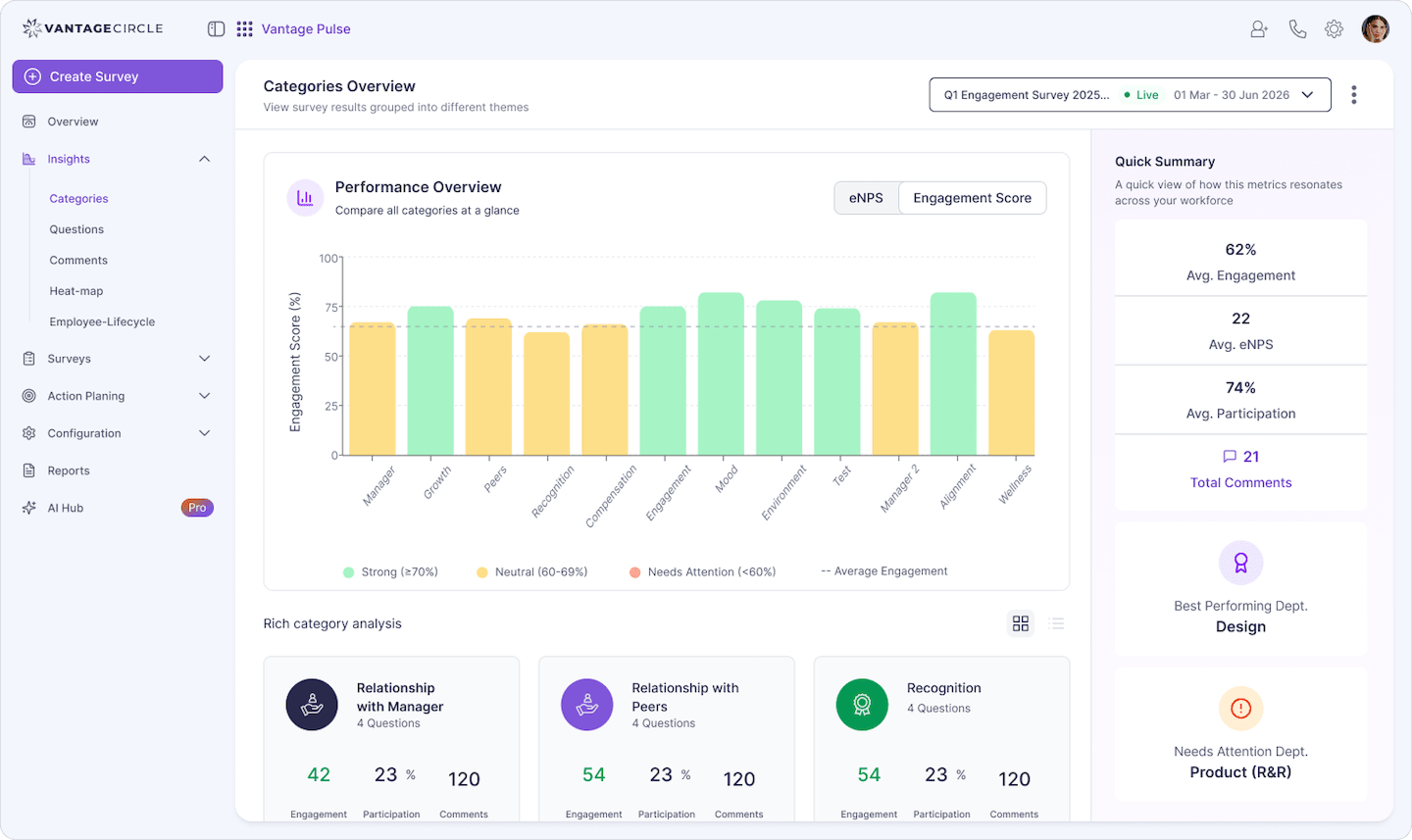
You cannot guide employees toward better performance if you do not know how they are feeling right now. That is where employee pulse surveys come in.
A platform like Vantage Pulse helps HR teams collect continuous sentiment data across teams and departments. Instead of waiting for the annual engagement survey, you get real-time signals that tell you where feedforward conversations need to happen most.
When managers can see engagement trends as they shift, they can act early. They can initiate growth conversations before disengagement sets in, not after.
Peer Recognition that Reinforces Forward Momentum
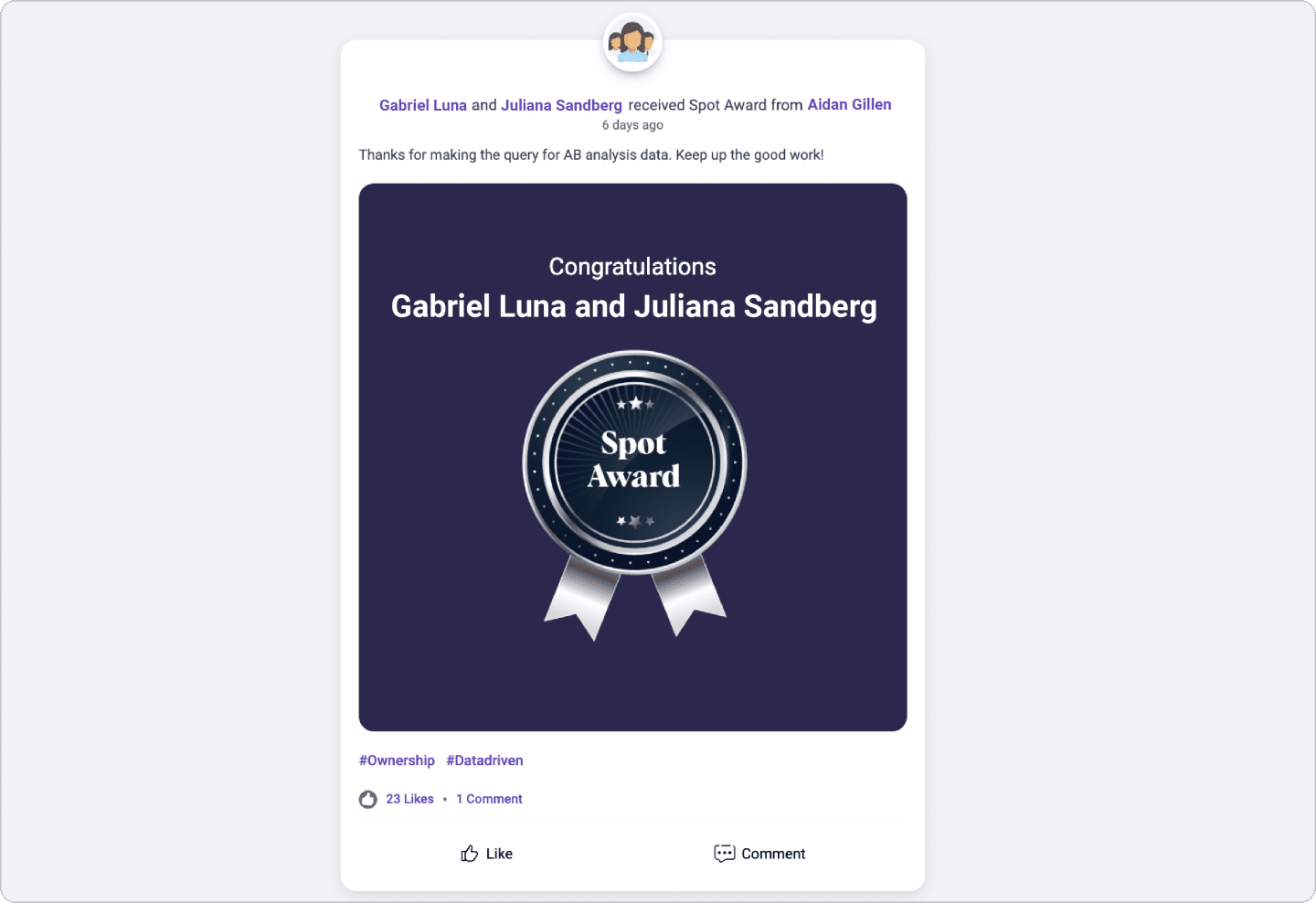 Source: Vantage Recognition
Feedforward only sticks when it is reinforced. And one of the most powerful ways to reinforce it is through peer recognition.
When a colleague acknowledges the effort someone made to grow or try something new, it signals that the behavior is valued. It motivates employees to keep going.
According to Gallup, 9% of employees said their most meaningful recognition came from peers.
That kind of momentum is exactly what a feedforward culture needs. Recognition should not just celebrate outcomes. It should celebrate the effort to improve.
Campaign Management to Keep the Culture Alive
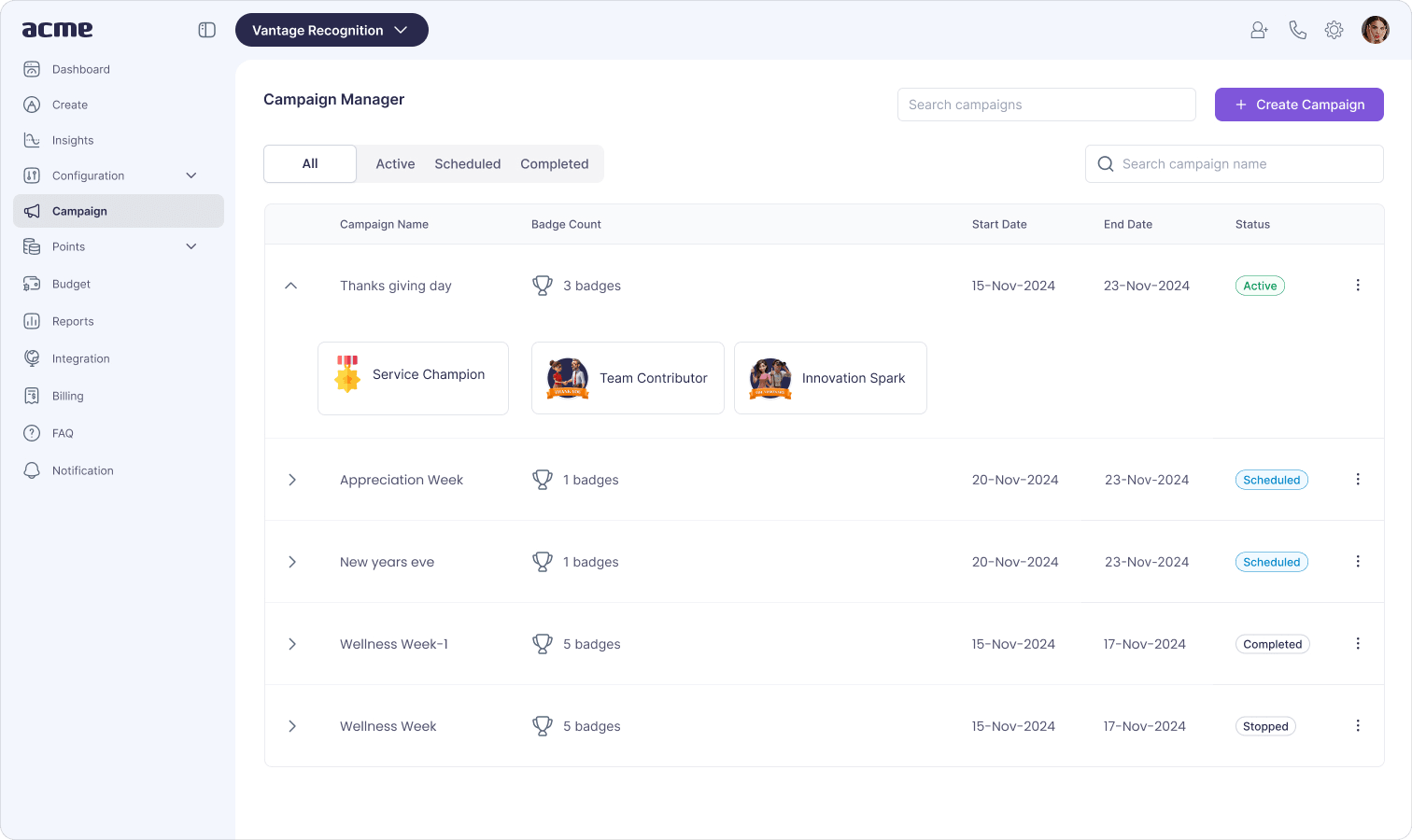
A single feedforward initiative rarely changes a culture. What changes culture is consistency.
With Campaign Management, HR teams can design and roll out recognition campaigns that are tied to specific growth behaviors. No matter, if it is onboarding a new cohort, supporting a team through a transformation, or embedding a new leadership behavior, campaigns create a structured rhythm for recognition and feedforward to coexist.
You can nudge managers to recognize feedforward moments, celebrate employees who have acted on development suggestions, and keep the energy around continuous improvement visible across the organization.
When recognition is programmatic and purposeful, feedforward stops being a one-off conversation and becomes part of how your organization operates every day.
How to Give Feedforward: A 5-Step Guide for Managers
Knowing the value of feedforward is one thing. Knowing how to deliver it well is another. Most managers default to pointing out what went wrong because that is what they were trained to do. Feedforward asks you to flip the script to look at the person in front of you and ask, what can they do better next time?
Here is a practical five-step approach any manager can follow.
Step 1: Choose the Right Moment
Feedforward works best when the conversation is timely and the employee is in a receptive headspace. Do not wait for a formal review cycle. Instead, initiate the conversation close to the moment after a presentation, at the end of a project sprint, or during a regular one-on-one meeting.
The goal is to make the conversation feel natural, not corrective. When employees know feedforward is part of how you work together, they stop bracing for criticism and start leaning into the conversation.
Manager example: After a team call where a direct report struggled to get buy-in from stakeholders, the manager schedules a brief check-in the same afternoon. They open with, "I want to share a couple of thoughts on today's call that I think could help you land that message even stronger next time."
Step 2: Focus on One or Two Specific Behaviors
Overwhelming someone with five areas to improve is not feedforward, it is just a longer version of feedback. Effective feedforward is precise. Pick one or two specific behaviors that, if shifted, would have the most impact on future performance.
Specificity also signals that you have been paying attention. It shows the employee that your observation is grounded in what actually happened, not a general impression.
Manager example: Instead of saying "you need to communicate better," a manager says, "Next time you present a proposal, try opening with the business case before diving into the details. It will help the leadership team connect with the idea faster."
Step 3: Frame It as a Suggestion, Not a Verdict
The language you use matters enormously. Feedforward should feel like coaching, not criticism. Use phrases like "one thing that could help," "something worth trying," or "I've seen this work well in similar situations." This framing keeps the employee in a growth mindset rather than a defensive one.
It also positions you as a partner in their development, not an evaluator passing judgment on their performance.
Manager example: A manager notices a team lead interrupting colleagues during brainstorms. Rather than flagging it as a problem, they say, "Something that might open up more ideas in those sessions, try holding your thoughts until everyone has shared. It tends to bring out perspectives you wouldn't have heard otherwise."
Step 4: Invite a Response
Feedforward is not a monologue. After sharing your suggestion, pause and ask the employee how it lands. Do they see what you see? Do they have a different read on the situation? Is there a constraint you are not aware of that makes the suggestion harder to act on?
This step is what separates feedforward from advice-giving. It turns the conversation into a dialogue and gives the employee agency in their own development. Two-way communication is what makes growth stick.
Manager example: After offering a suggestion on how to handle a difficult client conversation differently, the manager asks, "Does that feel doable given how that client usually responds? Is there anything I can help you think through before the next call?"
Step 5: Follow Up and Recognize the Effort
Feedforward without follow-up is just a suggestion that gets forgotten. Close the loop in your next one-on-one. Reference what you discussed, ask how it went, and crucially recognize when you see the employee trying something new.
Recognition does not have to be formal. A simple acknowledgment that you noticed the effort carries real weight. When employees feel seen for trying, they keep trying.
Manager example: Two weeks after the conversation, the manager opens their one-on-one with, "I noticed you opened the last stakeholder presentation with the business impact right upfront. That was exactly the shift we talked about, it made a real difference. How did it feel from your side?"
Looking for a platform that helps managers deliver timely recognition alongside feedforward conversations? Vantage Rewards makes it easy to spot and celebrate growth moments as they happen.
Conclusion
Ultimately, the decision between feedback vs feedforward depends on the objectives of the feedback exchange. And the preferences of the employees involved. Adopting an approach that has the elements of both is the way forward.

This article is written by Sanjeevani Saikia. Sanjeevani Saikia is a Senior Content Strategist at Vantage Circle, where she leads end-to-end content strategy across SEO, thought leadership, brand storytelling, podcasts, and video. She is also the face behind the Vantage Influencers Podcast. Through this platform, she engages with industry leaders from leading organisations across the globe, including Fortune 500 companies.
Connect with Sanjeevani on LinkedIn.


