Best HCM Software: My Top 15 Picks in 2026

Vantage Circle
A Global Employee Engagement Platform

Introduction
Humans are complex, each with needs, emotions, and motivations. Balancing organizational goals, individual growth, and team dynamics requires thoughtful consideration. As HR professionals navigate this complexity, they play a crucial role in fostering an engaged and productive workplace.
Human Capital Management (HCM) Software helps HR professionals handle everything related to employees in a company. It’s like having a digital assistant to manage people at work.
What is HCM Software?
Human Capital Management (HCM) Software is a strategic digital tool that assists HRs in managing and driving an organization’s HR practices and processes, thereby maximizing the value of human resources. At its core, HCM Software helps in the comprehensive management of employees throughout their entire organizational lifecycle.
HCM Features
So, what are the vital cogs of robust Human Capital Management Software? Some of the essential features of an HCM are:
Employee Database : A centralized repository for employee information, including personal details, work history, and contact information.
Payroll Management : Automated payroll processing to ensure accurate and timely compensation.
Applicant Tracking System (ATS) : Streamlines recruitment by managing job postings, candidate applications, and communication.
Onboarding Tools : Facilitates the smooth integration of new hires into the organization by providing necessary information and documentation.
Performance Management : Conducts regular performance evaluations and provides a platform for feedback and development planning.
Training Management : Tracks employee training needs, schedules, and completion status.
Compensation Planning : Helps design and manage salary structures, bonuses, and other forms of compensation.
Benefits Administration : Manages employee benefits, such as health insurance, retirement plans, and other perks.
Workforce Analytics : Helps collect data about the workforce, analyze them, and transform those into insights on workforce trends.
Self-Service Portals : This enables employees to access and update their personal information, view pay stubs, and manage benefits.
Mobile Accessibility : Provides mobile access to essential HR functions, allowing employees and managers to perform tasks on the go.
List of Top 15 HCM Software in 2026
Rippling : Best to automate administrative HR tasks
BambooHR : Best for streamlining HR processes
Deel : Best for simplifying global hiring, contracts, and payments for remote teams
Paycor : Best for intuitive AI and customer-focused innovation
SageHR : Best for simplifying HR processes and enhancing employee experiences
Paycom : Best for innovative cloud-based solutions and corporate well-being
ADP Workforce Now : Best for robust HR & payroll software with several features
Workday : Best comprehensive HR tools with a focus on CFO and CHRO needs
UKG Pro : Best AI-driven platform with customizable dashboards
Ceridian Dayforce : Best for HR and payroll management with a unified platform
Paylocity : Best for fostering a people-first culture with simplified HR solutions
Paychex Flex : Best for streamlining payroll and customized plans
isolved : Best for providing end-to-end HR and payroll solutions for businesses
SAP SuccessFactors : Best for talent management and workforce analytics
Oracle Cloud HCM : Best for integrations with HR, payroll, and analytics
Choosing the Best HCM Software
To finalize the 15 Best Human Capital Management Software, we conducted an exhaustive analysis of the best-known HCM platforms, collected insights from platform demos, gathered feedback from HRs, and then scored the contenders across 4 parameters, namely Standout Features, Reputation, Ease of Use, and User Reviews.
Here’s a detailed breakdown of the factors considered:
Standout Features
We looked at the range of features available on a platform without any additional integration. We also reviewed each platform for the functionality of its top features. In addition, we considered features that are unique to a platform.
Reputation
We considered the ranking and awards received by a product on platforms such as G2, SHRM, and Capterra. We also considered factors such as the intent & frequency of mentions of a product on relevant platforms (e.g., LinkedIn) by HR Leaders.
Ease of Use
To gauge Ease of Use, we analyzed a platform’s features and navigability across devices, reviewed if they had mobile apps for both iOS and Android users, and gathered feedback on their platform training program.
User Reviews
To gauge customer sentiment and understand what users liked and disliked in specific products, we analyzed customer ratings and reviews of each product from 3rd party review sites such as G2 and Capterra.
Expert Score
We also leveraged our expertise in the HR domain to identify the top platforms in the industry. We structured our judgment around additional considerations such as reputation, ease of use, value for money, customer support, and information security, which were clubbed together as an expert score.
Detailed Review of the Top HCM Software
Rippling
Why Rippling
Rippling offers a comprehensive suite of features to manage HR, IT, and finance - all under one roof. Its benefits administrator platform takes human capital management to a new level by automating open enrollment and new hires. Rippling can handle both small and large group benefits plans.
With Rippling’s HR Cloud, businesses can connect and automate every step of an employee life cycle, starting from Headcount Planning, Job Posting/Recruiting, Benefits Enrollment, Training/Learning Management, Goal Setting/Performance Reviews, Payroll Solutions to Pulse Surveys. It acts as a unified hub, eliminating the need for multiple disconnected systems and streamlining administrative tasks.

Best For: SMEs
Standout Features
All-in-one Platform for HR, IT, & Finance
Global Payroll
Integration Capabilities
Exclusive Features for Remote Employees
Extensive Customization
Benefits Administration

- It offers seamless payroll management, including global payroll capabilities.
- The platform has a great user interface and is easy to navigate.
Customer Reviews
“I find it very easy to navigate the platform. I use it both as an employee and a broker. It requires little to no training to understand and navigate through it.” (Source: G2)

- While it offers value, its pricing structure may not be suitable for all types of businesses.
- Rippling’s extensive features may require time to learn and fully utilize as well as requires improvement in the reporting features.
Customer Reviews
“Producing report inside of Rippling is one of those tasks that I find to be extremely difficult” (Source: GetApp)
Clientele
- DocuSign
- Superhuman
- Bottle Coffee
- Instacart
- Amplitude
- Chess.com
Pricing

Bamboo HR
Why BambooHR
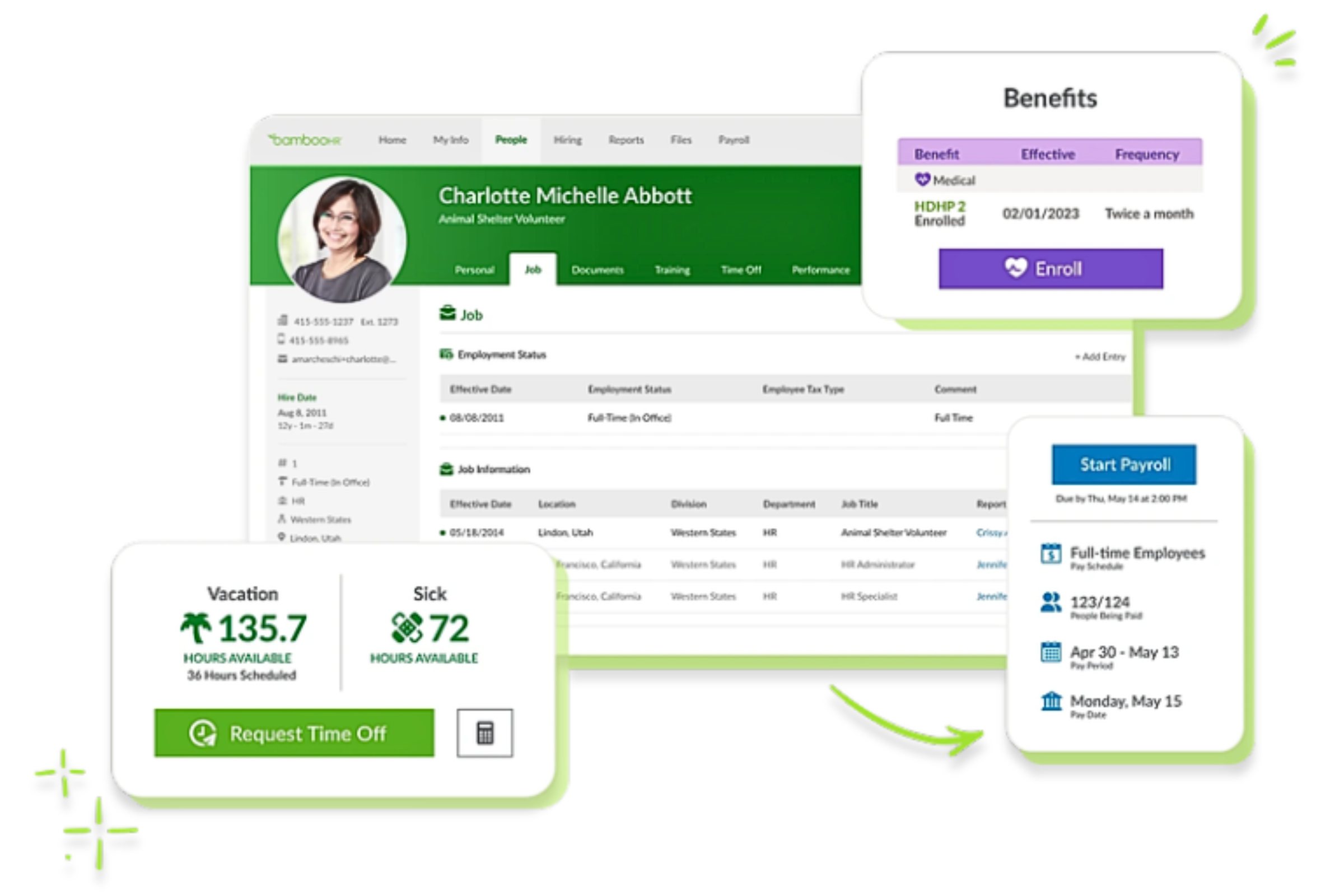
BambooHR excels in managing core HR processes. Its intuitive interface and robust features empower HR professionals to efficiently handle various tasks. From employee onboarding to performance management, BambooHR covers it all.
It simplifies personnel data management, ensuring accurate records and seamless organization charting. Easy to navigate, the platform optimizes tasks such as managing leave requests, tracking time off, or handling benefits administration, reducing administrative burden.
Best For: SMEs
Standout Features
Automated Approval Workflows
Offboarding Features
Centralized Employee Database
Tracking And Managing Performance
ATS
Employee Satisfaction Surveys
- It offers comprehensive features inclusive of essential HR management tools.
- It is cost-effective for SMBs as compared to businesses of other sizes
Customer Reviews
“We found BambooHR a pleasant experience and at a very cost-effective price” (Source: G2)
- The platform could provide more customization abilities improving employee satisfaction
- There is no built-in benefits administration for employees
Customer Reviews
“While BambooHR allows some degree of customization, organizations with highly unique or specialized HR processes may find the level of customization limiting.” (Source: G2)
Clientele
- Airbnb
- Change.org
- Jacksonville Jaguars
- Zendesk
- Fitbit
Pricing
Deel
Why Deel
Deel simplifies international HR tasks like payroll, compliance, and benefits, making it ideal for companies expanding globally or hiring international talent. Its cloud-based platform enables rapid onboarding and seamless team scaling, perfect for fast-growing startups or dynamic businesses. Features like localized contracts, multi-currency payments, and a global benefits marketplace offer unique value propositions.
Compared to setting up local entities or using traditional payroll providers for international employees, Deel can be more cost-effective in the long run and create a smoother and more positive experience for your global workforce by streamlining onboarding, payroll, and benefits.

Best For: SMEs
Standout Features
Contractor Management
Multi-currency Payments
Global Benefits Marketplace
Built-in Compliance
Expense Management
Tax Reporting
- The platform has simplified HR processes with automation saving time.
- It offers strong customer support to its users.
Customer Review
“It's clear that Deel goes above and beyond to support its users in real, tangible ways” (Source: G2)
- The platform needs to improve its flexibility in terms of compliance.
- The customer support team can do better with their knowledge and responsiveness.
Customer Review
“The support team has 3-4 texts and can’t help with simple requests. When they escalate my questions, I receive the same standard messages.” (Source: Capterra)
Notable Clients
- Shopify
- Nike
- Cloudflare
- Intercom
- Upwork
- Gitlab
Pricing
Paycor
Why Paycor
Paycor's software is designed to empower leaders to build winning teams. They offer a variety of tools and resources to help leaders develop their employees, improve employee engagement, and create a positive work culture.
Paycor offers industry-specific solutions tailored to the unique needs of businesses in different industries. It also provides excellent customer service across various support options, including phone, email, and live chat.

Best For: Companies of all sizes
Standout Features
Robust Payroll Solution
Employee Self-Service Portal
Multiple Pricing Tiers
Strong Learning Management System
Advanced Reporting & Analytics
All-in-one Platform
- Paycor offers advanced reporting & analytics capabilities.
- It is also an all-in-one platform for all HR management needs with extensive features.
Customer Review
“We love that Paycor has so many features- payroll, performance management, pulse surveys, learning management system, recognition and company news, just to name a few.” (Source: G2)
- It is relatively costlier than other competitor platforms in the market.
- The platform supports limited customization and slow customer service.
Customer Review
“Sometimes, it takes a little while to get a response from customer service.” (Source: G2)
Notable Clients
- Wendy’s
- McDonald’s
- Detroit Zoo
- The Cincinnati Bengals
- The YMCA
- ACMS
Pricing

Sage HR
Why SageHR
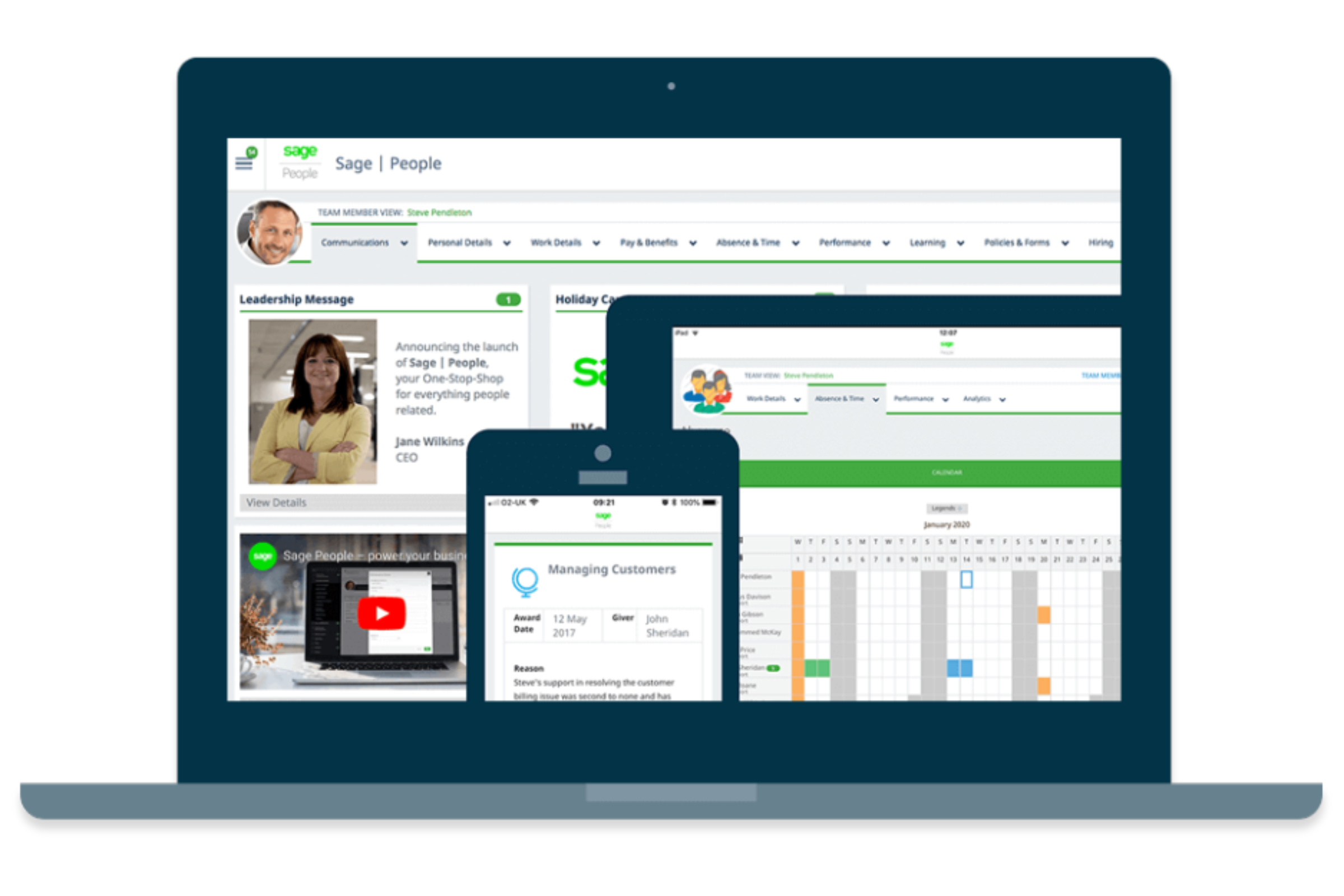
SageHR is a great option for SMBs seeking a user-friendly, scalable, and feature-rich HCM solution. Its intuitive interface and mobile accessibility make it easy for HR professionals and employees to use. It provides its customers with options to choose modules they need without paying for unnecessary features, making it cost-effective for smaller businesses.
Additionally, it adapts to accommodate growth as companies expand and offers multiple channels for support, including phone, email, and live chat. Besides, it boasts nearly a 100% customer renewal rate, indicating a positive user experience.
Best For: SMEs
Standout Features
Talent Management Tools
Compliance Support
Expense Management
Integrations
Performance Management
Shift Scheduling
- The platform has a user-friendly interface enabling a short learning curve.
- It also provides a modular approach to pricing tiers allowing flexibility to users.
Customer Review
“I really liked the choice of price points, depending on the needs of your business. The user interface is also intuitive” (Source: Capterra)
- Sage is comparatively costly than its competitors in the market.
- It offers limited mobile app capabilities leaving users looking forward to more features being incorporated.
Customer Review
“I wish time sheets were available on mobile” (Source:Capterra)
Notable Clients
- Domino's Pizza
- New Look
- Goodyear Tire & Rubber Company
- The AA
- Amadeus Hospitality Group
- Schneider Electric
Pricing
Paycom
Why Paycom
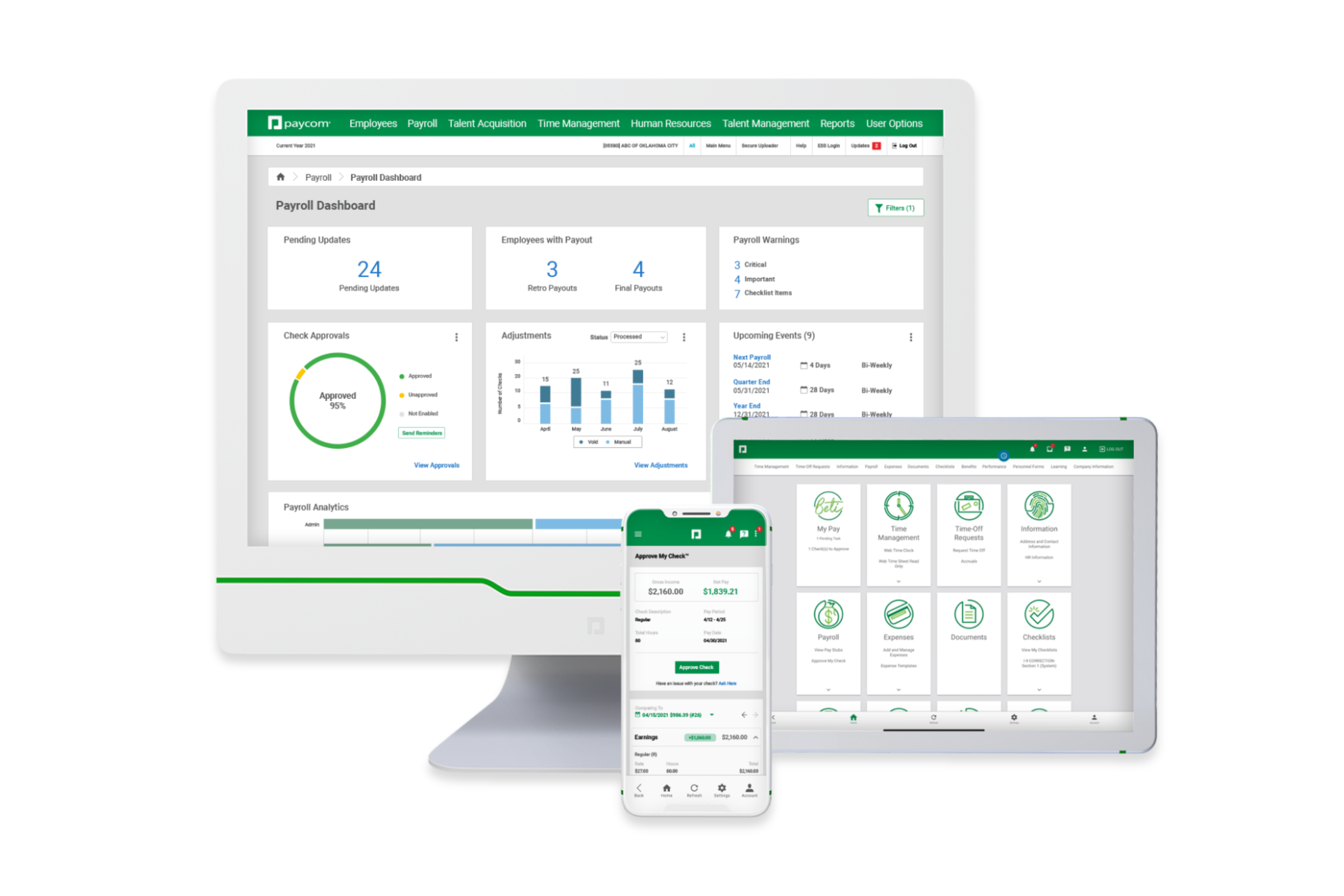
Paycom is a comprehensive HR solution that prioritizes employee experience and data-driven decision-making. It offers a broad range of functionalities, from payroll and timekeeping to advanced talent management tools, such as performance reviews and learning management.
Paycom offers a user-friendly interface that is intuitive for HR professionals and employees. Furthermore, the self-service portal gives employees control over their HR information and tasks. In a nutshell, Paycom tackles everything from payroll and timekeeping to talent acquisition, performance reviews, and employee benefits.
Best For: Medium-sized companies
Standout Features
Paycom Labs
Employee Recognition Programs
Performance Management
Succession Planning
Vault Visa Payroll Card
Time And Labour Tracking
- The platform allows mobile accessibility for both Android and iOS users.
- It also helps HR professionals with automation of tasks and saves a lot of time.
Customer Review
“We like that we are able to do all the onboarding within the system, so we no longer need to enter the information manually, saves a lot of time.” (Source: Capterra)
- The platform has limited third-party integrations that limit the system’s flexibility.
- It can improve on customer service to support users on advanced features that might require additional training.
Customer Review
“Paycom is so customizable that representatives are unfamiliar with how their own software works or how changing one setting will impact other settings” (Source: Capterra)
Notable Clients
- Southwest Airlines
- Zoom Video Communications
- Hilton
- Worldwide Holdings
- Toyota Motor North America
- Red Lobster
Pricing
ADP
Why ADP
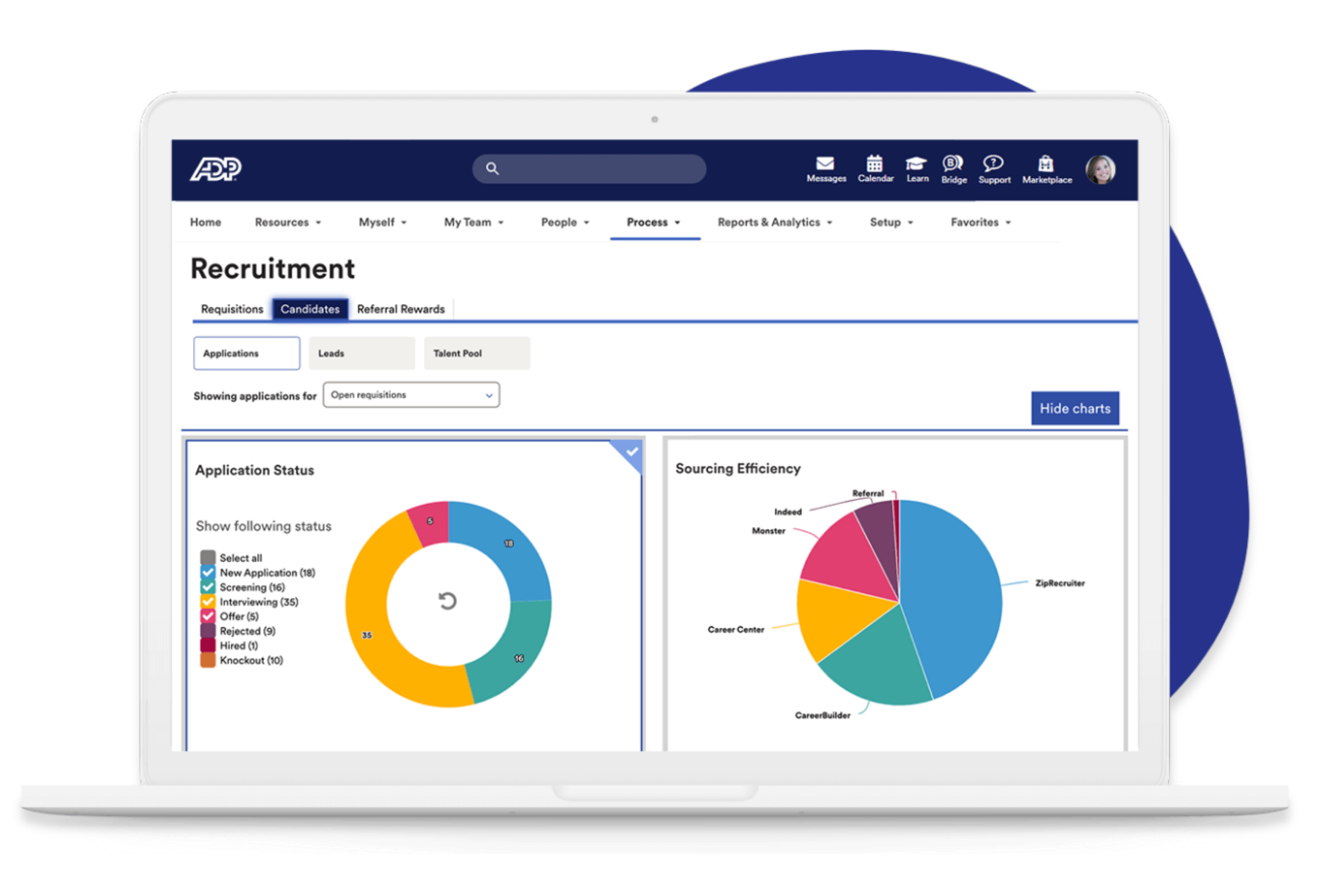
ADP offers a one-stop shop for all HR and payroll needs, from basic payroll processing to sophisticated talent management tools. This eliminates the need to manage multiple vendors and streamlines HR processes. Its customizable dashboards empower users to tailor their experience, ensuring efficient task execution.
ADP prioritizes data security and compliance with complex regulations, giving employers peace of mind. The software also integrates with other HR business applications, allowing organizations to create a cohesive ecosystem for managing their workforce.
Best For: Mid-sized to Large Companies
Standout Features
Automated Payroll Processing
HR & Talent Management
Employee Self-Service
Benefits Administration
Time & Attendance Tracking
Analytics & Reporting
- The mobile app works well and streamlines HR processes saving time.
- The platform provides quick and responsive customer service.
Customer Review
“The support team is knowledgeable and responsive, always providing quick and effective solutions to any issues or questions we have encountered” (Source: Capterra)
- The platform is relatively expensive for small businesses as they might not need as many features as provided.
- Not all features come across as easy to understand if you are not an experienced HR professional.
Customer Review
“The software provides a range of reporting options, but navigating and creating custom reports can be challenging for users who are not experienced in HR management.” (Source: Capterra)
Notable Clients
- Microsoft
- Walmart
- Johnson & Johnson
- Pfizer
- JPMorgan Chase
Pricing
Workday
Why Workday
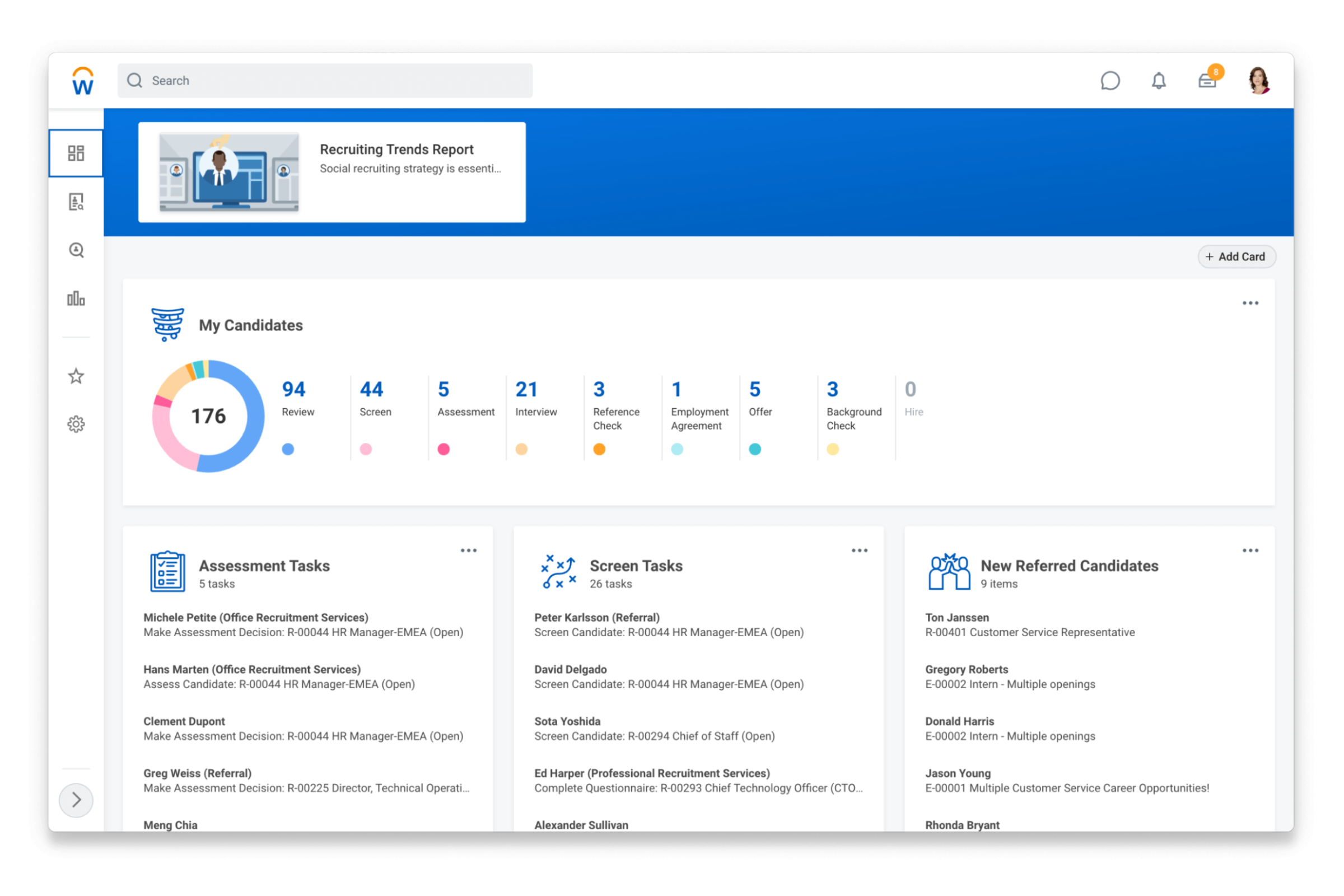
Workday centralizes all HR functions and data onto a single platform, eliminating data silos and simplifying workflows. This leads to improved efficiency, transparency, and decision-making in the organization.
The platform is flexible and adapts to the needs of organizations of all sizes. Its modular architecture allows organizations to tailor their solution and scale up or down as needed. The platform is a great fit for enterprises and boasts a large and diverse customer base, including many Fortune 500 companies.
Best For: Medium to Large Enterprises
Standout Features
Global Workforce Management
Social Collaboration
Complete Worker and Skills Profile Management
Flexible Organizational Structures and Modeling
Agile Compensation Management
Central Administration of Benefits
- Workday provides reliable data analytics, helping HR professionals with better workforce management.
- The platform can be praised for its intuitive user interface and layout of the worklets.
Customer Review
“As an avid user, I have found Workday to be a robust and user-friendly tool that significantly enhances organizational efficiency.” (Source: Capterra)
- The implementation process of the platform is quite long, and it may take up to a few months' time.
- The platform is expensive, especially with their additional charges for regular updates.
Customer Review
“Implementation was sticky for us. We had a number of requirements which we thought were typical; however had to create significant workarounds in order to meet our needs” (Source: Capterra)
Notable Clients
- PWC
- Thompson Reuters
- Hewlett Packard
- Shutterstock
- Samsung
- UNICEF
Pricing
UKG Pro
Why UKG Pro
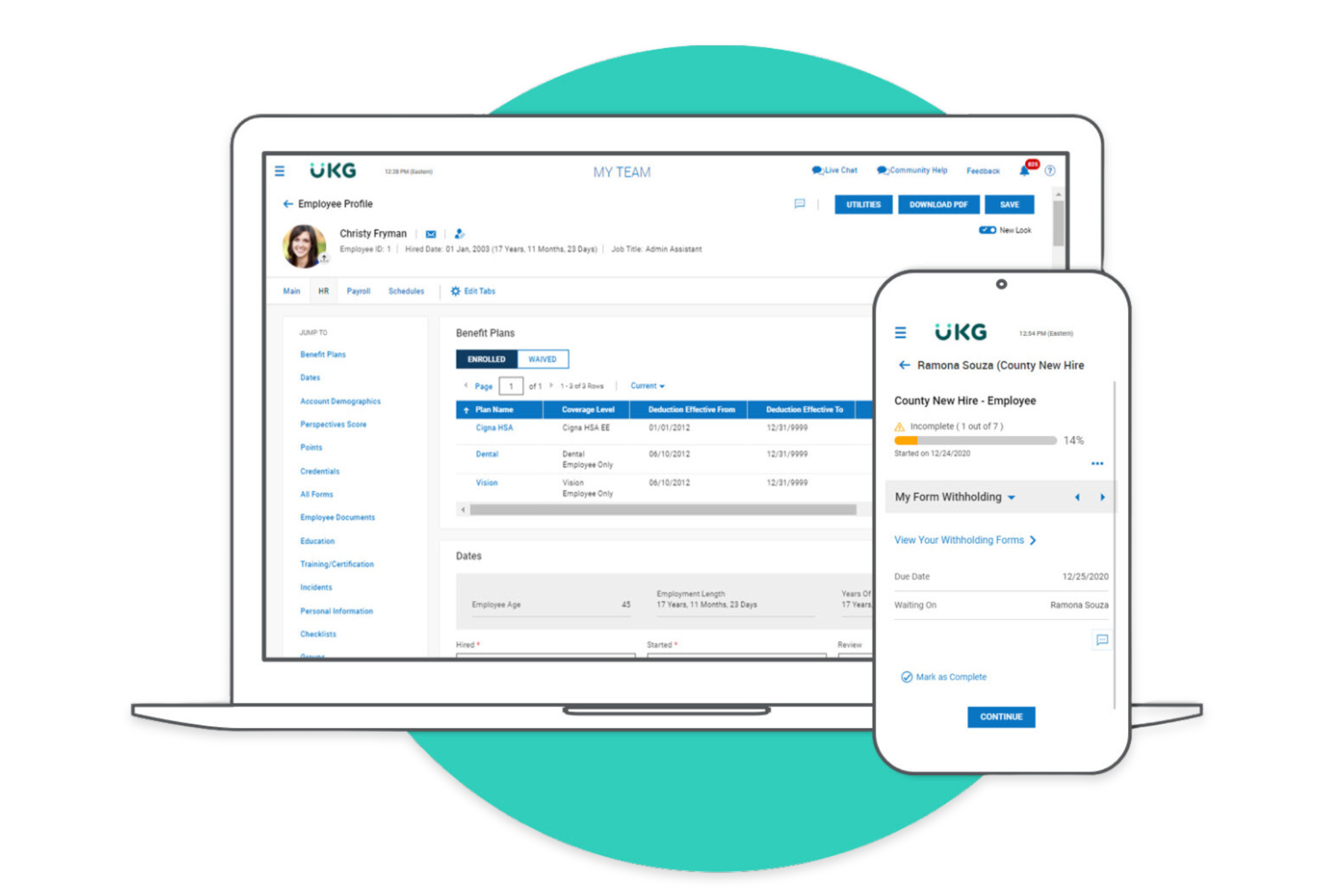
UKG Pro offers a powerful suite of HCM solutions that cover every aspect of HR, Payroll, Time and attendance, L&D, Talent Management, and more. It offers a robust compliance platform that ensures businesses stay on top of legislative updates. It covers various areas, including payroll, EEOC, and recruitment practices.
Businesses with complex HR and compliance requirements can go ahead with UKG Pro, as its built-in expertise and robust features help navigate intricate regulations and ensure compliance, reducing risks and penalties.
Best For: Mid-sized to Large Enterprises
Standout Features
Comprehensive Functionality
Personalized Employee Experience
Learning & Development
AI-powered features like Automated Workflows
Predictive Analytics
Customized Reports
- It is good with its integrations and automation as well as efficiency.
- The platform provides an easy user-interface built with several options to customize the same.
Customer Review
“I like the customization that UKG allows and provides in order to fit the needs of the business.” (Source: G2)
- The platform’s performance is sometimes slow, especially with user logins.
- It is relatively costly for smaller businesses with a budget.
Customer Review
“It is expensive; especially for smaller businesses. This includes both the initial implementation cost and the ongoing subscription fees” (Source: G2)
Notable Clients
- Crocs
- Waste Management, Inc
- Feeding America
- MGM Grand
- The Salvation Army
- Aramark
Pricing
Dayforce
Why Ceridian Dayforce
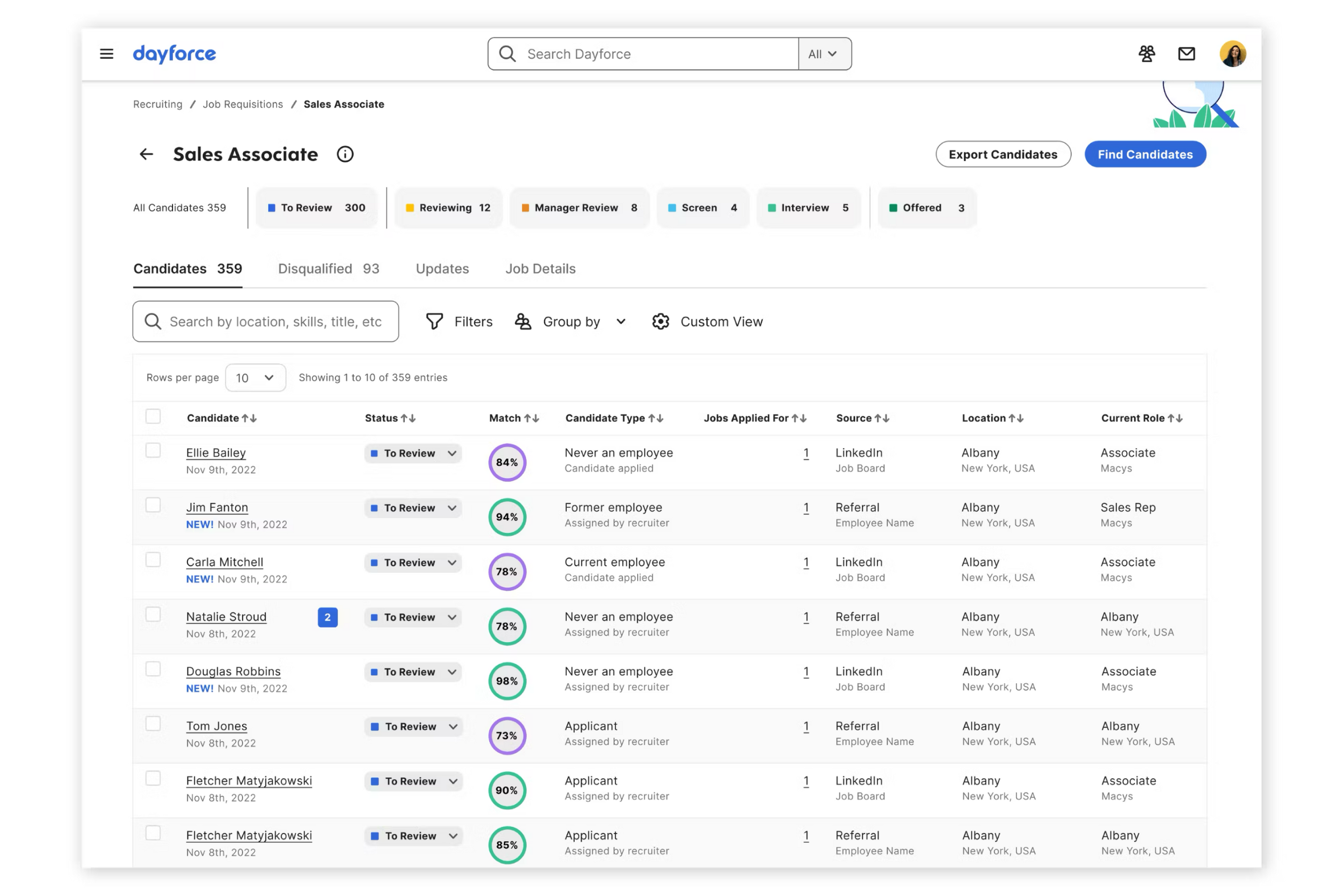
Ceridian Dayforce is a versatile platform that provides an all-in-one HCM suite along with real-time data and insights. It empowers employees with ESS and mobile accessibility. Besides, unique features like Dayforce Wallet - which offers early wage access to employees, and Workforce Forecasting - that leverages AI and predictive analytics to optimize scheduling and anticipating staffing needs, add to Ceridian’s versatility.
Dayforce combines human resources, payroll, benefits, workforce management, talent management, and analytics into a unified system and is well-suited for organizations with geographically dispersed workforces, and industries with complex compliance requirements.
Best For: Mid-sized to Large Companies
Standout Features
Dayforce Wallet
Workforce Forecasting
Performance Management
Learning Management System
Succession Planning
Industry Specific Plans
- Dayforce is fully integrated and offers real-time data.
- The platform has an intuitive user interface, and the features are easy to use.
Customer Review
“I like that the system is very intuitive and has many modules that we use and connect.” (Source: Capterra)
- Ceridian could improve the pricing of its products and offerings.
- The implementation process is tedious and complicated.
Customer Review
“The implementation time might be cut in half with better onboarding materials.” (Source: Capterra)
Notable Clients
- Gannett
- Costa Coffee
- Spirit Aerosystems
- OTG
- Danone
- FedEx
Pricing

Paylocity
Why Paylocity
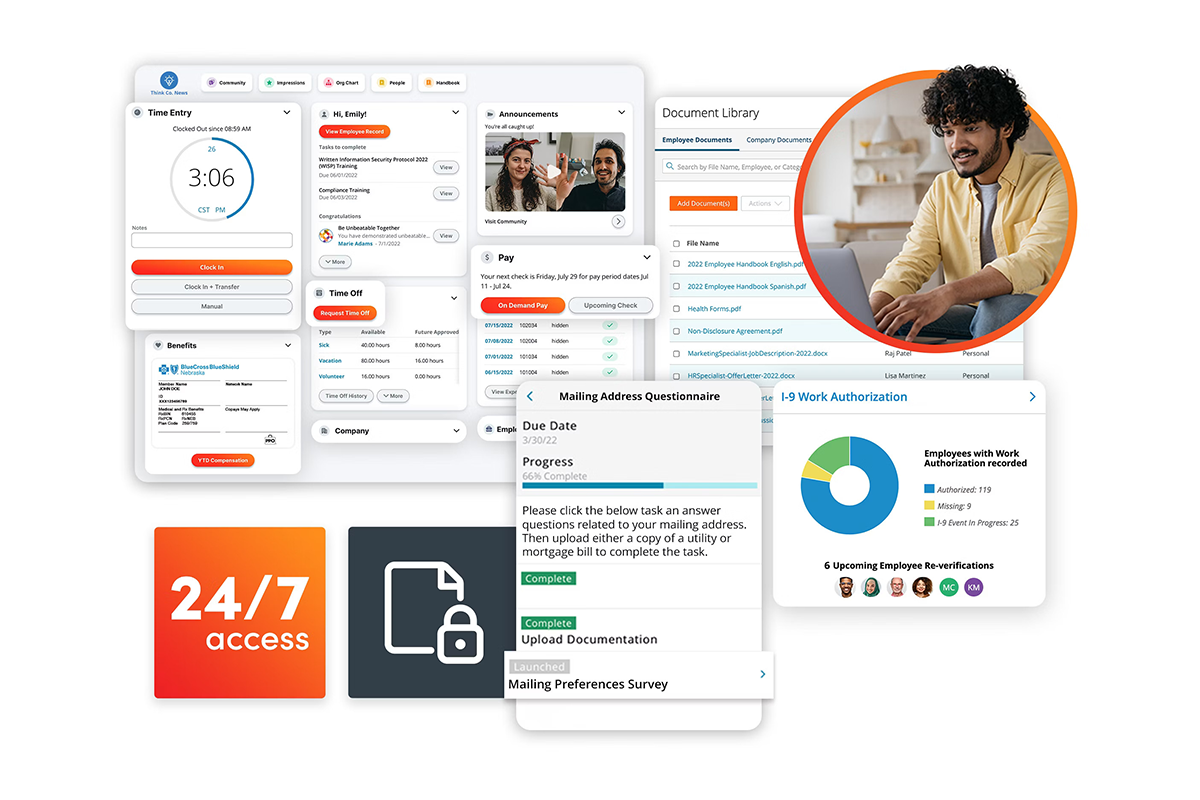
Paylocity is a cloud-based Human Resource (HR) and Payroll software provider that caters to businesses of all sizes. Their platform combines payroll, HR, and benefits administration into a user-friendly interface to streamline HR and payroll processes, automate tasks, and improve employee experience.
Paylocity is a great fit for businesses with complex payroll needs, technology-savvy companies, and growing businesses, as Paylocity's scalability and comprehensive features can easily accommodate the needs of companies experiencing rapid growth. Its automation tools and streamlined processes can help manage the increasing workload, reducing errors and saving time.
Best For: SMEs
Standout Features
All-in-One Suite
Employee Experience Focused
Dynamic Recruiting
Modular Design
Expense Management
Employee Feedback and Pulse Surveys
- The platform offers a user-friendly interface.
- The mobile app provides most of the features from the platform.
Customer Review
“We love the mobile capability for our team. Most features are accessible from smartphones, which helps our technicians in the field” (Source: Capterra)
- The platform is expensive for small businesses or those with limited HR needs.
- It offers limited flexibility and customization options.
Customer Review
“There are limited options when it comes to customizations.” (Source: G2)
Notable Clients
- Twilio
- DocuSign
- Levi Strauss & Co.
- Citizens Financial Group
- University of Southern California
- Lewis, Inc.
Pricing
Paychex
Why Paychex Flex HCM
Paychex Flex HCM offers a strong package for businesses looking for a comprehensive, user-friendly, and scalable HCM solution. It aims to streamline business operations by providing a central hub for managing employees, from onboarding to offboarding.
The platform offers a user-friendly interface and intuitive design, making it easy for employees and managers of all levels to navigate and utilize its features. It also helps businesses comply with ever-changing regulations by providing regular updates and automated features. This reduces the risk of penalties and fines. Additionally, it offers excellent customer support and strong integration capabilities.

Best For: SMEs
Standout Features
Time And Attendance Tracking
Employee Self-Service Portal
Benefits Administration
HR Reporting and Analytics
Mobile App
Employee Screening Package
- It provides a comprehensive set of features for most of the management needs.
- The platform provides easy customizations according to the needs of the business.
Customer Review
“It is so customizable to each employee and different groups” (Source: G2)
- The platform offers features that are complex and needs support to understand.
- Certain features of the platform are hard to use compared to other HCM software.
Customer Review
“The system is hard to use. Neither the system nor the training received from the implementation team helped the administrator to make minimal employee information changes” (Source: Capterra)
Notable Clients
- Dell Technologies
- Motorola Solutions
- Viacom CBS
- Bank of America
- Catholic Health Initiatives
- Wells Fargo
Pricing
isolved
Why isolved HCM
isolved HCM is a cloud-based human capital management (HCM) software suite that helps businesses of all sizes manage their employees from hiring to retirement. It includes a complete set of HR, payroll, benefits, and workforce management modules that can be used together or separately.
It is easy for HR professionals and employees at all levels to navigate. It covers HR, payroll, benefits, and workforce management in one platform. It is scalable, catering to the business needs of organizations of all sizes, and is affordably priced.

Best For: Companies of all sizes
Standout Features
All-in-One Solution
Mobile Access
Improved Employee Experience
Talent Management
Performance Management
350+ Built-in Integrations
- isolved is good in terms of customizations.
- The payroll software it provides is easy to use and mostly preferred by businesses.
Customer Review
“We love using isolved to process our payrolls. It's super easy. The system is easy to navigate and find what you're looking for as well as find help articles when needed.” (Source: Capterra)
- It offers limited reporting capabilities.
- Customer service from isolved needs better responsiveness and time management.
Customer Review
“One thing that I would say that has been an issue is the time zone differences between available support team members and me.” (Source: Capterra)
Notable Clients
- Barreto
- Brown & Brown
- CCS Technology Group
- Johnson Drug Company
- Levi Strauss & Co.
- Yamaha Corporation of America
Pricing
SAP SuccessFactors
Why SAP SuccessFactors HCM
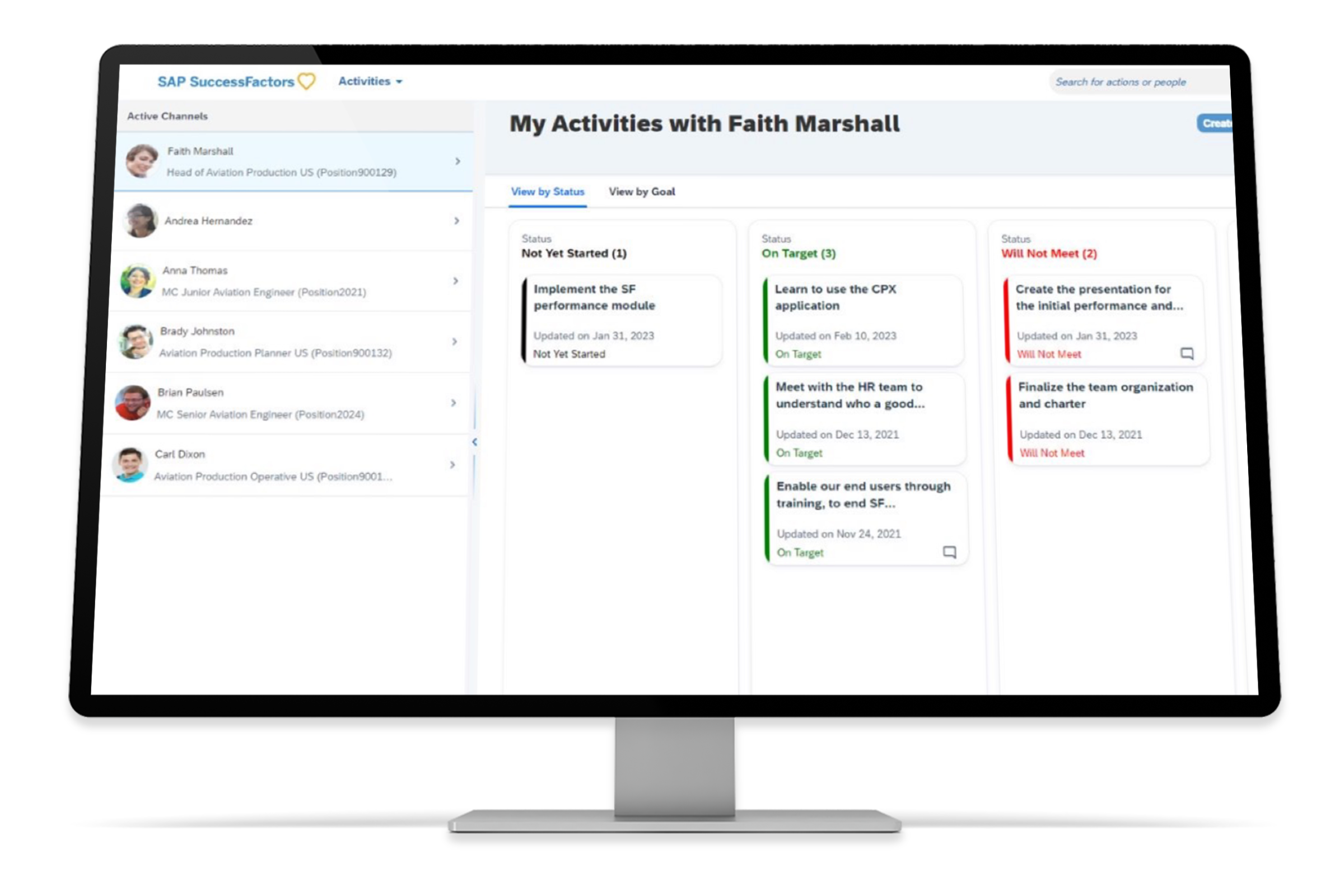
SAP SuccessFactors HCM offers various modules covering all aspects of HCM, eliminating the need for multiple disparate systems, and provide a centralized platform for all your HR needs. It integrates AI and machine learning for data analysis and insights. This empowers data-driven decision-making in workforce planning, talent management, and performance evaluations.
SAP supports over 43 languages and has extensive localization capabilities, making it suitable for organizations with global workforces. It also has a proven track record and strong client base, demonstrating its effectiveness and ability to adapt to different needs.
Best For: Mis-sized to Large Enterprises
Standout Features
Employee Experience Management
Succession Planning
Learning Management
Recruiting
Analytics And Reporting
Open API
- It has customizable options that allow your business to tailor the solution to your specific needs.
- It offers a wide range of features and customizations.
Customer Review
“Its wide range of features and customizable options make it a valuable tool for improving HR efficiency and employee engagement.” (Source: Capterra)
- SAP SuccessFactors HXM Suite can be expensive, especially for smaller businesses with limited budgets.
- The mobile app could incorporate and offer more to its users.
Customer Review
“It's cumbersome to customize and deploy- many smaller organizations may need to hire an implementation partner as a result. Additionally, its mobile version leaves a lot to be desired.” (Source: Capterra)
Notable Clients
- American Airlines
- Ernst & Young
- Hero Group
- Microsoft
- IBM
Pricing
Oracle
Why Oracle Human Capital Management (HCM)
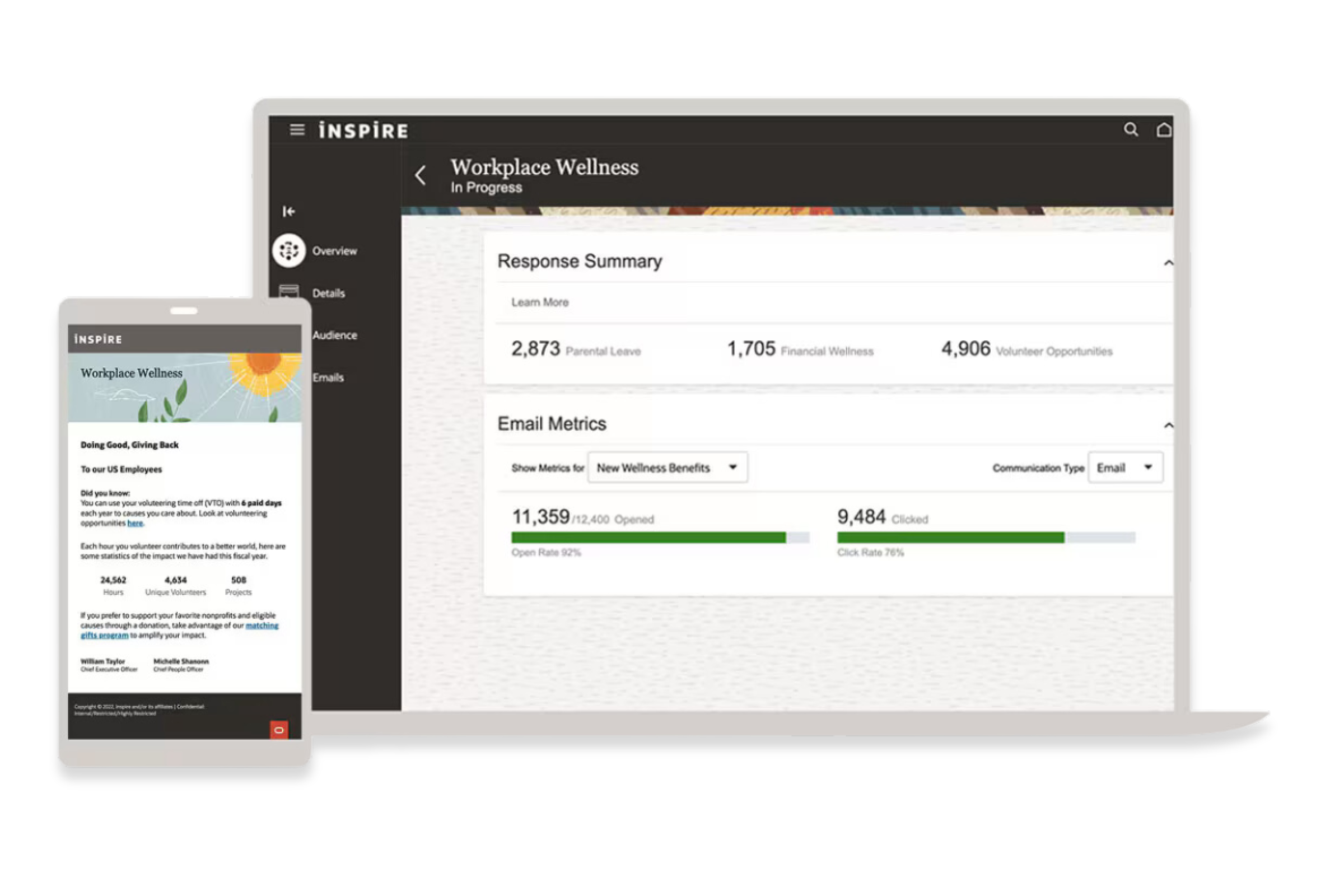
Oracle Human Capital Management (HCM) is a comprehensive suite of cloud-based applications designed to manage all aspects of the employee lifecycle, from recruitment and onboarding to performance management and payroll. It supports operations in over 200 jurisdictions, 29 languages, and 12 payroll localizations.
Oracle offers a diverse partner ecosystem, facilitating integrations with other best-in-class solutions and expanding functionality. Additionally, it focuses on Employee Experience by providing a program, Oracle Grow, for skills development and mobility in one platform. It also prioritizes an intuitive and customizable user interface for both HR professionals and employees regardless of role or location.
Best For: Mid-sized to Large Enterprises
Standout Features
Robust Talent Management
Workforce Experience
Compliance & Security
Continuous Innovation
HR Analytics and Scheduling Capabilities
Integration Capabilities
- Oracle provides comprehensive features to its users with no maintenance costs for updates.
- It works on providing continuous innovation and requires minimal admin efforts.
Customer Review
“Combining different programs for innovation and integration is a breeze" (Source: G2)
- Users find it a bit costlier than other HCM in the market.
- The software can become slow and laggy, especially for teams with multiple users.
Customer Review
“It's slow due to complexity and size. Need to improve UX” (Source: G2)
Notable Clients
- Zoom
- Uber
- PepsiCo
- Unilever
- Mastercard
- FujiFilm
Pricing
Benefits of HCM Software
The major benefits of an effective HCM software are:
Improved Efficiency & Productivity : It automates manual HR tasks like data entry and reporting, freeing up HRs for strategic activities like talent management and employee development.
Increased Talent Acquisition & Retention : It helps attract and retain top talent by providing HRs with the tools to manage their recruitment and onboarding processes effectively.
Enhanced Decision-Making : It provides valuable insights on employee demographics, skills, and performance. This helps the company make better recruitment, training, and development decisions.
Improved Compliance : It helps businesses comply with various labor regulations related to payroll, benefits, and time off.
Reduced Costs : It helps companies save money by reducing payroll errors, minimizing employee turnover, and improving compliance with labor regulations.
Overall, HCM software can be a valuable asset for businesses of all sizes. It can help businesses improve their efficiency, productivity, and compliance, and it can also help them attract and retain top talent.
Challenges of HCM
While there are several benefits to having an HCM software, there are also challenges associated with its implementation. Some of the common ones are:
High Upfront Costs: HCM software can be expensive to implement and maintain. Businesses need to factor in the cost of the software itself, as well as the cost of implementation and training.
Limited Flexibility: Some HCM solutions may have limitations in terms of flexibility and adaptability, which can be a drawback for companies with specific or evolving HR requirements.
Data Migration Challenges: Migrating data from an old HR system to a new HCM system can be challenging and error-prone. Businesses need a carefully planned data migration strategy.
How to Choose the Right Platform?
Choosing the right Human Capital Management (HCM) software is a crucial decision that can significantly impact an organization's ability to manage its workforce effectively.
Start by identifying your organization's specific HR needs and objectives. Consider the size of your workforce, business needs, and unique aspects of your business. Also, evaluate whether the platform can scale to accommodate changes in workforce size and structure.
Confirm that the HCM software complies with relevant data protection and privacy regulations. Also, determine the total cost of ownership, including upfront costs, ongoing maintenance fees, and any additional expenses for customization or training.
To conclude, choosing the right HCM Software can help your company grow exponentially. By carefully weighing your needs, you can find the right software that will help drive operational efficiency and improve workforce management in your organization.
FAQs
Q: What is Human Capital Management?
A: Human Capital Management broadly refers to the practices organizations use to handle their workforce. It can be broadly divided into the following components:
- Recruitment: Screening, evaluating, and selecting candidates for vacant positions
- Onboarding: Onboarding the newly appointed candidates into the organization
- Training: Mentoring employees and/or providing opportunities for upskilling
- Performance Management: Evaluating employee performance and providing feedback to enhance employee productivity
- Workforce Planning: Anticipating and addressing current and future workforce needs to ensure a skilled and appropriately sized workforce
Q: What is the difference between HCM, HRMS, and HRIS?
A: Although used interchangeably, the main difference between HCM, HRMS, and HRIS is:
- HRIS: Focuses on connected data management for HR processes like benefits, payroll, and core HR.
- HRMS: Expands on HRIS, managing internal HR functions comprehensively, including recruitment, talent management, and employee engagement.
- HCM: A complete suite of cloud-based HR applications emphasizing the employee experience. It includes advanced talent management, strategic workforce planning, and collaboration tools.
Q: How is HCM relevant for Gen Z
A: With approximately 40% of the workforce being millennials and an estimated 17% being Generation Z, these two generations will dominate the workforce worldwide, and it’ll be crucial for HR professionals to adapt to their changing needs and attitudes. This demands attention to the automation needs of organizations for better HR management.
Q. How is Hybrid Work impacting HCM
A: WFH and Hybrid Work have become mainstream workforce strategy components due to advantages like flexibility, cost savings, access to a global talent pool, work-life balance, and job satisfaction. In this, HCM software is essential as it helps in strategic workforce planning, a vital component in managing hybrid and remote work arrangements.
Q: What are the different integration options in HCM Platforms?
A: In a standard Human Capital Management (HCM) Platform, integration options include application adapters for connecting with various systems, technology adapters for communication protocols, global HR synchronization for unified data, hybrid integration for cloud and on-premises applications, and new hire onboarding automation. These options enhance efficiency and improve employee engagement.

This article is compiled by Shabana Shahnaz. Is a Product Research Analyst at Vantage Circle. As a post-graduate in Applied Sociology, Shabana is passionately interested in people dynamics. She writes everything in and around Human Resources that helps professionals find what they're looking for in the HR domain. To get in
You might also like

I Reviewed the Best Corporate Giving Software of 2026: Here Are My Top 10
A comprehensive review of the Top corporate Giving Platforms, highlighting essential features, pricing, and other key factors....

Best HR Analytics Tools in 2026: Pricing, Features & More
An extensive evaluation of the best HR Analytics Software, focusing on key features, pricing, and more. ...

10 Top Talent Management Software of 2026
An extensive evaluation of the best Talent Management Systems focusing on key features, pricing, and more. ...