HR has completed its most significant transformation yet.
What began as an operational function, and later evolved into a strategic partner, is now entering a new phase: the Intelligent HR Era. In 2026, HR doesn’t just support the business; it senses, predicts, and shapes it.
This is the year where AI meets behavioral science, skills intelligence informs workforce decisions, and ethical governance becomes non-negotiable. From AI oversight and empathy-first leadership to DEI accountability, lifecycle automation, real-time skills signals, and frontline digitization 2.0, the trends ahead signal a clear shift: HR is no longer reacting to change. It’s architecting what comes next.
A Quick Recap — How HR Evolved in 2025
- AI moved from experimentation to execution, automating routine HR tasks while enabling smarter hiring, real-time feedback, and predictive engagement insights.
- Skills-first hiring became mainstream, with organizations prioritizing capabilities over credentials and investing heavily in internal mobility and continuous upskilling.
- Employee recognition matured into a measurable strategy, as frameworks like AIRe helped organizations link appreciation, incentives, and emotional connection to real business outcomes.
- Hybrid work stabilized, supported by agile team structures, clearer collaboration norms, and stronger digital infrastructure, especially for frontline roles.
- Leadership development and people analytics became core, with emotional intelligence, succession planning, and data-driven decision-making shaping modern leadership.
Together, these shifts laid the foundation for what comes next. In 2026, HR moves beyond adoption into orchestration, where intelligence, ethics, and human insight converge to define the future of work.
H2: Top HR Trends for 2026
The focus in 2026 shifts from adoption to application.
These trends highlight how HR teams are translating last year’s progress into scalable, everyday impact.
1. AI Becomes Fully Embedded—With Guardrails
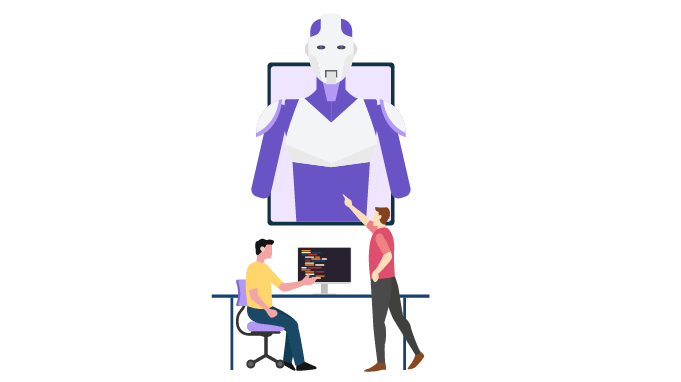
AI is no longer optional. It has become a core infrastructure. As automation quietly takes over high-volume administrative work, the real shift in 2026 is governance. With AI influencing hiring, pay, performance, and mobility decisions, organizations are being forced to define how intelligence is used, monitored, and held accountable.
In practice, AI now handles nearly 60–70% of administrative HR tasks, from candidate screening and interview scheduling to payroll processing and compliance checks.
To manage this scale responsibly, HR teams are forming AI Governance Councils, cross-functional groups that set guardrails around fairness, transparency, explainability, and bias prevention. In parallel, ethical AI is fast becoming a compliance requirement, not just a values statement, across multiple regions.
Why it matters:
Organizations that fail to put ethical frameworks around AI risk more than inefficiency; they risk legal exposure, erosion of employee trust, and reputational damage. In contrast, mature AI governance is emerging as a competitive advantage, enabling faster talent acquisition, smarter workforce planning, and greater confidence in people decisions.
2. Skills Intelligence Powers the Talent Ecosystem
In 2026, organizations move beyond skills-first to skills intelligence using AI and data to predict future needs, continuously assess capabilities, and activate talent in ways that advance both performance and equity. HR stops collecting static skills lists and starts building living talent profiles that drive better outcomes for individuals and business alike.
- Predictive skills forecasting: AI models don’t just identify current skills. They forecast what skills will be essential next, helping companies stay ahead of disruption.
- Dynamic skills profiles: Employee skill maps update automatically based on real work, learning activity, and performance data, giving leaders a real-time view of capability flow.
- Advanced internal talent marketplaces: AI-driven platforms match employees to roles, projects, and stretch opportunities faster and with higher fit accuracy. According to research, internal mobility programs supported by skills data double retention rates compared to low-mobility peers. The Human Capital Hub
- Skills-based pay and transparency: Pay bands and capability maps are increasingly tied to verifiable skills, reducing opaque compensation practices that historically disadvantage under-represented groups.
- DEI accountability built in: Skills-based hiring and assessments widen access to roles for people from non-traditional backgrounds and help reduce bias. In fact, employers using skills-based hiring are significantly more likely to meet diversity and inclusion goals, and 90 % report measurable improvements in representation.
Why it matters:
Skills intelligence doesn’t just make HR more efficient, it helps organizations measure and manage equity. By grounding talent decisions in observable capabilities rather than credentials or assumptions, companies reduce structural barriers, improve internal mobility, and build a workforce that more closely reflects the full spectrum of talent available. This fuels better retention, stronger engagement, and a more inclusive path to growth.
3. Hyper-Personalized Employee Experience
This year employee experience (EX) shifts from static programs to real-time, role-aware systems. Designed to adapt continuously across hybrid and frontline environments.
What’s changing:
AI-driven EX engines deliver:
Personalized benefits and well-being support
Contextual nudges based on role, workload, and engagement signals
Role-relevant learning paths tied to skills growth
In-the-moment recognition, triggered by impact, not anniversaries
Recognition becomes manager-enabled and contextual:
Managers receive prompts to recognize frontline wins, cross-team collaboration, and skills application
Recognition shifts from manual effort to embedded workflows
Peer and manager recognition increase visibility for deskless and distributed employees
Workflows adapt to employee life stages and work realities:
Early-career employees receive structured guidance and feedback
New parents and caregivers see flexible scheduling and support nudges
Frontline workers access mobile-first tools, micro-learning, and instant recognition
Hybrid employees benefit from fairness-driven visibility and collaboration design
Digital workplace design prioritizes sustainability:
Fewer tools, clearer workflows
Reduced cognitive overload
Built-in focus time, mental health guardrails, and intentional collaboration moments
Experience analytics move to real time:
Continuous pulse surveys and sentiment tracking
Early detection of burnout, disengagement, or workload imbalance
Managers and HR can adjust EX instantly. Not after attrition spikes
What the data shows:
Experience-led organizations report:
- 20–30% higher engagement
- Up to 25% lower attrition
- Faster issue resolution in frontline and hybrid teams
**Why it matters: **
As work becomes more distributed and expectations more personal, a one-size-fits-all employee experience simply can’t keep up. Organizations that fail to individualize and adapt EX risk disengagement, frontline burnout, and invisible attrition, especially in hybrid environments where effort often goes unnoticed.
In contrast, companies that embed recognition into daily workflows and equip managers with real-time experience insights create faster feedback loops, stronger trust, and fairer visibility across roles. In 2026, EX is no longer about perks or programs. It’s a system that determines whether employees feel supported, recognized, and motivated to stay and grow.
4. Human-Centric Leadership & Psychological Safety Take Center Stage

As technology accelerates decision-making and automation reshapes work, empathy becomes the true leadership differentiator. In 2026, how leaders listen, communicate, and support their teams matters as much as what they deliver.
**What’s changing: **
Leadership effectiveness is redefined:
Leaders are evaluated on empathy, emotional intelligence, coaching ability, and communication, not just outcomes
People leadership skills increasingly influence promotions, compensation, and succession decisions
“Quiet Cracking” demands intervention:
Employees appear productive on the surface while silently experiencing burnout and disengagement
Organizations respond by retraining managers to spot early warning signals like fatigue, withdrawal, declining participation before attrition occurs
Psychological safety becomes measurable:
Safety, trust, and voice are tracked through pulse surveys, sentiment analysis, and team-level diagnostics
Psychological safety is embedded as a formal KPI in performance and manager evaluations
Change leadership becomes non-negotiable:
Constant transformation- AI adoption, restructuring, new ways of working require leaders who can guide teams through uncertainty
Change readiness and adaptability are assessed as core leadership competencies
Why it matters:
In environments defined by rapid change, people don’t disengage because of technology. They disengage because of how change is led. Organizations that invest in human-centric leadership reduce burnout risk, retain high performers, and create teams that speak up, adapt faster, and perform more consistently under pressure.
5. AI-Assisted, Emotion-Science-Driven Recognition
In 2026, recognition stops being improvised and starts being engineered.
With AIRe and WISE as the operating models, organizations design recognition with the same rigor they use to design performance systems, using data, emotional signals, and behavioral science to drive engagement at scale.
What’s changing:
From ad-hoc to engineered:
Recognition is designed around behavioral science, emotional impact, and business outcomes
Every recognition moment is tied to values, skills, or performance signals
AI predicts the right moment to recognize:
Algorithms identify when effort peaks, collaboration happens, or stress builds
Systems recommend who should recognize, how, and through which channel for maximum impact
Emotional resonance becomes measurable:
The eMotional Connect pillar of AIRe tracks how recognition makes people feel
HR can now measure appreciation, belonging, and motivation, not just frequency
Bias is actively countered:
Constant recognition analytics surface blind spots such as proximity bias, manager bias, and visibility gaps in hybrid and frontline teams
Recognition becomes more equitable, not more arbitrary
Why it matters:
In a world where work is increasingly distributed and mediated by technology, recognition is one of the last true human signals of value. Organizations that apply AI and emotion science to recognition build stronger trust, fairer visibility, and higher retention turning appreciation into a strategic advantage, not a side activity.
6. People Analytics Becomes Predictive & Prescriptive
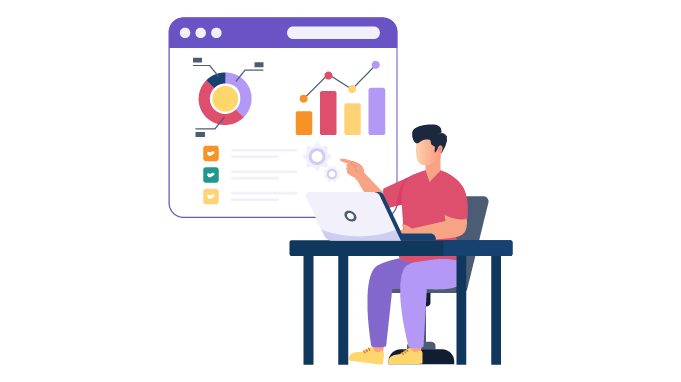
As people data becomes richer and more real-time, HR analytics stops telling leaders what happened and starts guiding them on what to do next. The function shifts from reporting to action-driven intelligence, where insights are designed to trigger decisions, not just decorate dashboards.
What’s changing:
Predictive analytics goes mainstream
Early detection of turnover risk, burnout, and disengagement
Teams and individuals flagged before problems escalate
Prescriptive insights drive action
Systems don’t just surface risks; they recommend next steps
Examples: who to coach, where to hire, when to intervene, how to retain
Workforce planning becomes real-time
Demand forecasting adjusts hiring, redeployment, and skills investment dynamically
HR shifts from annual plans to continuous workforce optimization
Analytics becomes a leadership tool
Managers receive decision prompts, not raw data
HR leaders guide the business with forward-looking people intelligence
What the data shows:
Organizations using advanced people analytics are more than 3x more likely to outperform their competitors(Deloitte)
Why it matters:
When talent risks and opportunities are detected too late, the damage is already done. In 2026, the organizations that win are the ones that use people data to move faster, intervene earlier, and make better workforce decisions—turning HR into a true engine of business performance.
7. Agile, Fluid, Borderless Teams Become the Norm

Work is no longer organized around permanent teams and fixed roles. It’s structured around projects, skills, and shifting demand. Organizations begin operating more like Hollywood studios, where teams assemble for a purpose, deliver, and then reconfigure for what comes next.
What’s changing:
Project-based team formation
Teams form and disband based on work, not hierarchy
Talent flows to where it creates the most value
Role-less contribution models
Employees contribute based on verified skills, not job titles
Individuals move fluidly between initiatives, functions, and priorities
Hybrid work evolves into microshifting
Work schedules adapt dynamically to task type
Deep-focus work happens remotely; collaboration happens in person
Presence is driven by purpose, not policy
AI-powered collaboration
Smart scheduling reduces unnecessary meetings
AI summarizes, prioritizes, and routes work to the right people
Teams spend more time creating and less time coordinating
Why it matters:
Modular work structures make organizations faster, more resilient, and better aligned to real talent. When people can plug into work that matches their skills and disengage from what doesn’t, productivity rises, burnout falls, and innovation accelerates.
8. Frontline Workforce Finally Gets a Digital Upgrade

The most meaningful employee-experience gains no longer come from headquarters; they come from the front line. As deskless and shift-based roles become digitally connected, organizations begin treating frontline EX as a growth engine, not a cost center.
What’s changing:
AI-powered, mobile-first enablement
On-demand learning, shift scheduling, and task guidance delivered via smartphones and lightweight devices
Micro-recognition triggered by service quality, safety, and performance moments
Technology access levels the field
Cloud tools, kiosks, and wearables give frontline teams the same visibility and feedback loops as corporate employees
Real-time updates reduce confusion, rework, and downtime
Career pathways become data-backed
Skills signals, performance data, and certifications map clear progression routes in retail, BFSI, healthcare, hospitality, and logistics
Frontline employees see how today’s work leads to tomorrow’s roles
Why it matters:
When frontline workers feel supported, seen, and able to grow, efficiency rises and customer experience improves. In people-intensive industries, EX at the front line directly shapes brand reputation, service quality, and revenue making frontline investment one of the highest-return HR strategies.
9. Accountability-Driven DEI Replaces Performative DEI

Diversity, equity, and inclusion stop living in slide decks and start living in data, decisions, and incentives. As organizations gain deeper visibility into how people are hired, paid, heard, and promoted, DEI becomes something leaders are measured on—not just expected to support.
What’s changing:
DEI is built into leadership performance
Representation, pay equity, and advancement rates are tied to leader evaluations and bonuses
Inclusion is treated as a management outcome, not an HR initiative
AI bias audits become routine
Algorithms used in hiring, performance, and pay are reviewed annually for fairness and explainability
Automated decisions must meet governance and equity standards
Inclusive behavior is quantified
Metrics like voice equity, meeting participation, feedback loops, and recognition distribution are tracked
Hybrid and frontline visibility gaps are surfaced and corrected
Pay and progression become transparent
Skills-based pay bands, promotion criteria, and career paths are clearly defined
Employees can see what it takes to advance and whether the system is fair
Why it matters:
When DEI is measurable, it becomes manageable. Organizations that embed equity into data and accountability reduce legal risk, improve trust, and build workforces that are not only more diverse, but more engaged, more mobile, and more resilient.
10. Digital-First HR Operations
HR operations move from fragmented tools to connected, always-on ecosystems. Instead of jumping between systems, employees and managers experience one continuous flow from hiring and onboarding to learning, recognition, and retention.
What’s changing:
Unified HR technology stacks
Hiring, onboarding, learning, performance, recognition, and rewards run on integrated platforms
Data flows across the entire employee lifecycle, enabling faster, smarter decisions
Self-service becomes the default
Employees manage leave, benefits, documents, learning, and recognition without HR intervention
Managers approve, allocate, and track in a single interface
AI handles everyday HR interactions
Chatbots and digital assistants answer questions, complete transactions, and guide employees in real time
HR teams shift from ticket resolution to workforce strategy
Why it matters:
When HR runs on connected systems, friction disappears. Employees get what they need faster, managers act with better data, and HR finally has the bandwidth to focus on what moves the business: talent, culture, and performance.
11. Compassionate Workforce Restructuring

Workforce change no longer means chaos, confusion, or broken trust. As organizations gain better visibility into skills, demand, and performance, restructuring becomes data-informed and deliberately humane, focused on preserving both capability and dignity.
What’s changing:
Redeployment comes before reduction
Internal talent marketplaces and skills data help move people into new roles before layoffs are considered
Critical capabilities are retained even as structures evolve
Predictive planning replaces reaction
Workforce analytics forecast demand, redundancy risk, and skill gaps early
Leaders can resize and reskill proactively instead of cutting in crisis
Outplacement becomes standard practice
Career coaching, job placement, and skills validation are built into separation processes
Exiting employees leave with momentum, not uncertainty
Transparency leads the process
Clear timelines, decision criteria, and two-way communication reduce fear and rumor
Trust is protected even in difficult moments
Why it matters:
How organizations handle exits shapes how those who remain show up. Companies that restructure with foresight and empathy protect their brand, retain critical talent, and maintain engagement, even during periods of significant change.
Conclusion
2026 marks a defining moment for HR. The challenge is no longer choosing between technology and humanity, or speed and fairness, but learning how to hold both at once. As AI, skills data, and automation reshape how work happens, HR becomes the function that ensures these forces serve people as much as they serve performance.
This is where HR steps fully into its role as the architect of the modern workplace. Designing systems that are intelligent, ethical, and built for real human complexity. From how talent is discovered and developed to how recognition is delivered and transitions are managed, HR is now shaping the conditions under which organizations grow.
The organizations that pull ahead will be the ones that use people analytics to act early, personalize employee experience at scale, invest deeply in frontline teams, and embed empathy into everyday operations. In 2026, competitive advantage won’t come from having more data or more technology. It will come from how thoughtfully, fairly, and humanely they are used.

This article is written by Lupamudra Deori. Lupamudra is a content marketing specialist at Vantage Circle, focused on creating clear, research-driven content on employee engagement and workplace culture.
Connect with Lupamudra on LinkedIn.