
Companies with diverse teams are 39% more likely to outperform their competitors.
Yet, most organizations are still only scratching the surface of what diversity really means.
Walk into most workplaces today, and you'll see diversity efforts that stop at hiring a few people from different backgrounds and calling it a day. Unfortunately, that's not diversity, that's optics.
Real diversity is layered.
It's about age, religion, disability, sexual orientation, socio-economic background, and so much more.
For HR leaders, this is where your role gets both challenging and incredibly meaningful. The decisions you make around hiring, workplace culture, and policy shape whether your employees feel valued or not.
Now, to make those decisions more intentional, it's important to understand the different dimensions of diversity. And why each one truly matters in shaping an inclusive workplace.
What is Workplace Diversity?
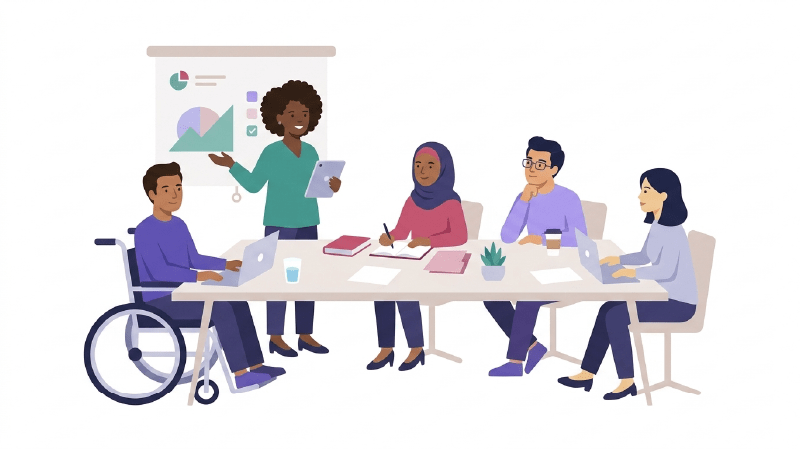
Workplace diversity refers to a work environment made up of employees with varying characteristics. It includes race, ethnicity, gender, age, sexual orientation, religion, disability, and socio-economic background.
But it's more than just a mix of different people under one roof.
A truly diverse organization is one where people from all walks of life are not only represented but genuinely valued.
In very simple words, workplace diversity is about equity and belonging. It means every employee, regardless of their background or identity, has an equal opportunity to contribute, grow, and succeed.
Related: Diversity and Inclusion in the Workplace: A Complete Guide
4 Categories of Workplace Diversity
Before diving into the specific types of diversity, it helps to understand how diversity is actually structured. Most HR frameworks organize workplace diversity into 4 broad categories.
Think of these as the lens through which all diversity exists. Once you understand the categories, the individual types start to make a lot more sense.
| Category | What It Covers | Examples | HR Relevance |
|---|---|---|---|
| Internal | Traits a person is born with or cannot change | Race, ethnicity, age, gender, sexual orientation, physical ability | Hiring equity, bias training, inclusive policies |
| External | Characteristics shaped by life experience and choices | Education, socioeconomic background, religion, language, life experience | Equitable development, mentorship, flexible policies |
| Organizational | Differences based on role and position within the company | Job function, seniority, department, management status | Cross-functional recognition, equitable visibility |
| Worldview | Beliefs, values, and perspectives shaped by all of the above | Political views, moral values, cultural norms, cognitive style | Psychological safety, respectful dialogue, inclusive feedback |
No single category exists in isolation. An employee's worldview, for example, is shaped by their internal traits, life experiences, and position at work, all at once. That is precisely why effective diversity strategies need to think holistically.
10 Types of Diversity
According to the standard definition of diversity, the forms of diversity in a social construct are theoretically infinite. It encompasses every characteristic that appears with variations amidst a group of people. But, generally, when it comes to workplaces, there are 10 primary types of diversity we can see:
1. Race and Ethnicity
Race and ethnicity are often used interchangeably, but they're not the same thing. Race refers to a person's biological characteristics, such as skin color and physical features. Ethnicity, on the other hand, is rooted in cultural identity, shared history, and geographic heritage.
Both matter deeply in the workplace.
Employees from different racial and ethnic backgrounds bring perspectives that challenge groupthink and drive better decision-making.
McKinsey's research shows that organizations with higher racial and ethnic diversity are 39% more likely to see stronger financial returns. That's not a soft benefit, that's a competitive advantage.
Now, for HR, this means going beyond diverse hiring numbers. It means auditing promotion rates, pay equity, and leadership representation across racial and ethnic lines.
2. Age and Generation
Today's workforce spans five generations, from Baby Boomers to Gen Z. Managing a multigenerational workforce comes with its own set of challenges.
And while people of the same age don't think identically, generational experiences do shape attitudes toward work, technology, communication, and leadership.
Gen Z, for instance, has never known a world without smartphones. That fundamentally changes how they collaborate, learn, and expect to be managed. Compared to someone who built their career in a pre-digital era.
Age bias, one of the most common forms of unconscious bias, is more common than most organizations admit.
According to SHRM research, HR professionals in organizations that offer DEI training are significantly less likely to report age playing a role in hiring decisions, 26% vs 40% in organizations without such training.
It's important for HR leaders to catch these blind spots before they become cultural norms.
Consider reverse mentoring. Pair a senior leader with a Gen Z employee. Let the younger one lead. You'll be surprised how fast generational assumptions dissolve when the knowledge flow goes both ways.
Related: Understanding Millennials in the Workforce
3. Gender and Gender Identity
You know what, having more women in the room means nothing if they're being paid less, passed over for promotions, or excluded from key conversations.
The gender pay gap remains one of the most persistent challenges in the workplace.
You'll be surprised to know, there's an average gender pay gap of 20% worldwide. The United Nations report reflected women consistently earning less than their male counterparts in similar roles.
It's also important to recognize that gender exists on a spectrum.
Policies, language, and benefits need to reflect that, from using inclusive language in job descriptions to offering gender-neutral facilities. At the same time, supporting transgender employees through clear, respectful HR processes.
Recommended Resource: Gender Equality in the Workplace: A Comprehensive Guide
4. Sexual Orientation
Sexual orientation is personal, but its impact on the workplace is very real. Employees who don't feel safe being themselves at work are less engaged, less productive, and far more likely to leave.
Research from the Williams Institute found that nearly half, 47% of LGBTQ+ employees, have experienced discrimination or harassment at work at some point in their careers because of their sexual orientation or gender identity.
HRs have a direct role in changing that through anti-discrimination policies, inclusive benefits, and a culture where allyship is actively encouraged, not just tolerated.
A workplace where people can show up authentically isn't just the right thing to do. It's one of the strongest drivers of retention and belonging.
Do Give a Read: Celebrating Pride Month at Work: Ideas and Best Practices
5. Religious and Spiritual Beliefs
Religion shapes how people see the world, structure their time, and what they need to feel respected at work. From dietary requirements to prayer times to holidays, these needs are real and usually easy to accommodate when there's genuine intention behind it.
The bigger challenge is unconscious bias.
Many workplaces run on a default cultural calendar that centers one religion while quietly overlooking everyone else. And religion is often the last box to get checked in DEI efforts.
The Religious Freedom & Business Foundation found that religion appears on only 43% of Fortune 100 companies' diversity pages, placing it dead last on the inclusion scale.
Such a gap points to a larger opportunity for organizations to be more intentional in how they approach inclusion. A good starting point could be to take a closer look at existing holiday policies, offering flexible scheduling, and creating space for open dialogue.
Related: Religious Diversity in the Workplace: A Guide for HR
6. Disability
Disability is one of the most underrepresented dimensions of workplace diversity, and one of the most misunderstood. It's not limited to physical mobility. Workplace accessibility extends far beyond ramps and elevators.
Disabilities include chronic illness, mental health conditions, neurodivergence, vision or hearing impairments, and learning differences.
Many employees with disabilities never show up in the data simply because they don't feel safe disclosing. And the employment gap tells its own story. The unemployment rate for people with a disability sits at 8.3%, more than double the 4.1% rate for those without one.
That's not a coincidence. A lot of it comes down to culture, not capability.
And here's the thing, most of the barriers aren't physical. Accessibility means flexible work arrangements, assistive technologies, and managers who are trained to support employees with disabilities, not stigmatize them.
Get the environment right, and the performance takes care of itself.
Disability rarely exists in isolation. Your employees may be navigating a disability alongside race, gender, or socioeconomic challenges simultaneously. Single-axis DEI strategies miss this entirely.
7. Socio-economic Status and Background
- Where did someone grow up?
- How were they raised?
- What opportunities did they have access to?
These questions, unfortunately, shape how people navigate the workplace in ways that often go unnoticed.
Employees from lower socioeconomic backgrounds may face barriers to diversity and inclusion that wealthier colleagues never encounter. Some of the barriers may look like networking gaps, credential bias, or assumptions based on where they went to school.
In fact, workers from lower socioeconomic backgrounds are 32% less likely to become managers than their higher socioeconomic peers. So, while companies proudly post about equal opportunity, the corner office still has a very specific guest list.
Turns out, the zip code you grew up in has more influence on your career trajectory than most organizations care to admit.
And sadly, the gap doesn't appear overnight.
It often starts within hiring processes themselves. Subtle preferences for elite institutions, unpaid internships, or specific communication styles can unintentionally filter out capable talent. But a strong diversity recruitment strategy moves the focus from credentials alone to underlying potential.
8. Neurodiversity
Neurodiversity refers to the natural variation in how human brains function and process information. This includes conditions like ADHD, autism spectrum disorder, dyslexia, and dyspraxia, many of which come with remarkable strengths alongside unique challenges.
Research by Deloitte shows that teams with neurodivergent professionals in key roles can achieve up to 30% higher productivity. Additionally, neuroinclusive organizations are 75% more likely to convert ideas into tangible products.
Yet traditional workplace structures, such as open offices, rigid communication styles, and linear career paths, are often designed in ways that work against them.
No matter how disappointing, a survey found that 52% of neurodivergent professionals don't feel comfortable disclosing their condition at work, with fear of stigma being the primary reason.
That's a culture problem, and it's squarely in HR's remit to fix. Creating psychological safety is a critical first step.
Written agendas before meetings, noise-cancelling headphones, and async communication options help neurodiverse employees do their best work. And frankly, most neurotypical employees appreciate them too.
9. Cultural Background and Nationality
In a globalized workforce, cultural diversity is both an incredible asset and a potential source of misunderstanding. Now it entirely depends on how well it's managed.
Your employees who have lived, studied, or worked across different countries and cultures bring a breadth of perspective that homogenous teams simply can't replicate. They challenge assumptions, bridge gaps, and often see solutions others miss.
For HR, this means investing in cross-cultural competency training, creating inclusive onboarding for international hires, but at the same time, ensuring that cultural differences don't get mistaken for performance issues.
10. Language Diversity
Someone on your team might have the sharpest idea in the room, but if English isn't their first language, that idea might never make it to the table.
That's the reality for many employees in multicultural workplaces.
Different native languages, accents, and fluency levels create gaps that have nothing to do with intelligence or capability. Rather, it has more to do with how comfortable someone feels speaking up.
And when those voices go unheard, it quietly shows up in performance reviews, promotion decisions, and who gets visibility in the organization.
So, what can HR do?
Well, you can make space.
- Train managers to actively draw out quieter voices in meetings.
- Write internal comms in plain, simple language.
- And never, consciously or not, let fluency become a stand-in for competence.
How Inclusive Recognition Brings Diversity to Life
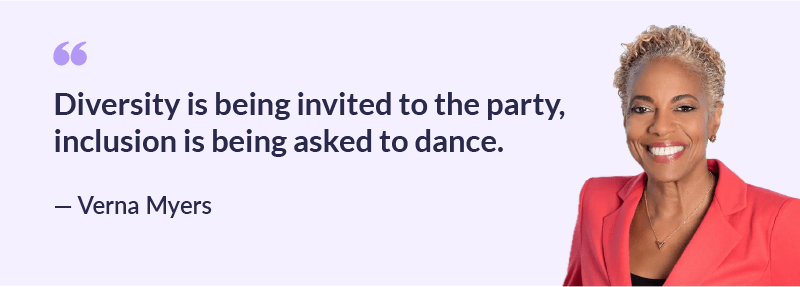
Most organizations have figured out how to invite people in.
But being asked to "dance" at work comes from everyday experiences, feeling seen, valued, and acknowledged.
That's where inclusion becomes real.
And more often than not, it's recognition that shapes those experiences. Who gets appreciated, how often it happens, and whether it's visible across the organization.
Because in the end, recognition isn't just a culture add-on. It's how inclusion shows up at work, every single day.
Here's what that looks like in action:
Making Recognition Fair and Visible
Recognition must feel organic. But in reality, it tends to follow patterns, familiar teams, visible roles, and unconscious bias.
Over time, this creates uneven visibility across the organization.
What HR leaders need isn't more intention. It's clarity.
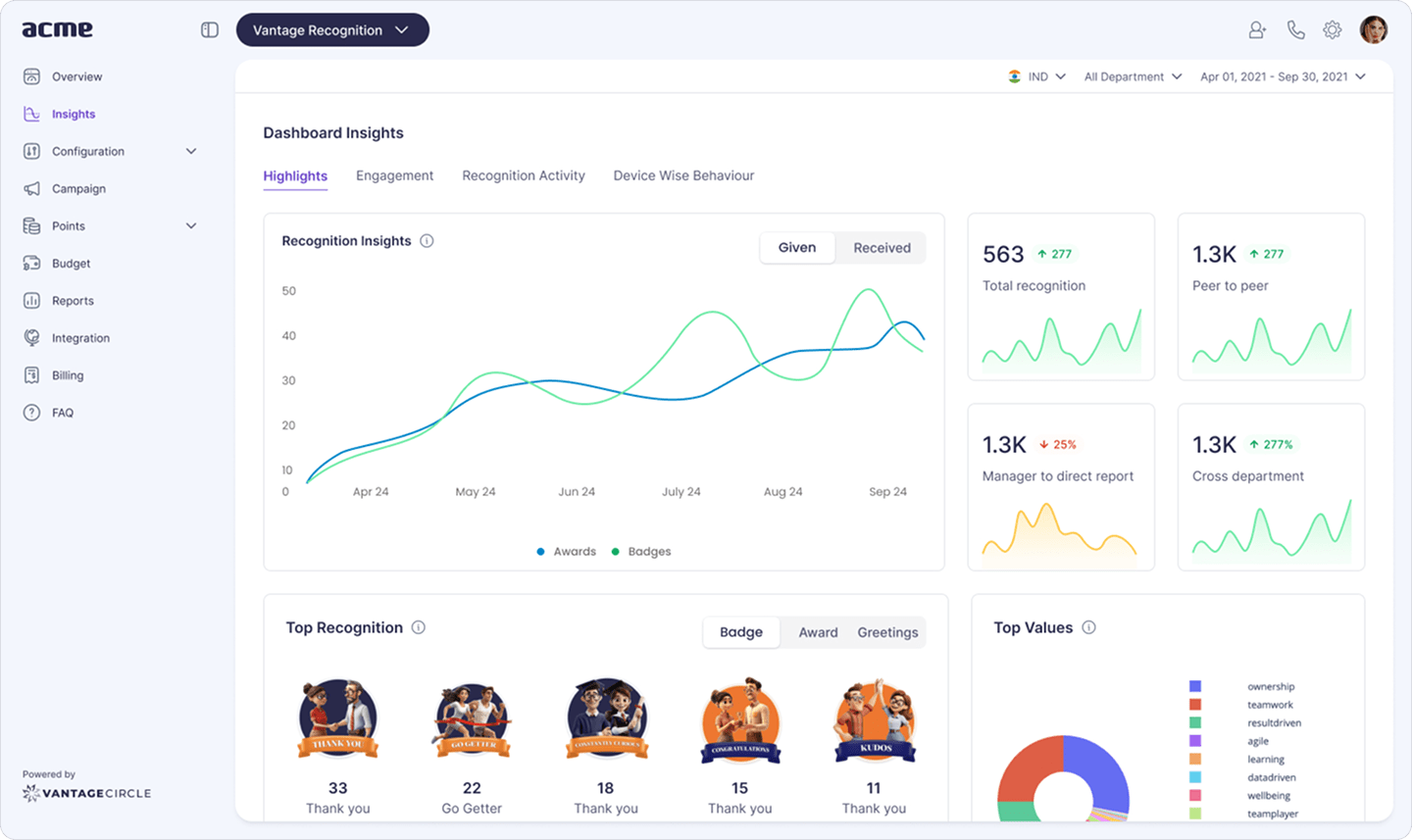
That clarity starts with data. Knowing where recognition flows and where it doesn't is the first step toward making appreciation genuinely equitable.
Recognition Analytics, gives organizations exactly that visibility: how appreciation moves across teams, locations, and employee groups, and where the gaps are quietly forming.
Not to control recognition, but to ensure it's not unintentionally excluding people.
Supporting Different Employee Needs, Not Standardizing Them
A diverse workforce doesn't respond to recognition in the same way.
Some employees value frequent, real-time appreciation. Others find meaning in milestone-based recognition. Many need both at different points in their journey.
The problem arises when organizations try to standardize recognition into a single format.
It, honestly, flattens the experience.
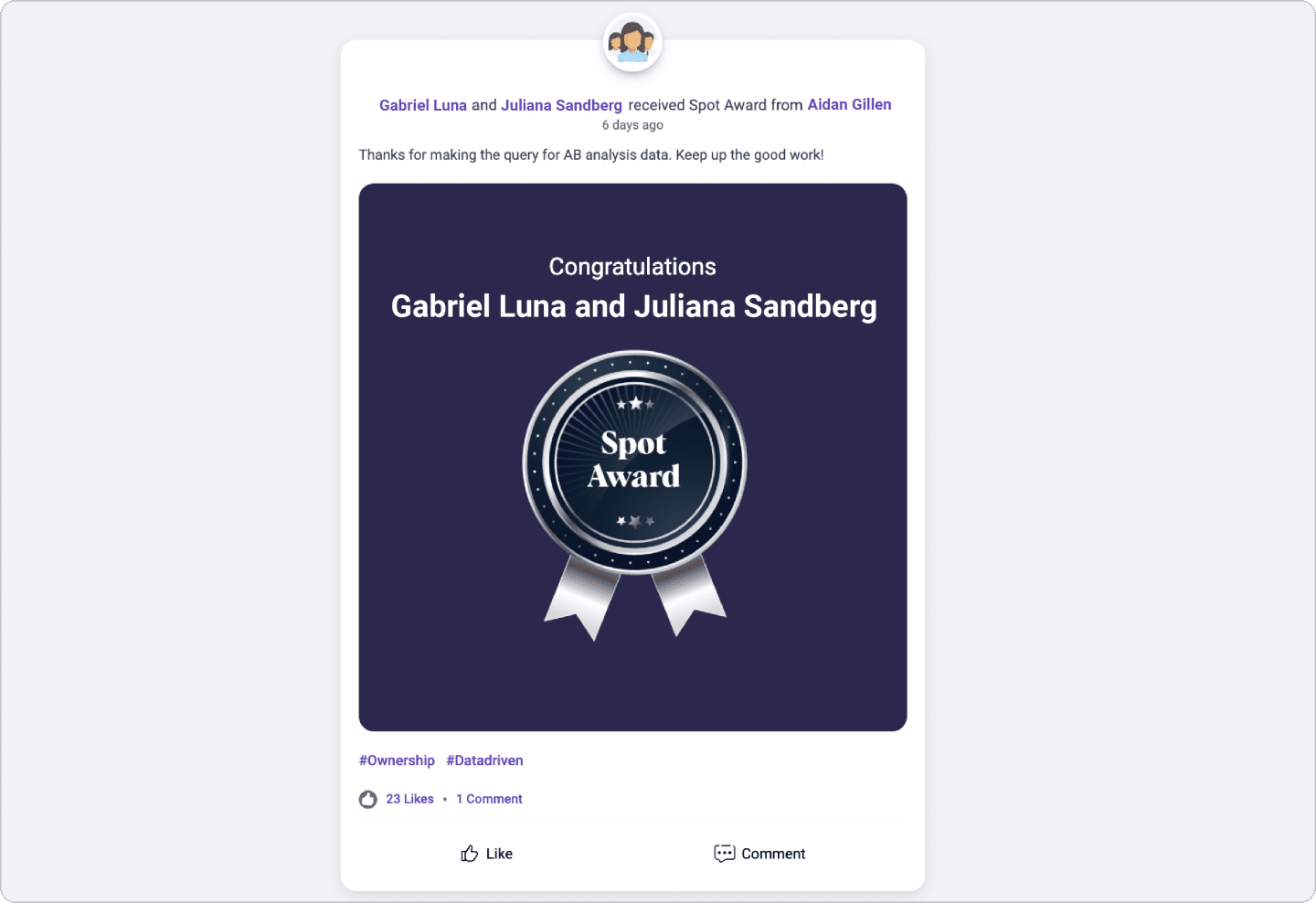
Platforms that support peer-to-peer recognition alongside long service awards let organizations meet employees where they are, not where the system expects them to be.
Recognition adapts to the person, not the other way around.
Source: Vantage Recognition
Ensuring No One Is Invisible
Not all employees have equal visibility.
Frontline workers, remote teams, and employees outside corporate hubs often miss out on recognition simply because their work isn't seen as often.
And over time, that invisibility affects employee engagement, motivation, and belonging.
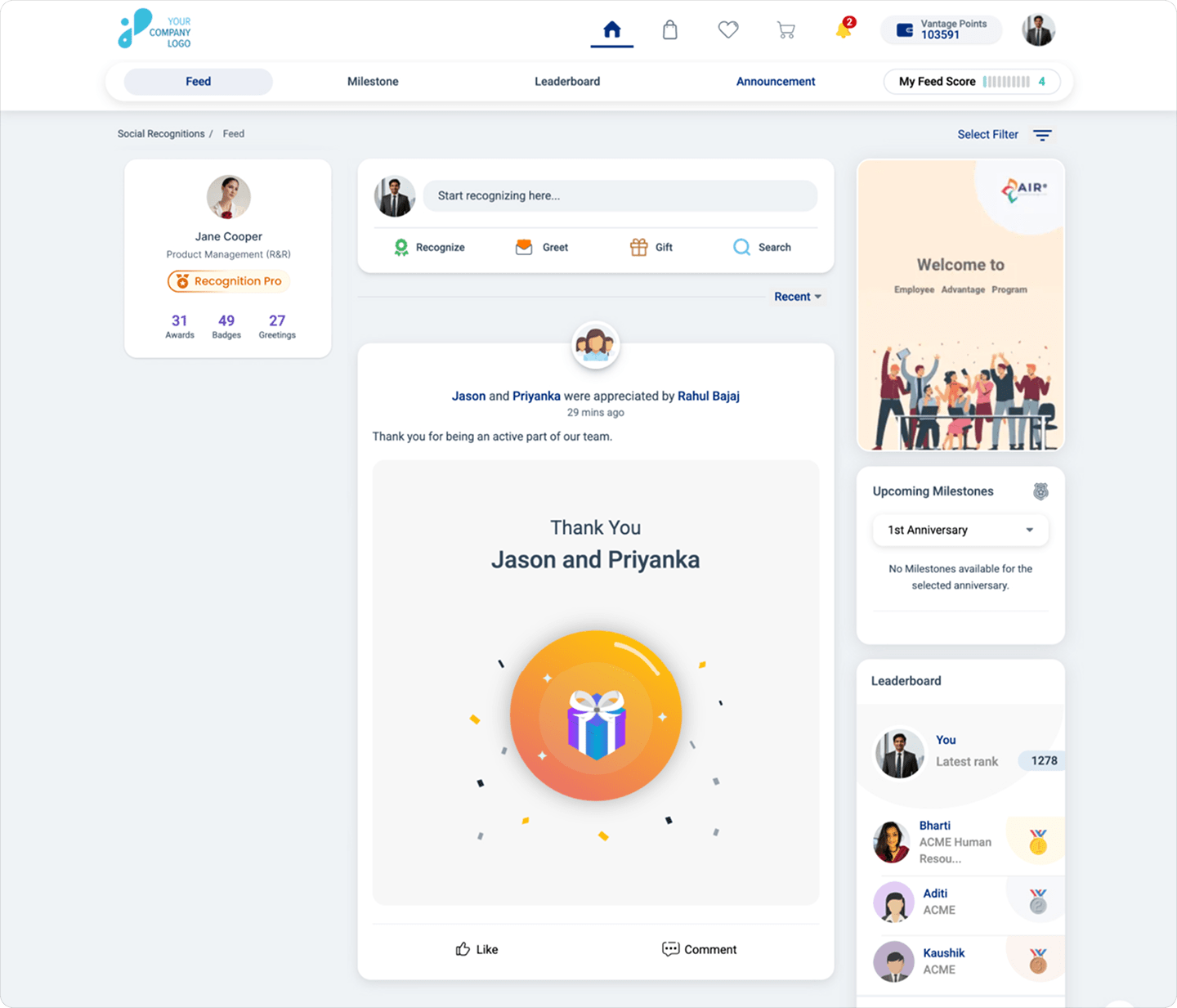
A social recognition feed combined with cross-team campaigns creates a shared space where appreciation is visible across roles, departments, and locations.
It ensures recognition isn't limited by proximity or hierarchy.
Measuring Inclusion Through Employee Feedback
Two teams may look equally diverse on paper. But the day-to-day experience can feel very different.
In one team, people feel heard, valued, and comfortable speaking up. In the other, there's silence, hesitation, and a quiet sense of disconnect.
And the tricky part? You won't always see this from the outside.
That's why relying on assumptions can be risky.
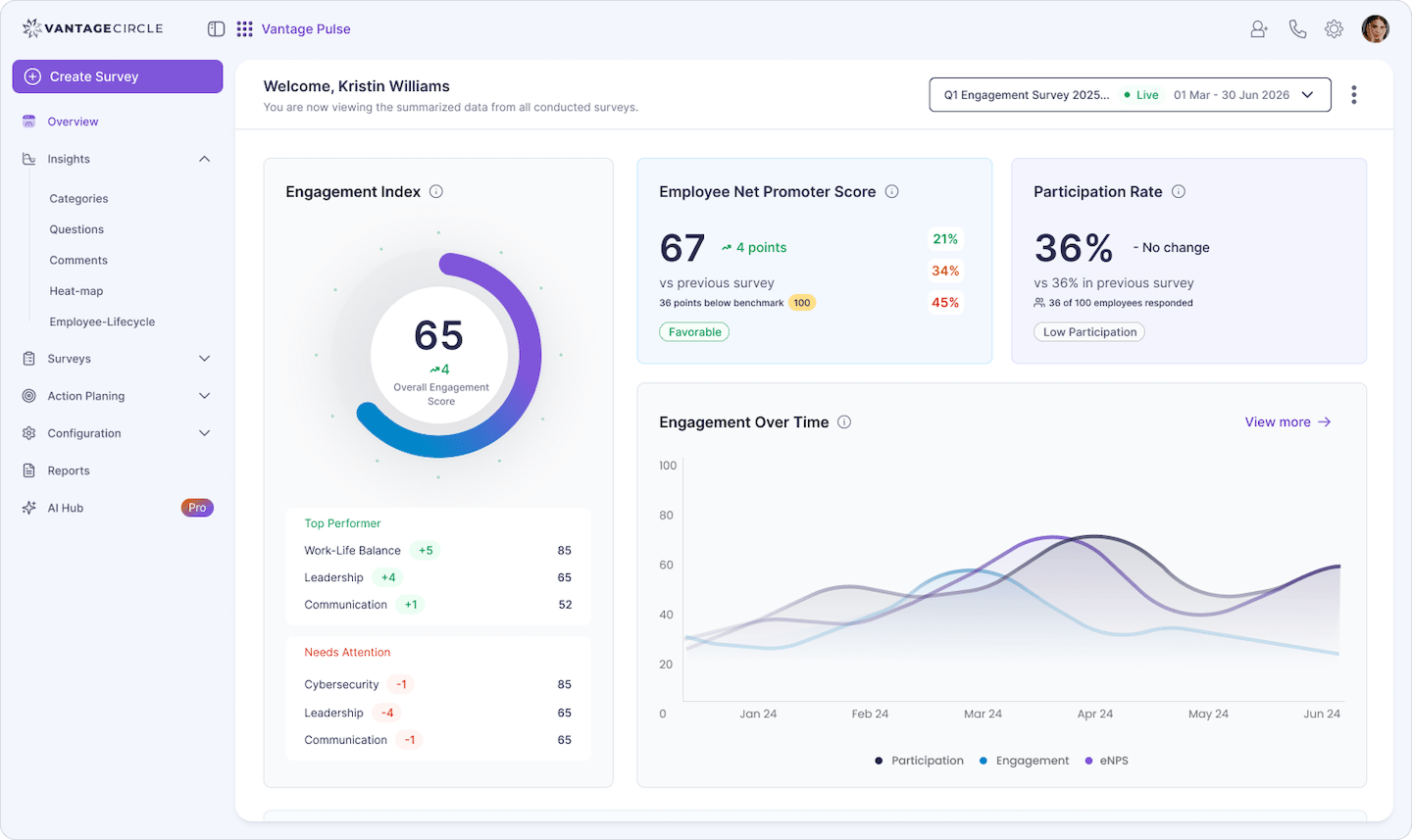
Regular employee surveys create space for employees to share how they actually feel, honestly and anonymously. They capture the lived experience behind the metrics.
Tools like pulse surveys and eNPS then help track that sentiment across teams, locations, and roles. Tracking makes it easier to see where inclusion is working, and where it's falling short.
Source: Vantage Pulse
Conclusion
Workplace diversity goes far beyond representation. It's shaped by the everyday experiences that determine whether employees feel valued, heard, and included.
From how recognition is shared to how feedback is captured, these small moments collectively define the culture of an organization.
For HR leaders, the focus isn't just on building diverse teams, but on creating an environment where that diversity can truly thrive. And that begins with paying attention to what employees experience, not just what's visible on the surface.

This article is written by Sanjeevani Saikia. Sanjeevani Saikia is a Senior Content Strategist at Vantage Circle, where she leads end-to-end content strategy across SEO, thought leadership, brand storytelling, podcasts, and video. She is also the face behind the Vantage Influencers Podcast. Through this platform, she engages with industry leaders from leading organisations across the globe, including Fortune 500 companies.
Connect with Sanjeevani on LinkedIn.