Most leaders believe they understand their company culture. They observe behaviors. They listen to anecdotes. They rely on instinct. But relying on gut feelings leads to missing critical details.
Research backs this up. Gallup reports that only about three in ten employees strongly agree that their opinions count at work. When people do not feel heard, culture weakens quietly. Performance and retention follow.
Data from Vantage Circle’s Global Recognition & Rewards Report 2025 reinforces this. When employees consistently feel appreciated and validated, intent to stay rises by 16 percentage points, and motivation increases by 18 points. When those signals weaken, motivation and retention drop by over 20 points.
The takeaway is clear. Culture is already producing measurable data. Most organizations are just unable to connect it.
So, How do you measure company culture?
Company culture is measured using a combination of quantitative metrics and qualitative insights. Strong culture measurement focuses on:
- Employee sentiment and trust
- Observable behaviors, not slogans
- Alignment between values and leadership actions
- Psychological safety
- Inclusion and fairness
- Recognition and feedback patterns
- Leadership consistency across teams
Culture is not vague. It is measurable. And the methods used can include, but are not limited to, sentiment analysis, eNPS, behavioral indicators, people outcomes, DEI & fairness metrics. Before we delve deeper into the methods, we must understand why measuring company culture matters in the first place.
Why Measuring Culture Matters
Culture shapes outcomes long before they show up in dashboards.
Productivity, retention, trust, innovation, and inclusion are not isolated results. They are downstream effects of how people experience work every day. When culture weakens, these outcomes decline quietly. By the time leaders react, the cost is already visible in attrition, burnout, or stalled performance.
Measurement changes that.
Gallup’s long-running research shows that highly engaged teams are 21% more profitable and experience 59% lower turnover in high-attrition organizations. Engagement is not accidental. It is a reflection of culture, leadership behavior, and how consistently people feel valued.
Culture data also surfaces problems that traditional HR metrics miss. Silence in meetings. Low participation in recognition. Teams that stop giving feedback. These signals rarely appear in annual reports, but they often precede disengagement and exits.
Vantage Circle’s Global Recognition & Rewards Report 2025 highlights this early-warning effect clearly. When even one core recognition signal drops, workplace sentiment falls from 98% to 83%, while motivation and retention decline by more than 20 points. These shifts happen before employees resign. Culture data reveals them early.
Measurement also strengthens leadership decisions. Instead of reacting to symptoms, leaders can trace issues back to root causes. Recognition gaps. Manager inconsistency. Lack of psychological safety. Poor communication cadence.
Most importantly, culture measurement helps leaders prove impact. It shows how recognition frequency affects belonging. How leadership communication influences trust. How feedback cycles shape engagement over time.
Recommended Read: How to Build a Sense of Belonging in the Workplace
What Company Culture Includes
Company culture is not a single feeling or initiative. It is a system of signals employees experience every day. These signals shape how people behave, speak up, collaborate, and stay.
To measure culture well, leaders first need clarity on what they are actually measuring.
At its core, company culture includes a few interconnected elements -
1. Trust and psychological safety
Employees need to feel safe sharing ideas, raising concerns, and admitting mistakes. When trust is low, silence replaces participation. Innovation slows down quietly.
2. Communication and collaboration
Culture becomes visible when information flows. Are decisions explained? Do teams collaborate across functions? Or does communication feel fragmented and top-down?
3. Values alignment
Stated values matter only when employees see them live. Culture weakens when leadership actions and daily decisions contradict what the organization claims to stand for.
4. Recognition and belonging
Who gets recognized, how often, and for what behaviors sends strong cultural signals. Consistent recognition builds belonging. Inconsistent recognition creates distance.
5. Inclusion and fairness
Culture is reflected in who feels heard, promoted, and treated fairly. Inclusion is not just representation. It is about everyday equity in opportunities and voice.
6. Learning and adaptability
Healthy cultures encourage learning, feedback, and change. Rigid cultures resist new ideas and penalize experimentation.
With this foundation clear, the next step is understanding how culture is measured in practice. That starts with two core approaches.
How to Measure Culture: The Two Core Approaches
Measuring company culture requires a mix of both quantitative indicators and qualitative methods.
Quantitative metrics give you hard data and patterns that reveal trends. These numbers are powerful because they highlight issues on a macro level, which are critical for leadership decision-making. However, these metrics alone often fail to provide the context behind the data.
Qualitative insights fill that gap. They provide the "why" behind the numbers, explaining the underlying emotions, experiences, and behaviors that quantitative data cannot capture.
Together, these two approaches provide a fuller picture of culture. Let’s break each one down.
Quantitative Indicators
1. eNPS (Employee Net Promoter Score)
A simple yet effective metric that measures employees' likelihood to recommend their workplace to others. It’s a direct reflection of overall employee satisfaction and engagement.
2. Pulse scores
These are short, frequent surveys that measure specific aspects of culture like trust, leadership alignment, or recognition. Pulse surveys provide real-time insights into how employees feel, making them one of the most effective tools for tracking culture over time.

3. Recognition frequency
The rate at which employees are recognized for their contributions. Tracking recognition ensures that it’s not just a one-off event but a daily practice that reinforces culture.
4. Attrition rates
A higher-than-average turnover rate can indicate underlying cultural issues, such as poor leadership, lack of psychological safety, or disengagement.
5. DEI (Diversity, Equity, and Inclusion) metrics
These metrics assess the representation of diverse groups within the organization, the inclusivity of the workplace, and the effectiveness of DEI initiatives.
Qualitative Methods
1. Interviews
One-on-one conversations with employees at various levels can provide deep insight into how they experience the culture. Interviews often reveal issues that surveys cannot, such as unspoken fears, frustrations, or moments of cultural disconnect.
2. Focus groups
These small, guided discussions allow employees to reflect on and share their experiences of the company culture. Focus groups are useful for diving into specific cultural issues and understanding the emotions behind them.
3. Open-text analysis
Many survey platforms allow employees to provide open-ended feedback. Analyzing this unstructured data helps uncover deeper insights about the culture, such as how employees feel about leadership, recognition, and company values.
4. Skip-level meetings
Skip-level meetings occur between employees and a manager two or more levels above them, bypassing their immediate supervisor. This allows higher-level leaders to hear concerns or suggestions that might not surface in regular conversations with direct managers.
5. Story cues (Anecdotal evidence)
Listening to the stories employees tell about their work can reveal a lot about the culture. Stories of success, struggles, and personal experiences offer a window into what really matters to the workforce.
By using both types of data, leaders can get a clear, holistic picture of their company culture and identify areas for improvement. But collecting this data is only the first step. It needs to be interpreted correctly by following the best practices.
Best Practices for Measuring Culture
To get the most out of culture measurement, it’s important to follow best practices that ensure the data is actionable, fair, and aligned with your organizational goals. Here are some of the key best practices:
1. Use Both Quantitative and Qualitative Data
Culture measurement is most effective when you combine numbers with stories. While quantitative data shows trends, qualitative insights provide context and explain the "why" behind the numbers.
2. Don’t Measure Too Many Dimensions at Once
Trying to measure every aspect at once can lead to overwhelming data that’s hard to interpret. Instead, prioritize the key areas most relevant to your organization's goals.
Example: If you’re focusing on improving inclusion, start by tracking DEI metrics and employee sentiment before expanding to other aspects, such as recognition or leadership alignment.
3. Make Pulses Short and Frequent
Rather than relying on annual surveys, use shorter, more frequent pulse surveys to measure culture continuously. This allows you to track real-time changes and quickly respond to emerging trends.
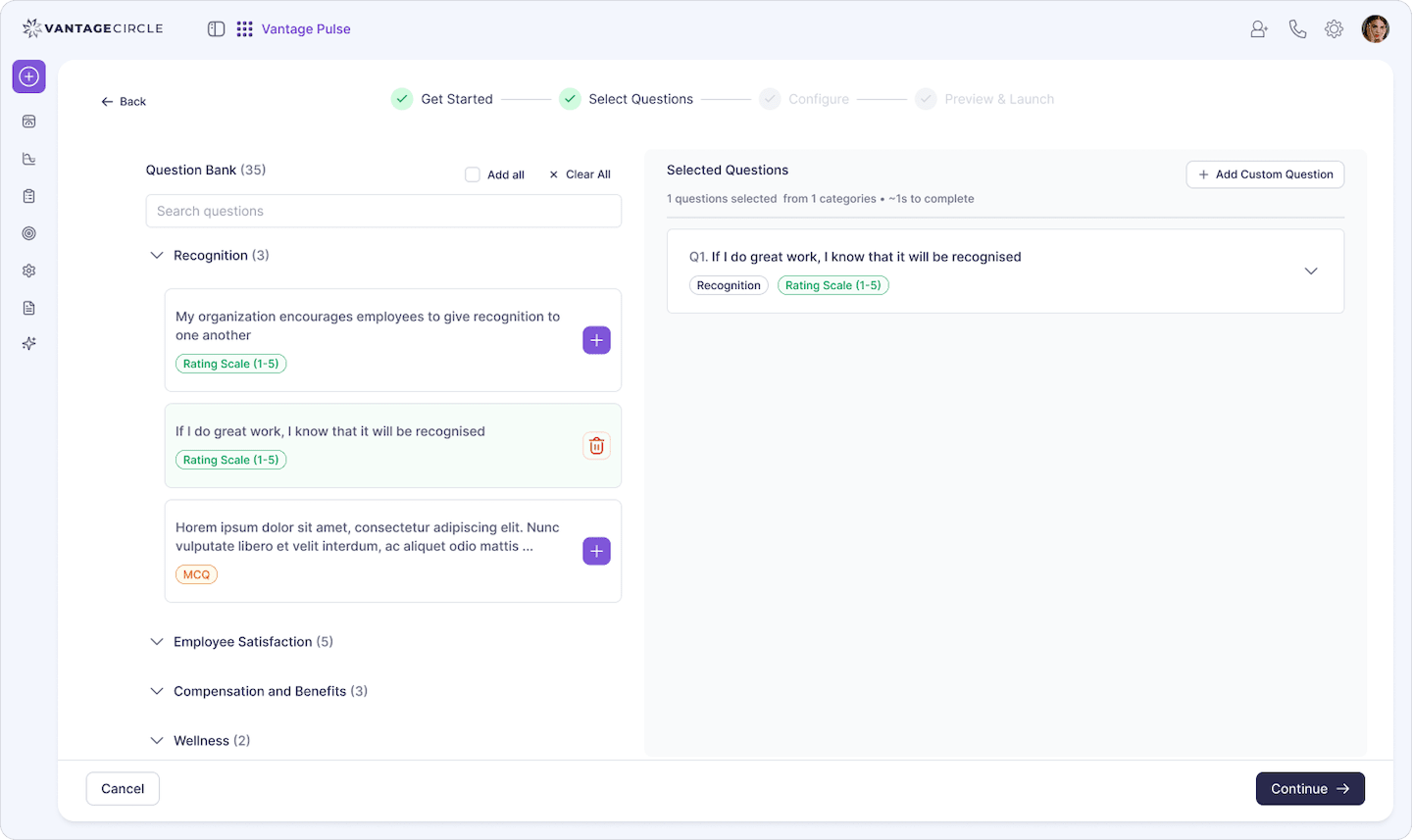
Use frequent check-ins to help prevent the survey fatigue that often accompanies large, infrequent surveys.
4. Close the Feedback Loop
Collecting data is only half of the battle. The real value comes when you act on it. Always ensure that you close the feedback loop by communicating to employees about what changes will be made based on their input.
5. Involve Managers Intentionally
Managers play a crucial role in shaping company culture, and their involvement in measuring culture is essential. Train managers to observe, interpret, and act on cultural indicators within their teams. They should be actively engaged in the feedback process.
6. Normalize Psychological Safety in Surveys
Psychological safety is a critical component of a healthy company culture. Ensure that your surveys and feedback mechanisms create a safe environment for employees to share honest opinions without fear of retaliation.
7. Measure Trends, Not One-Off Scores
Culture measurement should focus on long-term trends rather than one-time scores. Track changes over time to see if efforts to improve culture are making a measurable impact. This approach helps identify whether the initiatives you’ve put in place are genuinely shifting the culture or if further action is needed.
8. Compare Team vs. Organization Benchmarks
While it’s important to measure overall company culture, it’s also useful to compare team-level data with broader organizational benchmarks. This helps identify departments or groups that may be struggling with specific cultural issues.
9. Protect Anonymity in Sensitive Topics
For sensitive topics like leadership performance, inclusion, or workplace harassment, ensure that anonymity is protected. This encourages more candid responses and increases the reliability of your data.
10. Communicate Insights Transparently
Once data is collected, analyzed, and acted upon, share the findings with the organization. Be transparent about what has been learned, what changes will be made, and how employees can continue contributing to cultural evolution. This transparency fosters trust and a culture of continuous improvement.
Real Examples: What Strong and Weak Culture Indicators Look Like
Measuring culture means understanding what the data tells you. Let’s look at some real-life examples of strong and weak culture indicators.
Example 1: Recognition Culture
Strong Indicator: Recognition is frequent and meaningful. Employees at all levels feel seen, appreciated, and celebrated regularly. Peer-to-peer recognition is encouraged, and leadership sets the tone by recognizing efforts across teams.
- Impact: Employees feel more connected, motivated, and engaged.
- Relevant Data: According to Vantage Circle’s Global Recognition & Rewards Report 2025, when recognition is consistent and meaningful, motivation increases by 18% points, and intent to stay rises by 16% points.
Weak Indicator: Recognition is inconsistent and often limited to high-level achievements or specific individuals. This leads to a sense of unfairness and a lack of engagement.
- Impact: Low morale and disengagement increase, leading to higher turnover.
- Supporting Data: When recognition falters, motivation and retention decrease by over 20 points.
Example 2: Communication Culture
Strong Indicator: Open, transparent communication flows freely from leadership to employees. Feedback is encouraged, and teams collaborate effectively across functions.
- Impact: Strong alignment on goals, increased trust, and better team cohesion.
- Supporting Data: Gallup’s research shows that employees who strongly agree they “receive the information they need to do their jobs” are significantly more engaged, and that highly engaged teams achieve 21% higher profitability and 17% higher productivity than those with low engagement, underscoring how clear, consistent communication feeds engagement and performance.
Weak Indicator: Communication is one-way, from the top down. Employees feel disconnected from company decisions, which leads to confusion and disengagement.
- Impact: Misalignment, poor trust, and low engagement.
- Supporting Data: Research found 63% of employees considering leaving their jobs cite poor communication as a contributing factor.
Example 3: DEI Culture
Strong Indicator: Diversity, equity, and inclusion are embedded into the company’s core values. DEI is a consistent focus in leadership communication, hiring practices, and everyday interactions. Employees from diverse backgrounds feel included and valued.
- Impact: Higher employee satisfaction, increased creativity, and stronger business results.
- Supporting Data: McKinsey’s research indicates that companies in the top quartile for racial and ethnic diversity are 35% more likely to outperform their industry peers.
Weak Indicator: DEI efforts are limited to one-off events or lack follow-through. Diverse employees feel excluded, and there are few opportunities for marginalized groups to influence decision-making.
- Impact: Increased turnover, decreased engagement, and a sense of division.
- Supporting Data: Recent research shows 43% of employees would consider resigning if their employer retreated from DEI.
Example 4: Psychological Safety
Strong Indicator: Employees feel comfortable sharing ideas and raising concerns without fear of retaliation. Leaders actively foster an environment of openness and learning from mistakes.
- Impact: Increased innovation, higher team collaboration, and better problem-solving.
- Supporting Data: Google’s Project Aristotle found that psychological safety was the number one factor distinguishing high‑performing teams, outranking even individual ability and clear goals.
Weak Indicator: Employees avoid speaking up for fear of judgment or punishment. Mistakes are criticized, and feedback is often punitive rather than constructive.
- Impact: Reduced innovation, poor morale, and stagnant progress.
- Supporting Data: According to the Center for Creative Leadership, companies with low psychological safety experience lower performance and higher interpersonal conflict.
Example 5: Engagement Trends
Strong Indicator: Engagement scores are consistently high, with employees feeling aligned with the company’s values and goals. Recognition, feedback, and leadership visibility are part of everyday work.
- Impact: Higher productivity, better collaboration, and increased retention.
- Supporting Data: According to Gallup, highly engaged teams show 23% higher profitability compared to low-engagement teams, alongside 18% higher sales productivity.
Weak Indicator: Engagement scores are low, with a downward trend over time. Employees feel disconnected from the company’s mission and values.
- Impact: High turnover, low morale, and a disengaged workforce.
- Supporting Data: Gallup’s research shows that disengaged employees cost companies 18% lower productivity and 43% higher turnover, contributing to trillions in global losses.
Turning Culture Data Into Actionable Insights
Collecting culture data is just the beginning. The real value comes when you take that data and turn it into meaningful action. Here’s how you can create a plan that moves from insight to improvement.
1. Prioritize Key Issues
Not all cultural challenges can be fixed at once. Focus on 2-3 issues per quarter that are most critical to your organization’s culture and goals. For example, if your surveys reveal low psychological safety, prioritize creating open communication channels and reinforcing trust within teams. By narrowing your focus, you make it easier to track progress and create real impact.
2. Co-Create Solutions with Employees
Culture change needs to be a collaborative process. Engage employees at all levels to co-create solutions. This could be through focus groups, skip-level meetings, or brainstorming sessions. When employees feel like part of the solution, they’re more likely to buy into the changes and actively participate in creating the new culture.
3. Tie Actions to Measurable Metrics
Effective culture programs are outcome-driven. For instance, if recognition efforts are linked to higher belonging scores, use recognition data to measure improvement in inclusivity. Ensure that your actions are not abstract but tied to concrete metrics that show progress, like higher engagement, lower turnover, or improved feedback scores.
4. Communicate Progress Transparently
After implementing changes, communicate the results to your organization. Whether it’s a change in recognition frequency, leadership behavior, or DEI practices, be transparent about the actions taken and the results achieved. Regular updates keep employees engaged and motivated, and reinforce the idea that their feedback drives real change.
5. Track Improvements Over Time
Culture measurement is not a one-time event. Make it an ongoing process by tracking progress regularly. Use tools like pulse surveys and focus groups to monitor how the changes are impacting the culture over time. As you gather more data, refine your strategies to ensure continuous improvement.
Tools to Measure Culture
When it comes to measuring company culture, having the right tools can make all the difference. These tools help you collect, analyze, and act on culture data with greater efficiency and accuracy. Here are the key categories of tools to consider for tracking culture effectively:
1. Pulse Survey Platforms
- Culture Amp: Provides tools for conducting employee engagement and culture surveys.
- Vantage Pulse: A comprehensive pulse survey platform that measures employee sentiment and provides actionable insights across key culture dimensions, helping organizations track cultural shifts in real time.
2. Recognition & Feedback Platforms
- Vantage Recognition: A comprehensive platform for recognizing employees in a personalized, timely manner, helping to build a culture of appreciation.
- Bonusly: Allows employees to give micro-bonuses to peers, fostering a culture of ongoing recognition.
3. People Analytics Tools
- Workday People Analytics: Offers a robust set of analytics for measuring employee experience and culture.
- Visier: Helps organizations track key people metrics and analyze cultural trends over time.
4. External Reputation Tools
- Glassdoor: Tracks employee reviews and company ratings, providing insight into how your culture is perceived externally.
- Trustpilot: Collects and displays customer reviews, giving indirect feedback on company culture and performance.
Summing it Up
Measuring company culture is essential for informed decision-making. With the right tools and methods, you can track culture in real-time, identify areas for improvement, and drive meaningful change.
By using both quantitative metrics like pulse survey scores and qualitative insights from interviews, you gain a comprehensive view of your culture. Tools like Vantage Pulse and Vantage Recognition make this process seamless, helping you act on the data and make culture a strategic asset.
Culture is measurable, actionable, and can drive better engagement, retention, and performance. Start measuring today, and turn insights into real impact.

This article is written by Nilotpal M Saharia. Nilotpal M Saharia is a Senior Content Marketing Specialist & R&R Strategist at Vantage Circle, with 7 years of expertise in marketing, HR, and content strategy.
Connect with Nilotpal on LinkedIn.