People don’t just repeat what gets rewarded. They repeat what gets recognized in front of others.
A decade ago, social recognition wasn’t a topic that HR experts were talking about. But as workplaces started noticing employees feeling unseen, undervalued, and disengaged, the need for employee recognition became evident. That’s when its social aspect, too, entered the scene - and social recognition has gained significant traction in recent years.
Infact, the global “social employee recognition systems” market (platforms that enable public/peer recognition, social-feed style) reached around USD 15.8 billion in 2024 and is projected to hit USD 41.2 billion by 2033 (CAGR -10.1 %).
In this blog, we go over the fundamentals of social recognition. We will start with its meaning and importance and check out some social recognition types with examples.
We wrap this blog up with interesting tips for implementing a successful social recognition program. And if you are seeking quick answers or solutions to common questions about social recognition, you can jump into our FAQ section as well!
What Is Social Recognition?
Social recognition involves acknowledging and rewarding employees in a social manner, such as expressing gratitude in team meetings, featuring them in newsletters, or providing digital badges. In modern workplaces, it can be challenging to maintain such recognition, especially for remote teams. Utilizing digital platforms can create a common forum for social recognition in such environments.
Now let’s explore the different effective examples of social recognition that can be implemented in any organization to create a thriving and inclusive work environment.
Why Social Recognition Matters?
At its center, social recognition meets two basic human needs defined by Maslow's Hierarchy - the need for belonging and esteem.
In a workplace, employees do not want just to complete tasks but desire to feel connected, valued, and seen. When peers or leaders publicly acknowledge someone's effort, it strengthens the feeling of being included - thus satisfying the need for belonging.
Beyond that, appreciation is a signal of respect and achievement; it directly feeds into the esteem layer of Maslow's pyramid. Employees who receive regular recognition become more confident and motivated; they take pride in their contributions.
And together these effects translate into measurable advantages for both employees and the organization.
Benefits of Social Recognition And Why Does It Matter?
Many employees, particularly those working from home, may feel their efforts go unnoticed. Naturally, this can lead to a drop in engagement and, as a result, a drop in staff retention.
A social recognition program that allows all employees to instantly see, support, and remark on their peers' achievements can enhance engagement and job happiness.
Wipro partnered with Vantage Circle to revamp its global recognition program, “Winners’ Circle.” The goal: make recognition timely, frequent, and embedded into everyday work culture.
- Always-on recognition: Employees receive real-time appreciation instead of waiting for annual reviews.
- Mass adoption: Over 57% of employees were recognized in a year.
- Cultural shift: Recognition became a daily habit, not a one-time event.
- Data-backed impact: A 97.5% increase in appreciation since 2022 improved overall productivity
What began as an initiative gradually evolved into a culture of everyday appreciation—driving stronger engagement and productivity.
Happy, recognized employees are easier to retain. It's a small investment in saying "great job" that pays off big — reducing spending on hiring and training while strengthening team spirit.
Social recognition can help organizations showcase their values and positive culture.
Recognizing the success of a campaign, for example, promotes the qualities of innovation and dedication. Likewise, celebrating a personal event such as a birthday adds to a positive, inclusive, and human workplace.
Appreciation makes employees happy — and happy employees stick around because they enjoy coming to work.
Social recognition benefits go beyond internal appreciation. It also opens the door to external recognition from customers, clients, and vendors.
The key to customer happiness is to prioritize employee happiness. Happy employees provide exceptional experiences that attract and retain new clientele. It's simple: happy employees lead to happy customers.
In human resources, attracting and retaining great talent requires differentiating your brand from competitors.
Every organization has "silent superstars" at the entry level — those who create wonderful results but stay under the radar of usual recognition systems.
Recognition takes them forward, proving their readiness for bigger responsibilities. They gain peers' and seniors' trust and respect in a very short period.
Uncovering these hidden contributors requires both a strong internal communication platform and an effective employee survey tool that facilitates anonymous feedback from managers and peers beyond the immediate team — empowering leaders to recognize and support talent that traditional systems miss.
As a leader, your recognition holds tremendous value. Acknowledging and appreciating your team's efforts through social recognition contributes to a positive leadership image — leaders who consistently value their team's contributions cultivate respect, trust, and admiration.
It shapes a culture characterized by approachability, empathy, and genuine concern for employee well-being — all factors that help define positive, effective leadership.
Examples and Forms of Social Recognition
Social recognition takes many forms - here's a look at each.
Recognition posts on digital feeds
DigitalDigital social recognition involves a shared platform where employees can see who was recognized, by whom, and for what achievements. Being digital, it allows recognition to be instant, spontaneous, and visible across the organization. It serves as a central hub where employees can gather, share workplace experiences, and interact with each other. For example, peers can congratulate one another in the comments, creating a personal touch that strengthens workplace relationships.
Such interactions foster genuine connections, leading to higher engagement and, consequently, improved productivity.
Platforms like Vantage Circle are particularly effective in this regard. They enable peer-to-peer recognition, boost engagement, and provide instant rewards, making appreciation both meaningful and actionable.
The platform includes several features that make it ideal for social recognition:
- A. Single sign-on (SSO) and seamless integration with HRMS and chat applications for effortless access.
- B. Interactive recognition posts - employees can like, comment, and share recognitions, encouraging social engagement and peer support.
- C. Points-based rewards system - offers flexibility to choose between monetary or non-monetary awards, giving recognition a tangible impact.
- D. Easy-to-use mobile version — makes recognition immediate, convenient, and hassle-free, ensuring no achievement goes unnoticed.
- E. Gamified features — leaderboards and badges promote friendly peer competition and motivate consistent performance.
- F. Vantage Pulse surveys — managers can create custom surveys to capture employee feedback, gain actionable insights into performance, and leverage analytics for continuous improvement.
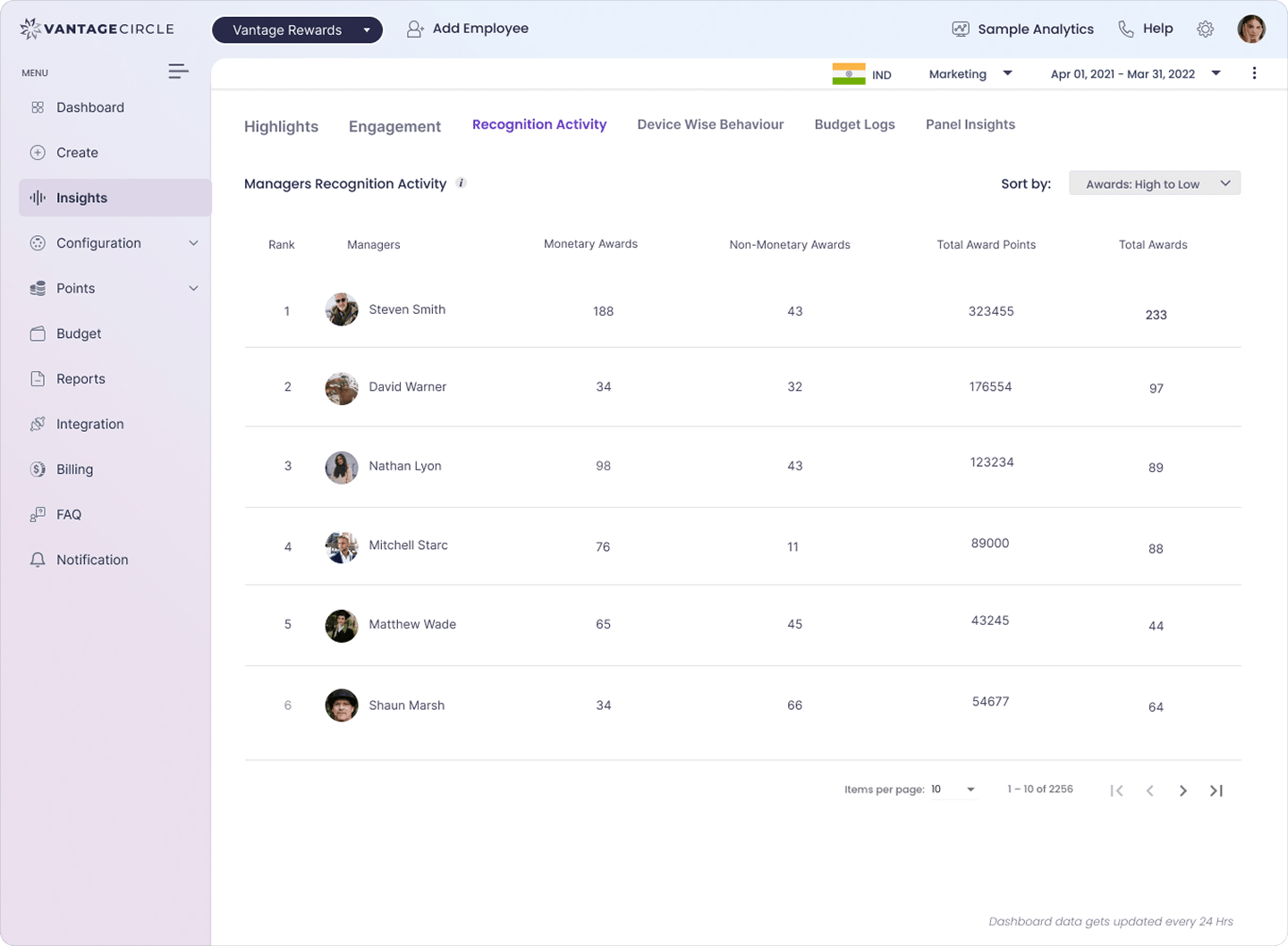

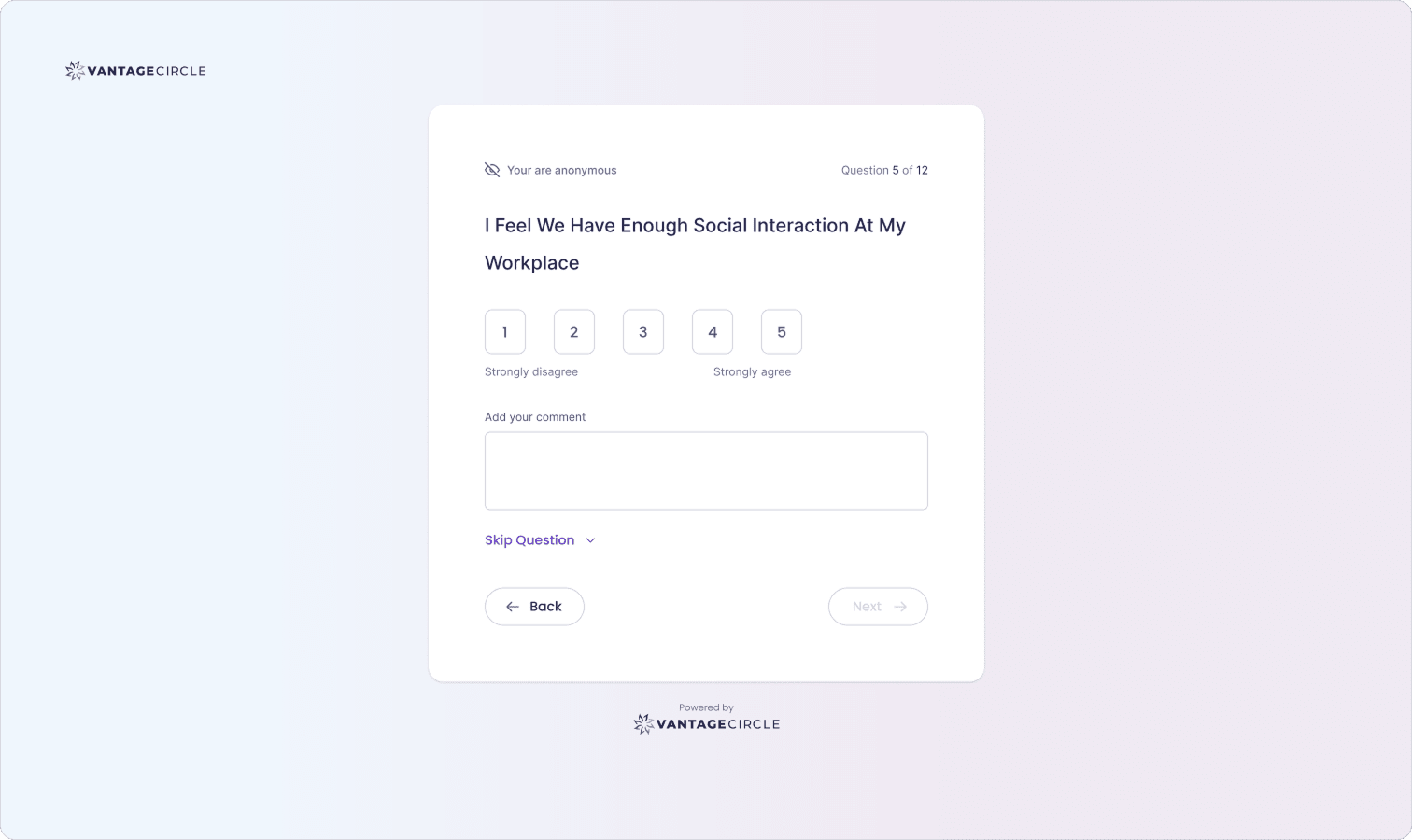
The above visuals showcase Vantage Circle's platform in action - from the manager recognition activity feed and the social wall where employees can like and comment on recognitions, to the Vantage Pulse wellness survey screen for capturing employee feedback
Monthly Newsletter Shoutouts
Highlighting top performers, innovative contributions, or project milestones in internal newsletters reinforce organizational priorities. It creates visibility for high performers, motivates peers to emulate best practices, and embeds recognition into formal communication channels.
By combining instant visibility, social interaction, and gamified rewards, digital recognition platforms like Vantage Circle turn everyday appreciation into a powerful tool for engagement, motivation, and workplace culture.
Notice boards
Notice boards are one of the oldest ways to make a public announcement. A well-designed, engaging notice board can entice people to stop walking, glance away from their phones, and absorb relevant messages. The only catch is that your board ideas must be very good.
Social intranet platform
A social intranet serves the same functions as social media apps in the workplace. It is a platform for internal communication and cooperation that allows employees to interact and create relationships. A social intranet promotes information exchange, interactions among colleagues, and collaboration around common goals.
Company Social Media Highlights
Sharing employee achievements externally not only strengthens employer branding but also signals a culture of appreciation to current and potential talent. It aligns recognition with strategic business objectives and positions employees as brand ambassadors.
The Top Best Practices For Social Recognition?
1. Be Immediate and frequent: Recognize in real time.
Strike while the iron is hot. And push your employees to strive to perform their best continually.
Don't wait. If an employee does an outstanding job or goes above and above, recognize them immediately.
More than 90% of employees say that when they are recognized for work, they are more inclined to repeat it.
Social recognition is only effective when employees recognize one another voluntarily. “Predetermined award timing is a common employee recognition problem,” says SHRM.
2. Encourage Peer-to-Peer Recognition: Let everyone participate.
Encouraging peer-to-peer recognition helps build a more inclusive and appreciative workplace. When employees recognize each other, appreciation becomes more frequent, authentic, and meaningful. It strengthens team bonds, boosts morale, and creates a culture where recognition flows in all directions - not just top-down.
3. Be Inclusive: Recognize across roles and locations.
Inclusive recognition ensures that appreciation reaches everyone - not just a select few. It fosters a sense of belonging, breaks down silos, and reinforces that every contribution, no matter where it comes from, adds value to the organization’s success.
4. Lead by Example: Leadership participation sets the tone.
The success of any social recognition initiative starts at the top. When senior leaders actively participate in recognizing others, it sends a strong message that appreciation truly matters. Employees view leadership as credible and are more likely to follow their example - creating a ripple effect where recognition becomes a natural, organization-wide habit.
5. Make It Fun: Use GIFs, emojis, and gamification.
Look for ways to customize your recognition with humorous gifs/ photographs, like, and comments section. A point-based rewards system is another fantastic way to make showing appreciation appealing.
6. Invest in a recognition software

Take time to appreciate employees, and they will reciprocate in a thousand ways.- Dr. Bob Nelson
If you're considering moving recognition online or starting your employee recognition effort from scratch, you must invest in employee recognition software.
Apart from being engaging, it has the following benefits:
Recognition software allows managers to evaluate the effectiveness of the initiative better. They know what is working for their employees, and it's the potential return on investment.
Recognition software ensures that every employee, regardless of location or organization level, can get the same recognition experience.
When implementing an employee recognition program, HR can expect minimal headaches. It comes with less admin work after it's set up, integrated with existing systems, and launched.
Digital platforms like Vantage Circle replace the archaic concept of a once-a-year employee appreciation ritual. With Vantage Recognition, well-deserving VCian receive immediate appreciation for work well done by their managers and teammates.

Some Famous Social Recognition Programs
Here are some popular and well-known social recognition platforms used for employee recognition and engagement in the workplace:
1. Vantage Circle: As discussed above, Vantage Circle is an employee recognition platform that offers a comprehensive suite of tools to celebrate achievements, reward employees, and enhance engagement through personalized rewards, social recognition, and employee benefits.
2. Kudos: Kudos is a user-friendly employee recognition platform that fosters a positive workplace culture by enabling employees to give and receive meaningful recognition, track achievements, and build a sense of appreciation and camaraderie within the organization.
3. Bonusly: With a focus on peer-to-peer recognition, Bonusly allows employees to give and receive micro-bonuses as a form of appreciation, fostering a culture of continuous recognition and encouraging positive behaviors.
4. Fond: Fond provides an intuitive platform for recognizing and rewarding employees, offering access to various perks and rewards to boost employee morale and maintain a motivated workforce.
5. Terryberry: Terryberry's employee recognition solutions encompass various tools like awards programs, social recognition, and performance-based rewards, facilitating organizations to build a culture of recognition and improve employee retention.
6. Awardco: Awardco is an all-in-one platform that empowers companies to recognize their employees' accomplishments with a diverse range of rewards and customizable recognition programs.
7. Motivosity: Motivosity emphasizes peer-to-peer recognition and regular feedback through its employee engagement platform, fostering a culture of appreciation, teamwork, and transparent communication.
8. Reward Gateway: Reward Gateway is an employee engagement platform that offers social recognition features alongside employee benefits, discounts, and well-being programs, enhancing overall employee satisfaction and motivation.
9. O.C. Tanner: O.C. Tanner specializes in creating customized recognition solutions, enabling companies to celebrate achievements, appreciate milestones, and strengthen employee engagement through meaningful rewards.
10. Achievers: Achievers provides a robust employee recognition platform that promotes continuous appreciation, aligns with company values, and encourages positive behaviors for enhanced employee engagement and productivity.
Conclusion
At the end of the day, social recognition isn’t a feature - it’s a feeling. It’s what turns colleagues into teammates and workplaces into communities. When appreciation becomes part of your culture, people don’t just show up to work - they show up to each other. And that’s where the real magic of belonging begins.
Frequently Asked Questions About Social Recognition
1. What is social recognition in the workplace?
A. Social recognition in the workplace refers to the practice of acknowledging and appreciating employees' achievements and contributions publicly within the organization, fostering a culture of appreciation and camaraderie.
2. What is an example of social recognition?
An example of social recognition is when a team leader publicly praises an employee's outstanding performance during a team meeting, highlighting their efforts and impact on the project's success.
3. What is the power of social recognition?
A. The power of social recognition lies in its ability to boost employee morale, strengthen interpersonal connections, and improve overall employee engagement, leading to increased productivity and a positive work environment.
4. What is the effect of social recognition?
A. Social recognition positively affects employee motivation and job satisfaction, leading to higher retention rates, improved teamwork, and a sense of belonging, ultimately driving organizational success and employee loyalty.

This article is written by Susmita Sarma. "Susmita Sarma is a Digital Marketer at Vantage Circle, making employee recognition less of a checkbox and more meaningful - helping organizations say “we value our people” and truly mean it.
Connect with Susmita on LinkedIn.