HR Takeaway: Why Points Beat Cash for Employee Rewards
Points-based employee rewards systems are replacing traditional recognition for three reasons:
- They increase engagement through immediate, visible recognition;
- They reduce cost waste by giving HR granular budget control per event; and
- They give employees autonomy over their rewards.
Quick comparison: Points offer high flexibility, budget control, and measurability. On the other hand cash bonuses blend into salary and are forgotten and gift cards? They limit choice to a single brand. Points win in all three dimensions.
A point-based reward system transforms the approach of an organization from a one-size-fits-all program to something more meaningful and flexible. It allows the employees to earn digital points for specific behaviors and achievements.
Picture this: Sarah from accounting just closed a complex project three days early. Instead of her effort disappearing into the void, she gets immediate employee recognition.
How? Through your company's points system.
She's not just another employee—she's someone whose contribution actually matters.
That's the power of points-based rewards. No more waiting for annual reviews or hoping someone notices your team's hard work.
Why this matters now
Your people are craving recognition. Employees who received meaningful recognition were 45% less likely to leave within two years.
The reality check? Recognition still occurs behind closed doors.
Maybe it does not happen at all.
Points-based systems change this game entirely. They make recognition visible, immediate, and fair. Everyone knows where they stand and what their efforts mean.
The cost of getting it wrong is steep
Employees who feel undervalued don't just quietly disengage—they leave. Gallup research shows they're twice as likely to quit within 12 months. That's not just an HR statistic; it's your top performer walking out the door.
Your complete implementation roadmap
This guide gives you everything needed to build a points-based reward system that your team will actually use and love. From program design to measuring real business impact, we're covering the practical steps that turn recognition from an afterthought into a competitive advantage.
What Is A Points Based Rewards System?
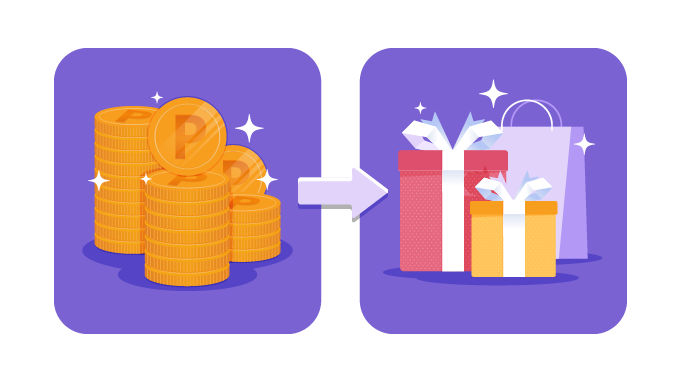
A points-based rewards system is a structured recognition program where employees earn digital points for specific behaviors, achievements, or contributions.
These points can be redeemed for tangible rewards like gift cards, extra time off, or workplace perks.
Here's how it works in action.
Sarah from marketing stays late to help finish a client presentation. She earns points.
Dev from IT patiently walks everyone through that tricky new software update. Points for him too.
Someone consistently shows up and crushes their daily goals? More points.
These aren't just digital gold stars. Points accumulate in each employee's personal account, and they can redeem them for rewards they actually want.
Real rewards people care about:
- Amazon gift cards
- Extra PTO days
- Those noise-canceling headphones everyone's been eyeing
- Team lunch vouchers
- Professional development courses
- Curated experiences in 60+ countries
The effectiveness of a points program depends on redemption choices. For example-
A comprehensive catalog offering 1,000+ eGift card brands, an Amazon Store with 10M+ products, and curated experiences in 60+ countries ensures every employee finds something personally meaningful, not just generically acceptable.
Why this beats traditional recognition.
The old system relied on managers remembering to give praise months later during reviews. By then, nobody recalls what happened anyway.
Points-based systems flip this script entirely. Recognition happens immediately when behaviors occur.
Everyone plays by the same transparent rules, so the quiet high performers get noticed alongside the naturally vocal team members.
In practice, a points-based system in the form of Vantage Points automates currency conversion and applies SOLI (Standard of Living Index) matrix. So, 100 points carry equivalent purchasing power whether it is redeemed in New York or New Delhi. This solves the biggest challenge of creating a global rewards program which is equitable recognition across different geographies.
The peer-to-peer advantage.
Many platforms let colleagues recognize each other directly.
Appreciation flows from all directions—not just top-down from management.

Image: The platform image depicts a peer recognizing their fellow peer.
(Source:Vantage Recognition)
When your teammate can instantly reward your help on a project, recognition becomes part of your daily culture.
Bottom line: It transforms "maybe the boss will notice" into "your effort definitely counts."
Recommended Resource: Empower the Workforce With A Culture of Peer-to-Peer Recognition
Points-Based vs. Traditional Reward Systems: Key Differences
The table below breaks down how points-based systems compare to traditional alternatives across the dimensions that matter to HR leaders evaluating their options.
| Criteria | 🏆 Points-Based | 💵 Cash Bonuses | 🎁 Gift Cards |
|---|---|---|---|
🛍️ Employee Choice |
|||
💰 Budget Control |
|||
🌍 Global Scalability |
|||
⚡ Timeliness |
|||
📊 Measurability |
|||
💎 Perceived Value |

10 Use Cases for a Points-Based Employee Rewards System
Here are 10 specific ways companies implement points-based rewards and how it has an impact on the business outcome. These examples show different approaches that you can adapt to your own organization.
Here are some creative ways companies are implementing points-based rewards. These examples show different approaches you can adapt for your own organization.
1. Points for Completing Milestones
Jake from engineering wraps up that complex database migration. Instead of moving on to the next crisis, he gets 200 points and immediate recognition for hitting his deadline.
Points scale with complexity: 50 for training sessions, 200 for project milestones, 500 for quarterly targets. Some companies add bonus multipliers for early completion.
Why it works: Transforms routine completions into celebrated victories. Employees develop stronger finish-line habits.
Business impact: Direct improvement in project completion rates and deadline adherence.
2. Points for Mastering New Skills
Maria from HR spends her weekend learning new payroll software. She earns 300 points for mastering something that benefits the entire team.
Structure varies by complexity: 100 points for online courses, 300 for certifications, 500 for advanced technical skills.
Why it works: Learning becomes opportunity instead of burden. Career growth feels supported and rewarded.
Business impact: Builds skilled workforce internally without external training costs. Reduces turnover through clear advancement paths.
3. Eco-Friendly Actions: Rewarding Sustainable Choices
Sarah bikes to work daily, earning 25 points each time. She says it makes her think twice before printing unnecessary emails.
Simple system: 25 points for sustainable transport, 50 for recycling, 100 for energy-saving suggestions.
Why it works: Daily eco-choices feel meaningful and recognized.
Business impact: Lower utility bills, reduced waste costs, improved company reputation. Moreover, the overall carbon footprint reduces.
4. Points for Acts of Kindness and Peer Support
David stays late helping the new intern navigate client databases. His teammate nominates him for 75 points the next day.
System: Colleagues nominate each other for collaborative efforts. Points range from 25-100 based on impact level.
Why it works: Kindness gets noticed instead of taken for granted. Shifts workplace from competition to collaboration.
Business impact: Stronger teamwork naturally boosts productivity, without the need for forced initiatives.
5. Points for Customer Feedback and Service Excellence
Tom in customer service sees challenging interactions as point-earning opportunities. Each complaint he converts earns recognition.
System rewards results: 100 points for 5-star reviews, 150 for testimonials, 200 for referrals.
Why it works: Difficult customer moments become worthwhile when exceptional effort gets recognized.
Business impact: Higher customer retention and referral rates through genuine service motivation.
6. Manager Spot Awards
It's Saturday morning. Ravi's phone won't stop buzzing as production goes down. Two hours later, he fixed everything from his kitchen table. His manager doesn't wait until Monday. She drops 800 points with one line: "Ravi saved our weekend. Literally."
No committee. No approval chain. Just 500–1,000 points delivered while the moment still matters.
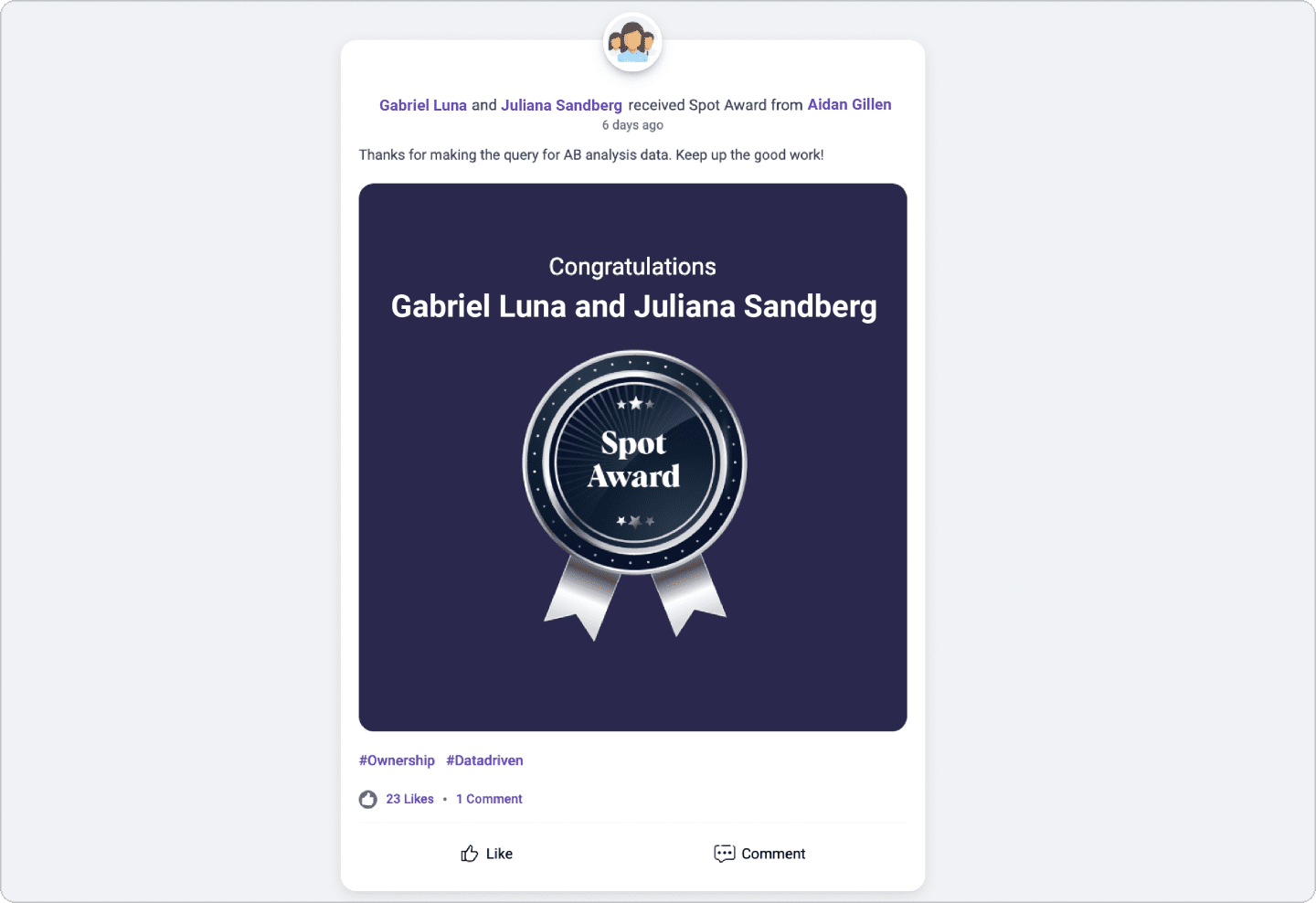
Figure: The images portrays how a spot award looks like given by a manager.
(Source:Vantage Recognition)
System rewards results: 500 points for going above and beyond, 800 for critical fixes, 1,000 for company-saving contributions.
Why it works: Getting thanked three weeks later feels like a formality. Getting recognized the same day you sacrificed your Saturday? That stays with you.
Business impact: Faster incident response and stronger retention of the people who always carry the heaviest load.
7. Safety and Compliance Milestones
Ninety days. Zero incidents. For a warehouse crew handling heavy equipment every shift, that's not luck. That is everyone looking out for each other. Each member earns 300 points, and the milestone hits the company's feed. Someone in accounting comments "that's incredible." The team lead screenshots it for the break room wall.
System rewards results: Points run from 100 for safety training to 500 for team streaks. And here's what most companies botch: they build slick digital platforms and forget that half their people don't sit at desks. Physical scratch cards with QR codes fix that. A forklift operator scratches a card on break, scans it, and the points land just like everyone else's.
Why it works: Frontline workers have watched office teams get recognition perks for years while they got a pizza party if they were lucky. This levels things up.
Business impact: Fewer incidents, a compliance culture that actually holds, and real savings on workers' comp.
8. Work Anniversary and Milestone Celebrations
Lisa forgot her own 5-year anniversary. The company didn't. She opens her phone to 3,000 points, a personalized yearbook from her five years, and messages from teammates she didn't even realize were paying attention.
She later tells a friend, "I was honestly thinking about updating my resume last month. That morning changed something."
System rewards results: 1,000 points at year one, 2,000 at year three, 3,000 at year five, 5,000 for long-service milestones.
But the points aren't the magic. It's the yearbook. The messages. The proof that five years mattered to someone other than you.
Why it works: People don't quit on random Tuesdays. They quit after months of feeling invisible. One genuine moment of recognition can interrupt that slow drift toward the door.
Business impact: Better retention at the 3-year and 5-year marks — exactly where most companies quietly bleed their best people.
9. Team-Based Project Completion
Eight people. Three departments. A launch deadline that made everyone nervous. They hit it anyway that too on time and under budget. The team shares 2,400 points, 300 each, and the announcement goes company wide. The CEO drops a comment. For a crew that spent three months grinding in obscurity, it feels like someone finally noticed.
System rewards results: 1,000 points for small team completions, 2,000 for cross-functional deliveries, 3,000 for company-wide launches.
The structure matters less than the principle as the win belongs to everyone who showed up.
Why it works: Most workplaces accidentally reward lone wolves. Shared recognition flips that. When your teammate's win is your win too, collaboration stops being a buzzword.
Business impact: Projects land on time more often, and teams actually want to work together again.
10. Core Values Champion Recognition
A frustrated client calls. The kind that makes you check the clock. But Priya's colleague stays patient, finds a workaround nobody asked for, and the client hangs up grateful. No manager was watching. No KPI tracked it.
Priya was watching. She nominates her colleague for 200 points tagged #CustomerFirst with a simple note: "She does this every time, and nobody ever says anything. I wanted to change that."
Next week, three more people start tagging values in their own nominations. One small moment starts a ripple.
System rewards results: 100 points for peer nominations, 300 for consistent value demonstration, 500 for company-wide values champion of the quarter.
Why it works: Nobody reads the values poster in the lobby. But when real people get recognized for living those values in real moments, culture shifts from something on a mug to something you actually feel.
Business impact: Stronger values alignment in surveys and a culture that attracts the right people and not just any people.
7 Benefits of Points Based Rewards System

Let's dive into why points-based rewards are becoming every HR professional's secret weapon. These aren't just theoretical advantages - they're real, measurable benefits that can transform your workplace culture and bottom line.
1. Higher Engagement

Points tap into basic human psychology: achievement and progress. When employees see immediate recognition through points, they feel genuinely valued instead of wondering if anyone noticed their hard work.
The instant gratification creates a positive feedback loop. Instead of waiting months for annual reviews, employees get real-time acknowledgment. People want to go above and beyond because they know it won't go unnoticed.
The numbers: A fully engaged global workforce could boost the economy by $9.6 trillion in productivity, according to Gallup research.
2. Easy To Recognize Global Workforce

Managing recognition across time zones and cultures is challenging with traditional approaches. Points create a universal language of appreciation that works in New York, Bangalore, or São Paulo.
Digital recognition happens 24/7 without requiring physical manager presence. Tokyo team members can recognize London colleagues instantly, with everyone seeing transparent point values regardless of location.
Business impact: Eliminates cultural misunderstandings about meaningful recognition. Points speak everyone's language.
Recognize your global workforce with Vantage Recognition
If that is something you are still worried about then Vantage Recognition is your one-stop solution. The platform specializes in helping distributed teams engage through points-based recognition powered by the SOLI matrix. It works across borders, currencies, and cultural differences.
Not only that, it also enables employees to indulge in peer-to-peer recognition based on the organizational configuration. This helps promote employee empowerment and creates a culture of appreciation in the long run.
3. Flexible In Nature
Points-based systems adapt to your changing business needs. Customize point values based on company priorities, adjust reward catalogs seasonally, create special campaigns for specific objectives.
Need to encourage innovation this quarter? Bump up points for creative suggestions. Want better customer service scores? Weight customer feedback points higher.
Strategic advantage: System evolves without complete overhauls when priorities shift.
4. Easy To Understand By Employees

Complex bonus structures confuse new hires. Points eliminate confusion entirely: do good work, earn points, redeem rewards. Even skeptical employees grasp it immediately.
No mysterious algorithms or subjective manager interpretation. Employees know exactly which behaviors earn recognition and point requirements for specific rewards.
Culture impact: Transparency builds trust and eliminates "teacher's pet" syndrome from traditional programs.
5. Enables Frequent Recognition

Traditional recognition happens quarterly at best. Points make recognition a daily habit rather than special occasion. Managers and peers give points when achievements are fresh and meaningful.
Frequency matters significantly. Recognition loses impact over time, so waiting weeks reduces motivational effect.
Immediate impact: Great client presentations get recognized the same day they happen.
6. Measure Impact And Track Metrics

Points-based systems generate data that traditional approaches can't provide. Track which behaviors get recognized most, department participation rates, and recognition correlation with performance metrics.
This data helps optimize programs over time. Customer service scores improve with positive feedback points? Double down. Marketing engagement dropping? Check recognition proportions.
Strategic insight: Finally, recognition programs you can actually measure and improve.
7. Points Add Value To Recognition

Points have actual, tangible value unlike empty "good job" recognition. When someone earns 500 points, they know it translates to meaningful rewards they can choose.
The accumulation aspect is powerful. Unlike forgotten one-off rewards, points build over time, creating anticipation and goal-setting behavior.
Manager impact: Employees with recognition-focused managers are 40% more engaged than those without, according to Harvard Business Review research.
Personal motivation: Employees think "I'm 200 points away from those wireless headphones"—recognition becomes personally motivating instead of just professionally acknowledged.
How to Implement a Points-Based Employee Rewards System: 90-Day Roadmap
Let's be real, too many companies get excited, skip the planning, and end up with a program nobody remembers by month three. This 90-day roadmap stops that from happening. Four phases with clear milestones that help you achieve your goals.
Phase 1 — Foundation (Weeks 1–3): Define Objectives, Set Budget, Choose Platform
Skip this phase and nothing else matters. This is where you get brutally honest about what you're fixing, how much you're spending, and who's owning the whole thing.
| Action Item | Details | Metric / Target | Common Mistake |
|---|---|---|---|
🔍 Define your real problem |
Retention bleeding? Teams on autopilot? People checking out? Connect points to an actual business problem. | Specific KPI like "Increase sales by 15% in Q1" | "Improving performance" isn't a goal: it's a vague wish. |
🏅 Set earning milestones |
Define exactly what earns points like sales targets, customer scores, stepping up for teammates. | Clear, documented earning criteria | Making them too easy (participation trophies) or too hard (people quit by week two). |
⏰ Create redemption deadlines |
Set clear timelines so points don't sit unused forever. | Redemption rate tracked monthly | No deadlines = points pile up and get forgotten like expired loyalty miles. |
💬 Communicate the why |
Tell people why this exists, not just how it works. | Employee awareness survey post-launch | Skipping the "why" and jumping straight to mechanics. People commit to things they understand. |
👤 Assign one owner |
One person. One name. Not "the HR team." | Named program champion | Shared ownership = no ownership. If nobody loses sleep over it, nobody's really in charge. |
🛡️ Choose a platform with budget controls |
Department-level budgets, SOLI adjustments for global teams, real-time spend tracking. | Budget variance under 10% | No spend visibility = finance knocking on your door one bad quarter later. |
🔢 Set points-to-currency conversion |
Keep it dead simple. Most start with 1 point = $1 and adjust. | Employees can explain conversion in one sentence | Hidden formulas or complex math. The moment it feels shady, trust walks out the door. |
Phase 2 — Design (Weeks 4–6): Configure Points Economy, Build Catalog, Set Earning Rules
This is where your program gets its personality. Design it around what your people actually want and not what you think they should want.
| Action Item | Details | Metric / Target | Common Mistake |
|---|---|---|---|
🎙️ Survey your people first |
Ask what they actually want. Gift cards? Time off? Experiences? Don't assume. | Survey completion rate 70%+ | Assuming everyone wants the same thing. They never do. |
🏗️ Build tiered rewards |
100 pts: coffee cards, small wins. 500 pts: electronics, gift cards. 1,000 pts: vacation days, premium rewards. | Redemption spread across all tiers | Top-heavy catalog where nothing feels reachable, or bottom-heavy where nothing feels worth chasing. |
🎛️ Give employees choice |
Let people pick how they earn and what they spend on. Flexibility drives engagement. | Catalog utilization across categories | Rigid, one-size-fits-all system that feels like it was designed in a boardroom, not for real people. |
🌍 Account for cultural differences |
Global teams need culturally relevant rewards and locally appropriate recognition norms. | Regional participation parity | Treating your Mumbai team the same as your Denver team and wondering why engagement differs. |
⚖️ Balance the four AIRe dimensions |
Appreciation (non-monetary), Incentivization (points), Reinforcement (gamification), eMotional Connect (milestones). | Program covers all four dimensions | Only focusing on points and ignoring the moments that actually make people feel something. |
⚙️ Configure the points economy table |
Set point ranges, frequency caps, and estimated costs per event type. (See design table below.) | Budget alignment within 5% of plan | Winging it without a structured economy — leads to inflation or stinginess, both kill credibility. |
Points Economy Design Table
| Event Type | Point Range | Frequency Cap | Est. Cost |
|---|---|---|---|
| Peer-to-Peer Recognition | 50–100 | Daily / No cap | $0.50–$1.00 |
| Manager Spot Awards | 500–1,000 | As-needed / 3 per manager per month | $5–$10 |
| Work Anniversaries | 1,000–5,000 | Annual / 1 per year | $10–$50 |
| Performance Goals | 500–2,000 | Quarterly / 1 per quarter | $5–$20 |
| Innovation Submissions | 200–1,000 | Monthly / 2 per month | $2–$10 |
| Safety Milestones | 100–500 | Monthly / Team-based | $1–$5 |
| L&D Completion | 100–300 | Per completion / No cap | $1–$3 |
| Customer Excellence | 200–500 | Monthly / 2 per month | $2–$5 |
| Team Projects | 1,000–3,000 | Per project / No cap | $10–$30 shared |
| Core Values Champion | 100–500 | Weekly / 1 per nominator per week | $1–$5 |
Phase 3 — Pilot (Weeks 7–9): Launch with One Team, Gather Feedback, Iterate
Think of this as your dress rehearsal. One team, three weeks, and every uncomfortable truth about your program surfaces here and not in front of the whole company.
| Action Item | Details | Metric / Target | Common Mistake |
|---|---|---|---|
🧪 Pick one pilot team |
50–100 people. Don't go company-wide on day one — that's how programs crash in public. | Team selected and briefed by Week 7 | Launching to everyone at once and trying to fix problems with 500 people watching. |
👥 Track participation rate |
Are people actually using the system or just aware it exists? | 60%+ participation | Confusing awareness with adoption. Knowing about it and using it are two very different things. |
🎁 Track redemption rate |
If points are piling up unredeemed, your catalog isn't working. | 40%+ redemption | A beautiful catalog that nobody actually wants anything from. |
🖱️ Measure recognition friction |
How many clicks does it take to recognize someone? Count them honestly. | Under 3 clicks to send recognition | Twelve-click processes that busy managers will never touch, no matter how great the program is. |
💬 Gather ground-level feedback |
Talk to actual users, not just managers giving the polished version. Short survey + real conversations. | Qualitative feedback from 50%+ of pilot users | Only collecting feedback from enthusiastic early adopters and assuming everyone feels the same. |
🔎 Identify non-participating teams |
Which groups aren't engaging? Figure out why before scaling. | Root cause documented for low-engagement groups | Ignoring quiet disengagement and hoping it fixes itself at scale. Spoiler — it won't. |
📝 Document and fix before scaling |
Write down every lesson. Fix catalog gaps, process friction, communication holes. | Iteration log completed before Phase 4 | Rushing to scale because leadership is impatient. A slow pilot beats a fast failure every time. |
Phase 4 — Scale (Weeks 10–12): Company-Wide Rollout, Manager Training, Communication
You've tested it, fixed it, and now it's showtime. The goal here is simple — make it so easy and so embedded in daily work that using it feels like second nature, not extra homework.
| Action Item | Details | Metric / Target | Common Mistake |
|---|---|---|---|
✨ Keep it effortless |
If someone needs a manual, you've lost them. Think Amazon, not tax software. | New user can navigate in under 5 minutes | Overengineering the UX. Complexity doesn't impress anyone — it just drives them away. |
⚙️ Automate tracking |
Points logging, redemption processing, catalog management — none of this should be manual. | Zero manual spreadsheet tracking | Someone in HR manually updating a spreadsheet in 2025. If it's manual, it's already dead. |
📱 Go mobile-first |
Half your workforce will use this from their phone on a break or commute. | Mobile usage rate 50%+ | Building a desktop-first system and bolting on a clunky mobile version as an afterthought. |
📖 Write crystal-clear rules |
How to earn. How to spend. No fine print. No gotchas. No "terms and conditions" energy. | Zero support tickets about confusion on rules | Burying important details in FAQ pages nobody will ever read. |
🙋 Provide real human support |
When someone's stuck, they need a straight answer — not a chatbot loop sending them in circles. | Support response time under 24 hours | Assuming a help center article solves everything. Frustrated employees don't read FAQs — they give up. |
🔗 Integrate into existing tools |
Slack, Teams, Workday, BambooHR — meet people where they already are every morning. | 80%+ usage through integrated tools | A separate portal people have to remember to log into. That's 30–40% lower participation, guaranteed. |
⚡ Enable instant recognition |
Recognition should happen in the moment. Two days later, when the feeling's gone cold? That's paperwork, not recognition. | Average time from behavior to recognition under 24 hours | Approval workflows that delay recognition until the moment has completely lost its meaning. |
Measuring ROI: Points-Based Rewards System Metrics
A points-based rewards program is an investment, and like any investment, it needs measurable returns. Track these leading and lagging indicators to demonstrate program value to leadership and optimize over time.
a. Leading Indicators (Measure Monthly)
These are early signals that your program is healthy.
| Metric | Definition | Target |
|---|---|---|
| Points Distributed | Total points given across all event types | Rising trend month-over-month |
| Redemption Rate | % of earned points redeemed within 90 days | 60%+ (low = catalog or awareness problem) |
| Recognition Frequency | Avg recognitions per employee per month | 1+ per employee |
| Participation Rate | % of employees who gave OR received recognition | 70%+ within 6 months |
b. Lagging Indicators (Measure Quarterly)
These give you a clear view of if your program is moving the needle in the positive direction as expected.
| Metric | Definition | Target |
|---|---|---|
| eNPS Improvement | Employee Net Promoter Score vs. pre-program baseline | +5–10 points within 6 months |
| Turnover Reduction | Voluntary turnover rate vs. prior year | Organizations with strong recognition see 45% lower turnover (Gallup) |
| Engagement Survey Scores | Recognition-specific questions in pulse surveys | 10%+ improvement |
Delivering Impactful Points Based Rewards With Vantage Recognition
Platform Spotlight: Vantage Recognition
Looking for a platform that gets points-based recognition right? Vantage Recognition combines social recognition, automated celebrations, and global reward flexibility into one seamless experience.
Core features that matter:
- Social recognition made simple: Custom awards and badges enable peer-to-peer recognition. Interactive social feeds and gamified leaderboards spark friendly competition while keeping everyone engaged.

- Automated program management: The platform handles details that make or break recognition programs. Automatic birthday and service anniversary celebrations with personalized messages and point awards eliminate manual tracking.
- Global reward flexibility: Comprehensive reward catalogs span experiences to Amazon merchandise. Real-time analytics and budget management tools give HR teams the insights they actually need.
- Workflow integration: Seamless connections with Microsoft Teams and major HRIS systems make recognition part of daily workflow instead of separate tasks to remember.
Why it works: Recognition technology that operates as efficiently as your team does. The platform handles complexity while keeping the user experience simple and engaging.
Strategic advantage: Combines the essential elements—social engagement, automation, global scalability, and practical integration—into a single solution that grows with your organization.
FAQ
Q1. How does reward points work?
Answer. Reward points function like digital currency for workplace achievements. Employees earn points for specific behaviors—hitting deadlines, helping teammates, completing training, or delivering excellent customer service.
These points accumulate in personal accounts and can be redeemed for rewards employees actually want. Think gift cards, extra PTO days, experiences, or merchandise from your company's reward catalog.
The simple cycle: Do good work → Earn points → Choose meaningful rewards. It transforms recognition from occasional manager feedback into immediate, tangible appreciation.
Q2. How do you reward employees with points?
Answer. Points can be awarded through multiple channels depending on your system setup.
Manager recognition: Supervisors award points for performance milestones, project completions, or exceptional work quality. Most platforms allow instant point allocation with personalized messages.
Peer-to-peer recognition: Colleagues nominate each other for collaborative efforts, helpful behavior, or going above and beyond. This creates a culture where appreciation flows from all directions.
Automated triggers: Systems can automatically award points for completing training modules, hitting sales targets, or receiving positive customer feedback.
Event-based recognition: Special campaigns during busy seasons or company milestones keep programs fresh and aligned with business priorities.
Q3. How does the point system work?
Answer. Point systems operate on transparent, predefined rules that eliminate guesswork about earning and redemption.
Earning structure: Different achievements carry different point values. Training completion might earn 50 points, project milestones 200 points, exceptional performance 500 points. Values scale with effort and business impact.
Redemption process: Employees access their points balance through digital platforms, browse reward catalogs, and redeem points for chosen items. Most systems process redemptions automatically without HR intervention.
Tracking and transparency: Real-time dashboards show current balances, earning history, and available rewards. Employees always know where they stand and what they're working toward.
Program flexibility: Point values and reward options can be adjusted based on changing business needs, seasonal campaigns, or employee feedback.
Q4. How do you set the monetary value of reward points?
Answer: Most organizations set a 1 point = $0.01 to $0.10 ratio, depending on their annual recognition budget and workforce size. A common approach is allocating 1-2% of payroll as the total points budget, then dividing by the number of point-earning events per employee per year. The key is consistency and transparency — employees must clearly understand what their points are worth.
Q5. What is the ideal points-to-currency ratio?
Answer: The most common baseline is 1 point= $1, adjusted based on budget. Some organizations use 1 point= $0.01 for higher point volumes (e.g., 10,000 points=$100). The key is full transparency where employees must clearly understand what their points are worth. Avoid complex formulas that require explanation.
Q6. How do points-based systems work for remote and global teams?
Answer: Points-based systems are inherently suited for distributed teams because digital points transcend geography. For global equity, look for platforms that apply SOLI (Standard of Living Index) adjustment so points carry equivalent purchasing power across different countries. A platform with multi-language support (16+ languages), multi-currency redemption, and mobile-first design ensures every employee can participate regardless of location or role.
Q7. What’s the difference between points-based and cash-based reward systems?
Answer: Points-based systems offer flexibility (employees choose their reward), budget control (points can have expiration, reducing liability), and psychological benefit (the act of choosing increases perceived value by up to 20%). Cash bonuses are quickly absorbed into regular spending and forgotten. Points create a separate “reward experience” that employees remember and associate with the recognizing behavior.

This article is written by Mrinmoy Rabha. Mrinmoy Rabha is a content writer and digital marketer at Vantage Circle. He is an avid follower of football and passionate about singing