A manager interrupts a team member mid-sentence in a meeting. A colleague reads their phone while someone is presenting. An email arrives with no greeting, just a list of demands. None of these incidents would show up in an HR report. None cross the legal line. But every single one chips away at the people on the receiving end — and, over time, at your organization’s culture.
This is workplace incivility: low-level, often overlooked, and more damaging than most leaders realize.
Key Takeaways
- Workplace incivility is low-intensity disrespect with ambiguous intent — distinct from bullying and harassment, but equally damaging when left unaddressed.
- 98% of employees have experienced incivility at work, yet most never report it.
- The business cost is real: lost productivity, declining engagement, reduced commitment, and voluntary attrition.
- Incivility spreads from the top — leadership behavior is the single strongest driver of team norms.
- Recognition is a proven cultural lever: workplaces where people feel consistently seen and valued have significantly lower rates of disrespectful behavior.
- Addressing incivility requires a combination of clear norms, manager capability, psychological safety, and deliberate culture-building.
What is Workplace Incivility?
Workplace incivility is defined as low-intensity deviant behavior with ambiguous intent to harm — characterized by rudeness, dismissiveness, or disrespect that violates workplace norms of mutual regard. The concept was formally introduced by organizational researchers Andersson and Pearson (1999) and has since become one of the most studied phenomena in organizational behavior.
The key word is ambiguous. Unlike bullying or harassment, incivility doesn’t carry a clear intent to harm. That ambiguity is precisely what makes it so hard to address — and so easy to excuse.
Consider these everyday scenarios:
- A senior leader responds to a junior employee’s question with a dismissive eye-roll
- A colleague talks over others repeatedly in team discussions
- An employee is left off a meeting invite with no explanation
- Someone replies to a thoughtful email with a one-word response — or doesn’t reply at all
- A manager publicly critiques someone’s work without acknowledging their effort
None of these incidents are dramatic. None would trigger a formal complaint. But each one sends a message: your presence doesn’t matter here.
Workplace Incivility vs. Bullying vs. Harassment
These three terms are often conflated, but they occupy different points on the same spectrum:
| Incivility | Bullying | Harassment | |
|---|---|---|---|
| Intent | Ambiguous | Usually intentional | Intentional |
| Frequency | Can be one-off | Repeated, targeted | Can be one-off or repeated |
| Severity | Low-intensity | Moderate to severe | Severe |
| Legal risk | Low | Moderate | High |
Incivility sits at the low end of the spectrum — but research shows it often escalates when left unaddressed. What starts as a dismissive comment in one meeting can spiral into a pattern, then into workplace bullying, and eventually into a formal harassment complaint.
Treating incivility as "not serious enough to act on" is how organizations end up with serious problems.
How Common Is Workplace Incivility?
More common than most leaders want to admit. According to research by Christine Porath and Christine Pearson published in Harvard Business Review, 98% of workers have experienced uncivil behavior at work, and 50% say they are treated rudely at least once a week.
Despite how widespread it is, most employees don’t report it. A survey by the American Psychological Association found that fear of retaliation, skepticism that anything would change, and not wanting to be seen as "difficult" are the top reasons employees stay silent.
The silence problem: Because most employees never report incivility, HR leaders are often managing a problem they can’t see. By the time it surfaces — through attrition, declining engagement scores, or a formal complaint — significant damage has already been done. Proactive listening mechanisms are not optional; they are the only way to catch incivility before it becomes a crisis.
The result: a slow leak. Incivility spreads quietly through teams, eroding employee morale, trust, and engagement before anyone sounds the alarm.
The Real Cost of Workplace Incivility
Among employees who experienced rudeness at work (Porath & Pearson, HBR):
- 80% lost work time worrying about the incident
- 78% said their commitment to the organization declined
- 66% said their performance deteriorated
- 48% intentionally reduced their work effort
- 25% took their frustration out on customers
- 12% left their job because of it
The employee attrition cost alone is staggering. But the less visible costs — lost creativity, reduced collaboration, lower job satisfaction, and disengaged employees who stay — are equally damaging.
Gallup research consistently shows that disengaged employees cost organizations significantly in lost productivity. Incivility is one of the most reliable predictors of disengagement.
There’s also a customer impact. Porath’s research found that 25% of employees who experienced incivility took it out on customers — meaning your internal culture directly affects external relationships.
What company would want turnover as a result of uncivil behavior? What company would want disengagement, or even lost productivity? By investing in civility, you erase — you eliminate — a lot of the negatives that come with uncivil workplaces.
Mike Horne
Executive Coach & Organizational Development Consultant · Vantage Circle HR Influencers Podcast
What Causes Workplace Incivility?
Incivility rarely happens in a vacuum. Common root causes include:
Stress and overload. High-pressure environments with unclear priorities and inadequate resources push people toward short-tempered, dismissive behavior. When people are stretched too thin, small courtesies are the first thing to go.
Poor leadership modeling. Leaders set the behavioral tone for their teams. When managers are dismissive, interrupt others, or respond to mistakes with sarcasm, they signal that this is what "normal" looks like. Leadership behavior is the single most powerful driver of team norms.
A culture that tolerates it. When uncivil behavior goes unaddressed — when excuses are made for "that’s just how he is" or "she’s under a lot of pressure" — it normalizes. Over time, team dynamics degrade and toxic workplace patterns take hold.
Lack of psychological safety. In workplaces where people don’t feel safe to speak up, disagreement goes underground. Frustration that can’t be expressed openly often surfaces as passive-aggressive incivility. Psychological safety isn’t just about innovation — it’s about basic human dignity at work.
Remote and hybrid work gaps. The absence of non-verbal cues in digital communication makes incivility easier to commit and harder to detect. A terse Slack message or an unanswered email lands differently when there’s no tone of voice or body language to soften it.
8 Proven Ways to Address Workplace Incivility
1. Start with honest self-assessment
Before building a strategy, leaders need to understand the current state. This means creating safe channels for employees to share their experiences — anonymous pulse surveys, skip-level conversations, or structured listening sessions.
Employee voice is the foundation. If people don’t feel safe naming the problem, you can’t solve it. Normalizing feedback as a regular practice — not just a crisis response — is how leaders stay connected to what’s actually happening on the ground.
2. Model the behavior you expect
No policy, training program, or culture initiative will work if leaders don’t walk the talk. Incivility is highly contagious — research by Porath and Pearson shows that witnessing incivility, even without being the target, degrades performance and cooperation.
The inverse is also true: respectful, inclusive leadership behavior sets a powerful norm. Leaders who listen actively, acknowledge contributions, and communicate with care create teams that mirror those behaviors.
3. Recognize and reinforce respectful behavior
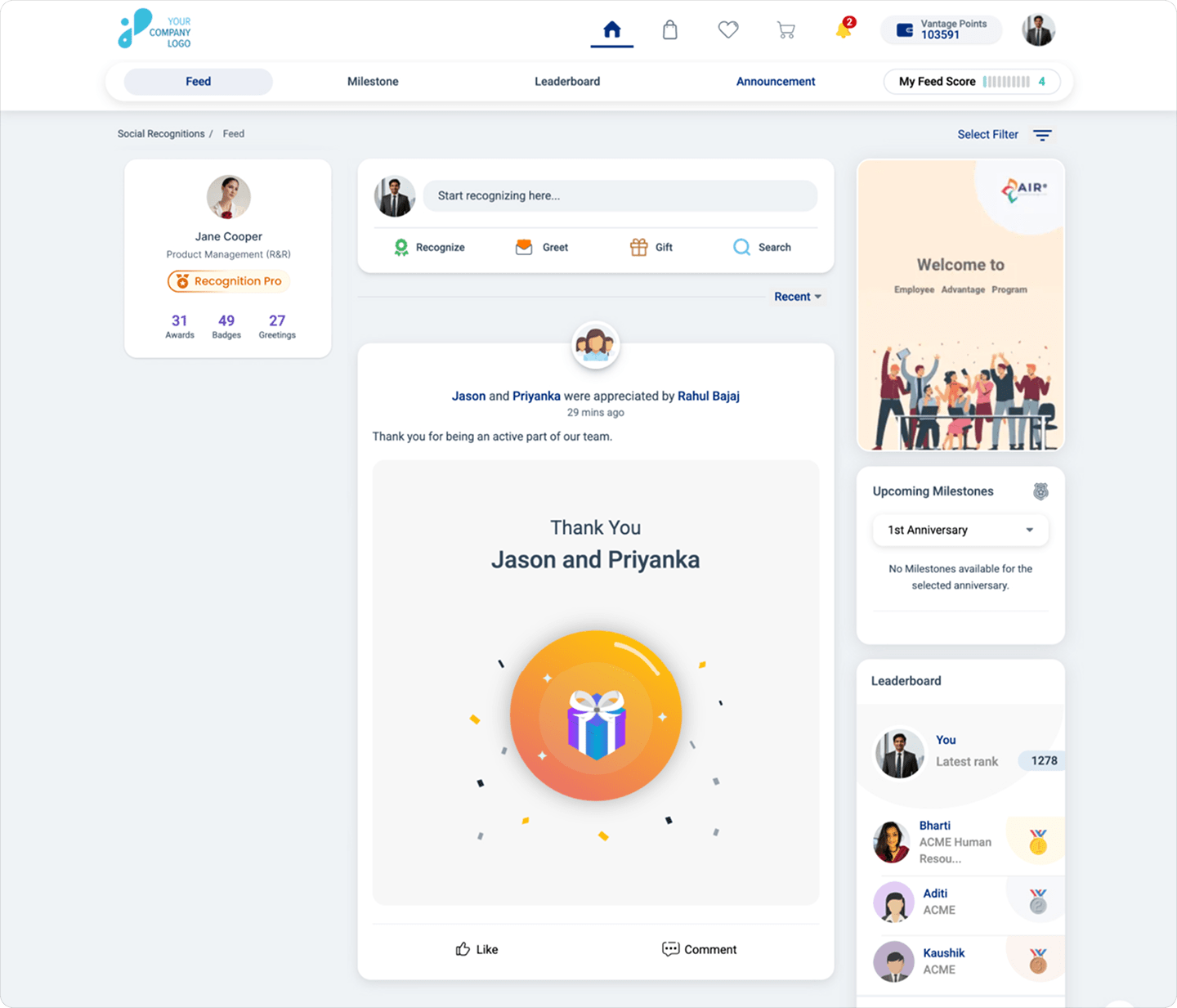
One of the most underused levers against incivility is recognition — specifically, using it to make civility visible and valued.
When an employee goes out of their way to support a struggling colleague, includes a quieter teammate in a discussion, or handles a tense situation with patience and grace, that behavior deserves to be seen. Employee recognition programs that go beyond performance metrics to include how people treat each other send a clear message: the way we work matters as much as what we produce.
Peer-to-peer recognition is particularly effective here. When employees regularly acknowledge each other for respectful, collaborative behavior, it builds team cohesion and shifts the cultural baseline. Organizations that build a genuine culture of appreciation see lower rates of disrespectful behavior — because appreciation and incivility struggle to coexist in the same environment.
Recognition that explicitly names how someone behaved — not just what they delivered — teaches the whole team what "good" looks like. "Thanks for delivering the report" reinforces output. "Thanks for staying patient and inclusive in that difficult meeting" reinforces culture.
4. Give managers the tools to address it directly
Managers are the frontline defense against incivility — and most of them are underprepared. Addressing rudeness or dismissiveness in real time requires specific skills: the ability to name the behavior without escalating, to separate intent from impact, and to give constructive feedback that opens a conversation rather than closing one down.
Organizations should invest in training managers to have these conversations early and clearly. Waiting until incivility becomes a formal complaint is far more costly than addressing it when it first appears.
5. Build clear norms and hold people accountable
Civility can’t just be implied — it needs to be explicit. This means articulating what respectful behavior looks like at your organization, embedding it in onboarding, team charters, and performance conversations, and making it part of how managers evaluate workplace relationships.
Accountability matters too. When uncivil behavior is consistently excused — because the person is a high performer, a senior leader, or "just stressed" — it signals that the norms don’t apply equally. The recognition gap works in reverse here: when bad behavior goes unchallenged, it shapes culture just as powerfully as when good behavior goes unrecognized.
6. Create genuine psychological safety
Incivility thrives in environments where people feel they can’t push back, ask questions, or say "that wasn’t okay." Building psychological safety means actively creating conditions where employees can speak up without fear of retaliation or ridicule.
This goes hand in hand with trust in the workplace. When employees trust that leadership will take concerns seriously, they’re more likely to raise issues early — before they escalate.
7. Address the stress that fuels it
Because many incivility incidents are stress-driven, reducing the conditions that generate uncivil behavior matters as much as addressing the behavior itself. Chronic overload, unclear roles, poor workplace communication, and a lack of autonomy all create the pressure-cooker conditions where incivility becomes common.
Leaders who invest in employee wellbeing — including stress management resources, reasonable workloads, and work-life balance — are also investing in a more civil workplace.
8. Screen for it during hiring
Incivility is far easier to prevent than to correct. One of the most effective long-term strategies is hiring for respectful, collaborative behavior from the start.
During interviews, behavioral questions that explore how candidates handle conflict, disagreement, and high-pressure situations can reveal a lot. Checking with references about how a candidate treats peers and direct reports — not just what they delivered — is equally valuable. This approach to building a positive workplace culture pays dividends long after the offer letter is signed.
The Recognition Connection: Building a Culture That Makes Incivility Unwelcome
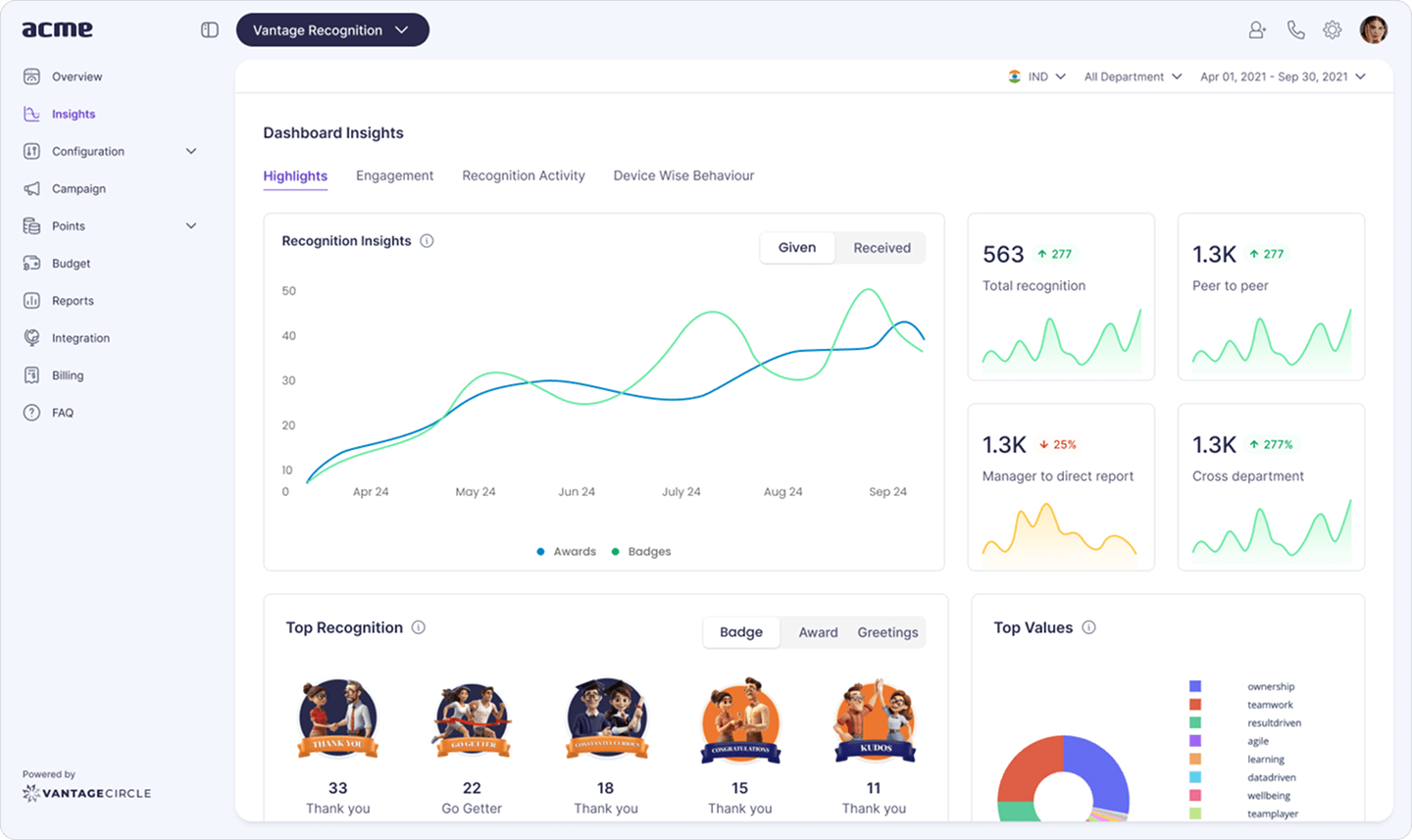
The organizations that most effectively combat incivility share a common trait: they’re cultures where people feel consistently seen, valued, and respected. That’s not accidental — it’s built.
Meaningful recognition plays a structural role in this. When employees regularly receive acknowledgment for both their work and how they do it, several things happen:
- Employee morale rises, reducing the frustration and resentment that fuel uncivil behavior
- The behaviors being recognized become visible models for the whole team
- Employee engagement increases, and engaged employees are significantly less likely to act uncivilly or tolerate it from others
- Peer relationships strengthen as people feel genuinely appreciated by their colleagues
This is why the most forward-thinking HR leaders don’t treat recognition as a "nice to have" — they treat it as a culture infrastructure investment. A workplace where people feel valued is one where incivility has far less room to take root.
As Gallup research shows, culture — including how people are treated — is one of the strongest predictors of both engagement and retention. Building that culture deliberately, through consistent recognition, clear norms, and strong leadership, is the most durable solution to workplace incivility.
Frequently Asked Questions
1. What is the difference between workplace incivility and bullying?
Workplace incivility involves low-intensity, often ambiguous disrespect — rudeness, dismissiveness, or exclusion where intent to harm is unclear. Bullying is deliberate, repeated, and targeted. Incivility sits at the lower end of the misconduct spectrum, but it frequently escalates into bullying when left unaddressed.
2. What are some common examples of workplace incivility?
Common examples include interrupting colleagues in meetings, sending abrupt emails without context or greeting, taking credit for others' work, leaving someone off a meeting invite, responding to questions with dismissive body language, and excluding certain employees from social interactions. None of these cross a legal threshold, but all erode respect and trust over time.
3. Why do employees not report workplace incivility?
Most employees stay silent because they fear retaliation, doubt that anything will change, or worry about being labelled as difficult or overly sensitive. The ambiguous nature of incivility also makes it harder to articulate — if there is no clear intent, employees often question whether the behavior was even worth raising.
4. How does workplace incivility affect employee performance?
Research by Christine Porath and Christine Pearson found that 80% of employees who experienced incivility lost work time worrying about it, 66% said their performance deteriorated, and 48% intentionally reduced their effort. Beyond individual performance, incivility lowers team morale, reduces collaboration, and increases voluntary attrition.
5. Can employee recognition help reduce workplace incivility?
Yes — recognition is one of the most underused cultural tools against incivility. When organizations consistently recognize respectful, collaborative behavior, they make civility visible and valued. Peer-to-peer recognition in particular reinforces positive norms across teams, reducing the conditions in which dismissive or disrespectful behavior takes hold.
Final Thoughts
Workplace incivility is not a minor inconvenience. It is a structural problem that, when left unaddressed, quietly hollows out employee engagement, team morale, and retention.
The good news: it’s also one of the most preventable workplace challenges. Leaders who take it seriously — who model respect, recognize positive behavior, build psychological safety, and address incivility early — create environments where people do their best work.
Civility isn’t a soft skill. It’s a business strategy.
Want to build a culture where respectful behavior gets recognized and reinforced? Explore how Vantage Circle’s rewards and recognition platform helps organizations make appreciation a daily practice.

This article is written by Susmita Sarma. She is a Digital Marketer at Vantage Circle, making employee recognition less of a checkbox and more meaningful - helping organizations say “we value our people” and truly mean it.
Connect with Susmita on LinkedIn.